The Best Of Wine Tourism Awards are annual awards given by the Great Wine Capitals Global Network to wineries and wine-country businesses that do an exceptional job of receiving visitors. The crucial thing to understand — and the thing almost nobody explains — is that they judge the visit, not the wine in the bottle.
A winery can make superb wine and never come close to one of these awards. Another can make perfectly good, unremarkable wine and win, because the tour is brilliantly run, the architecture is worth the detour, or the rooms are the best place to sleep for thirty kilometres in any direction. If you are planning a trip rather than building a cellar, that distinction is the whole point: this is one of the very few wine awards that is actually about you.
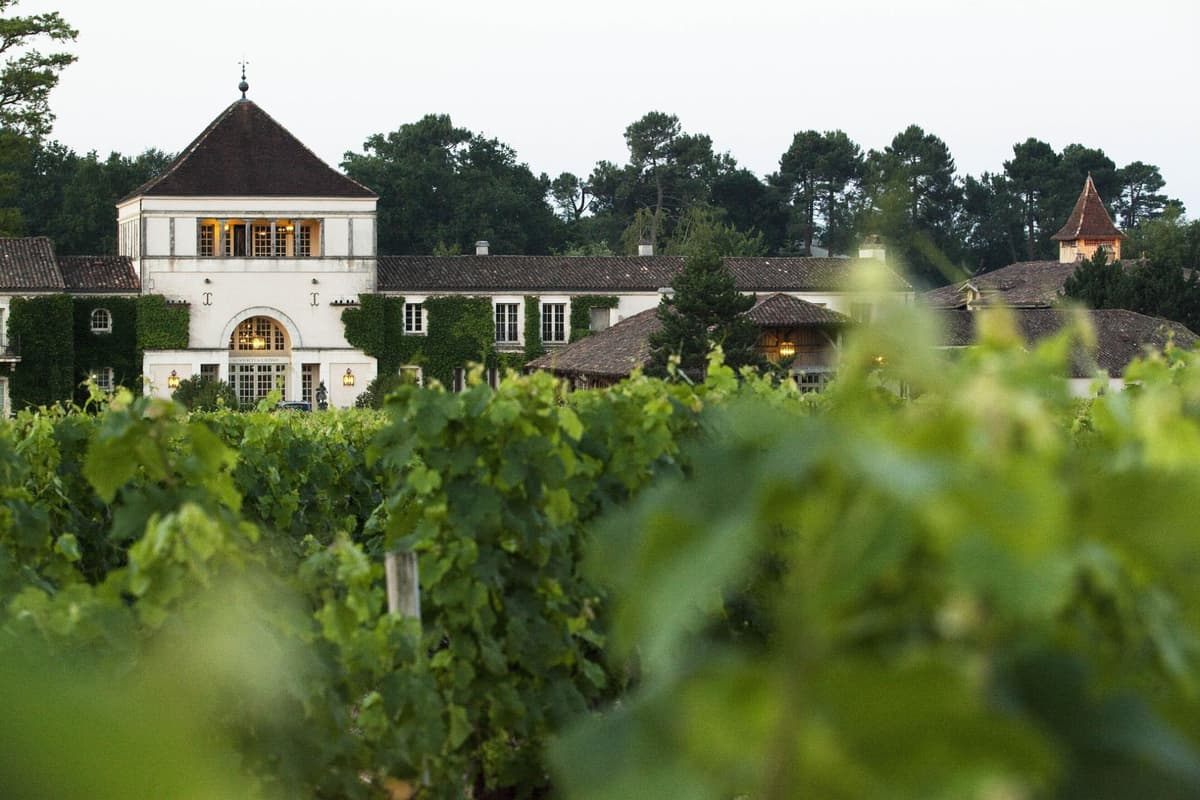
Bordeaux hosts the annual global ceremony. Estates like Les Sources de Caudalie, set among the vines of Pessac-Léognan, are the kind of property the awards were designed to assess.
The awards run on an annual cycle, in two rounds — regional first, then global. The 2026 global winners were announced in Bordeaux on 7 November 2025, selected from 623 applications across the network.
Who runs them: the Great Wine Capitals network
The awards belong to the Great Wine Capitals Global Network, an alliance of cities that sit at the heart of major wine regions. There are eleven member capitals, and the membership is the single most useful fact about the whole scheme:
Adelaide, South Australia
Bilbao-Rioja, Spain
Bordeaux, France
Hawke's Bay, New Zealand
Lausanne, Switzerland
Mainz-Rheinhessen, Germany
Mendoza, Argentina
Porto, Portugal
San Francisco-Napa Valley, United States
Valparaíso-Casablanca Valley, Chile
Verona, Italy
Read that list again and something jumps out. Tuscany is not on it. Nor is Burgundy, Champagne, the Douro as a region, Piedmont, Stellenbosch, or the Mosel. Those places are not absent because their wine tourism is weak — they are absent because their nearest city is not a member of this particular network. It is a club, and the awards are open to businesses in the club's territories.
This is the most common misreading of the badge. A property with no Best Of Wine Tourism award may simply be in a region that cannot enter. Absence tells you nothing.
The seven categories, and what each one actually tells you
Entries compete in seven categories. Each rewards a different part of the visit, and once you know what they mean, the badge on a property's website becomes genuinely informative rather than decorative.
Accommodation — the one that matters most if you are choosing where to sleep. It recognises staying on or beside a working estate, judged as a place to stay rather than as a place to taste.
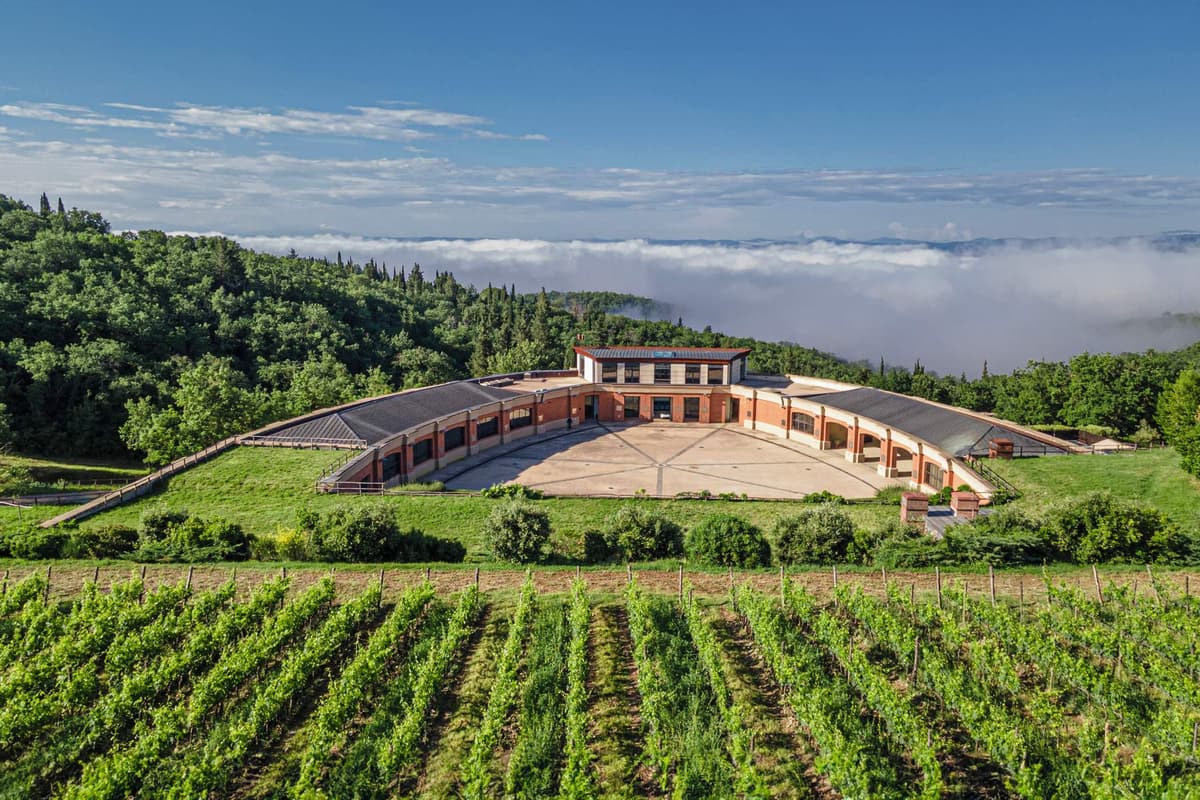
Architecture & Landscape — the estates built to be looked at. Think cellars designed by name architects, or historic buildings restored with real ambition. If the photograph is why you are going, this is your category.
Art & Culture — collections, exhibitions, concerts, museums. Several European estates now run genuine art programmes rather than hanging a few canvases in the tasting room.
Culinary Experiences — the restaurant, the cookery school, the long lunch under the pergola. Useful because a mediocre kitchen can undo an otherwise excellent stay.
Innovative Wine Tourism Experiences — the unusual formats: blending workshops, harvest participation, immersive tours. This is where you find the visits that are not simply a walk through a barrel room.
Sustainable Wine Tourism — environmental and social practice in how the estate receives visitors, not merely how it farms.
Wine Tourism Services — the connective tissue: tour operators, visitor centres, transport, the businesses that make a region navigable.
What the Architecture & Landscape category is looking for: Frank Gehry's building at Marqués de Riscal in Rioja Alavesa, one of the Bilbao-Rioja capital's most photographed estates.
Category names vary very slightly between the network's regional chapters — one capital may publish “Sustainable Wine Tourism Practices” where another writes “Sustainable Wine Tourism” — but the seven areas themselves are consistent across the network.
Regional first, global second: how the two rounds work
Every entry is judged first inside its own wine capital. Each capital names its regional winners across the seven categories, and those regional winners then go forward to be judged against their counterparts from the other ten capitals. Only one property per capital emerges as that capital's global winner.
The practical consequence is that “regional winner” and “global winner” are different things, and marketing copy does not always make the difference obvious. A regional award means a property was the best in its category in its own wine capital — a real distinction, and for trip planning arguably the more useful one, because it is specific to the place you are actually going.
Hawke's Bay in New Zealand shows the shape of a regional round clearly. Its 2026 regional winners were Porters Boutique Hotel for Accommodation, Craggy Range Winery for Architecture and Landscape, Black Barn Vineyards for Art and Culture, Wallingford Homestead for Culinary Experiences, Smith & Sheth for Innovative Wine Tourism Experiences, Hawke's Bay Experiences for Sustainable Wine Tourism Practices, and Church Road Winery for Wine Tourism Services. Seven businesses, seven different things done well — and one of them, Church Road, went on to take the capital's global place.
When a property advertises the award, look for the year and the word “regional” or “global”. Both are legitimate. They are simply not the same claim.
The 2026 global winners in full
Eleven properties took the global honours for 2026, one from each wine capital, announced at the ceremony in Bordeaux on 7 November 2025:
San Francisco-Napa Valley, United States — Sterling Vineyards
Valparaíso-Casablanca Valley, Chile — BOTÁNICO by Casas del Bosque
Verona, Italy — Rambaldi Apartments
Catherine Leparmentier, the network's Managing Director, summed up the 2026 cohort this way: “This year's winners exemplify how passion, innovation, and a sense of place come together to create unforgettable experiences for visitors.”
Two of the eleven are places you can actually book a bed in — Ventozelo Hotel & Quinta in the Douro and Rambaldi Apartments near Verona. That ratio is worth noticing. Most of the winners in any given year are wineries, restaurants and visitor operations rather than hotels, which is why the Accommodation category is the one to look for if a bed is what you are after.
Ventozelo: what a winning stay looks like
The Porto global winner is a useful worked example, because it is a property you can visit rather than an abstraction. Ventozelo Hotel & Quinta sits at Alijó, in the Douro Valley — a nineteenth-century manor converted into a four-star wine hotel on a hundred-hectare estate, with nineteen rooms and suites, a pool, a spa, and a restaurant built around regional cooking. Tastings, vineyard tours and harvest activities run from the property itself.
That combination is what the award is looking for: you are not driving out to a winery and back to a town hotel at night. The estate is the accommodation, and the visit continues after the tasting room closes. It is the same logic that defines a quinta in Portugal and a wine relais in Italy.
Hotel
4.7(245 条评论)
Ventozelo Hotel & Quinta
Douro, Portugal
起价
$270 /晚
How to use the award when you are choosing where to stay
The badge is a shortcut, not a verdict. Used properly it does three things well.
It filters for effort. Entering means documenting how you receive visitors and being judged on it by people who do this professionally. Estates that cannot be bothered to run a decent tour do not tend to apply.
It tells you which part is strong. An Architecture & Landscape winner and a Culinary Experiences winner are promising very different afternoons. Match the category to what you actually want out of the trip rather than treating all wins as interchangeable.
It is regionally anchored. Because judging happens inside each capital first, a regional award is a comparison against local competition — which is exactly the comparison you are making when you decide where to stay in Rioja or Mendoza.
Practical move: identify the wine capital you are travelling to, then look at that capital's Accommodation and Culinary winners for the current year. It is a faster shortlist than working through a booking platform's ranking, and it is judged by people who visited.
What the award does not tell you
Four things worth being clear about, because the badge is routinely over-read.
It is not a wine-quality rating. It says nothing about scores, vintages or cellar-worthiness. For that you want a wine competition, which is a completely separate institution with completely separate judges.
It is not a global ranking of wine regions. Only the eleven member capitals can enter. Tuscany, Burgundy, Champagne, Piedmont and Stellenbosch are outside the scheme entirely.
It is not a hotel star rating. Accommodation winners are judged on the wine-stay experience, not on the checklist that produces a star classification. A four-star estate can beat a five-star hotel here without either rating being wrong.
It is annual, so the year matters. A 2019 badge is a statement about 2019. Ownership changes, chefs leave, programmes get cut. Check the year before you weight it.
Staying in the Great Wine Capitals regions
Five of the eleven capitals — Porto, Bordeaux, Bilbao-Rioja, Mendoza and San Francisco-Napa Valley — have particularly deep options for staying on an estate rather than commuting to one. These are properties in those regions worth having on a shortlist while you compare the current award winners:
Hotel
4.7(245 条评论)
Ventozelo Hotel & Quinta
Douro, Portugal
起价
$270 /晚
Hotel
4.7(1,573 条评论)
Les Sources de Caudalie
Bordeaux, France
起价
$265 /晚
Hotel
4.5(4,169 条评论)
Hotel Marqués de Riscal
Rioja, Rioja Alavesa, Spain
起价
$812 /晚
Hotel
4.6(1,055 条评论)
Entre Cielos Wine & Wellness Hotel
Mendoza, Luján de Cuyo, Argentina
起价
$417 /晚
Hotel
4.7(501 条评论)
Meadowood Napa Valley
Napa Valley, USA
起价
$1025 /晚
Staying among the vines rather than commuting from town is the distinction the Accommodation category rewards.
The Douro, Bordeaux and Rioja in particular reward staying on the estate: harvest runs from late summer into autumn, tastings are easier to book as a resident guest than as a day visitor, and the driving distances between properties are long enough that a bed on site changes the shape of the day. If you are planning around the picking season, our guide to global wine harvest seasons sets out when each region actually picks.
The short version
The Best Of Wine Tourism Awards are run by the Great Wine Capitals Global Network across eleven member wine capitals, in seven categories, judged regionally and then globally. They measure how well a place receives visitors — not how good its wine is. The 2026 global winners were announced in Bordeaux on 7 November 2025 from 623 entries, and only two of the eleven are places you can sleep.
Use the category, check the year, and remember that half the world's great wine regions are not eligible at all. Within those limits, it is one of the more honest signals in wine travel: somebody actually went, and actually judged the visit.
Sources & Further Reading
Every award name, category, date and figure in this article was checked against the awarding body's own published pages rather than against a winery's press release. Winners are announced annually, so check the current cycle before relying on any list.

 Alex Osso2026年9月7日

 创建您自己的目录


