Michelin named 94 Burgundy estates. We opened 33 of their websites: two sell a visit online, and none of the nine top domaines publish a bookable tour.
DOCG, DOC and IGT are the three Italian designations you will see on a wine label. In plain terms they describe how tightly the wine in the bottle is tied to a defined place and a defined set of rules — which grapes, grown where, farmed how, aged how long, and checked by whom.
DOCG — Denominazione di Origine Controllata e Garantita. The strictest tier: a defined zone, a specific rule book, and mandatory state-issued traceability seals on every bottle.
DOC — Denominazione di Origine Controllata. The same idea, a step less strict. A defined zone and its own rule book, but not all the additional requirements that come with the top tier.
IGT — Indicazione Geografica Tipica. A broader geographic indication, usually covering a whole region, with far more freedom over grape varieties and winemaking.
Here is the part that trips people up, and the reason this article exists: the ladder is about rules, not about how good the wine tastes. A producer can hold a DOCG and choose to bottle under IGT instead, on purpose, because the IGT rule book allows something the DOCG rule book forbids. That is not a demotion. It is a different rule set.
The thing the label does not tell you: the law now speaks DOP and IGP
Ask Italy's Ministry of Agriculture how many denominations exist and you will not get a DOCG number and a DOC number. The official register counts something else entirely: 411 DOP wine specifications and 111 IGP specifications.
That is because Italy's national tiers now sit inside the European Union's two categories. DOP (in English, PDO — Protected Designation of Origin) is the umbrella that holds both DOCG and DOC. IGP (PGI — Protected Geographical Indication) is the umbrella that holds IGT. The current legal framework for all of it is Regulation (EU) 2024/1143, in force since 13 May 2024.
The EU definitions are usefully blunt about the difference. For a PDO wine, the grapes must come exclusively from the geographical area where the wine is made. For a PGI wine, at least 85% of the grapes must come from that area. Fifteen per cent of flexibility is the entire structural distinction between the two European tiers — and it explains a great deal about why some producers pick one over the other.
Practical consequence: a bottle may say DOCG, DOP, or both. They are not competing claims. DOCG is the Italian name for the tier; DOP is the European legal category it belongs to.
Chianti Classico country near Siena. The boundary of a denomination is drawn on a map, and being inside or outside it changes what a producer is allowed to write on the label.
What each tier actually requires
Every denomination has its own disciplinare di produzione — a production rule book specific to that wine. There is no single national list of requirements, which is why generic explanations tend to go vague at exactly the moment they should get concrete. What is consistent is the kind of thing each tier controls.
A DOCG rule book is the tightest. It fixes the permitted grape varieties and their proportions, draws the production zone, sets maximum yields per hectare, and lays down minimum ageing before release — often specifying how much of that time must be spent in wood and how much in bottle. It also brings the state seal described below.
A DOC rule book works the same way with more room to move: a wider zone, more permitted varieties, generally higher yield ceilings and shorter minimum ageing.
An IGTtypically covers a large area — sometimes an entire region — and concerns itself mainly with where the grapes grew. Varieties and methods are largely the producer's choice. This is the freedom that makes IGT attractive to a winemaker who wants to plant something the local DOCG does not permit, or blend in a proportion the rule book forbids.
Do not assume ageing rules from the tier alone. “Riserva” and similar terms mean whatever that specific denomination's rule book says they mean, and the requirement differs from one appellation to the next. If it matters to you, ask at the estate — they will know their own disciplinare by heart.
The seal on the neck: the one difference you can see
Pick up an Italian bottle and look at the neck. If there is a numbered paper strip across the capsule, that is the contrassegno di Stato — the state seal, usually called the fascetta. It exists for traceability: each strip carries a unique number tying that individual bottle to a certified lot.
The rule, as set out by Valoritalia — the body that certifies a large share of Italian denominations — is that seals guarantee traceability “per tutti i vini DOCG e i vini DOC e IGT che lo prevedono da piano dei controlli” — for all DOCG wines, and for those DOC and IGT wines whose control plan provides for it. So: always on DOCG, and on DOC or IGT only where that denomination's own control plan calls for it.
For a visitor this is the most reliable at-a-glance signal on the bottle. It tells you the wine went through a certification chain with a serial number attached. It tells you nothing whatsoever about whether you will enjoy it.
The Langhe in Piedmont — a landscape where several denominations overlap within a short drive, and where the same producer often bottles across more than one of them.
Why the tier is not a quality ranking
This is the misreading worth unlearning before you travel. The tiers measure conformity to a rule book, not deliciousness. Three consequences follow, and all three are visible on any serious Italian wine list.
A producer can go down the ladder deliberately. If an estate wants to make a wine from a variety its DOCG does not permit, or in a blend proportion the rule book forbids, the legal route is to bottle it as IGT. The wine is not lesser. It is outside a specific set of rules, by choice.
A DOCG guarantees a floor, not a ceiling. Minimum ageing, maximum yields and a defined zone raise the baseline across a denomination. They do not distinguish a careful grower from a careless one working inside the same rules.
The tier says nothing about scale or philosophy. A tiny family estate and a large commercial operation in the same zone carry the same three letters.
A better question than “is it DOCG?” is “who made it, where in the zone, and from what?” That is precisely what you can find out by standing in the vineyard and asking — which is the actual argument for staying on an estate rather than tasting in town.
How to use this while you are actually in Italy
Four things that make the system useful rather than decorative once you are on the ground.
Read the place name, not the letters.The denomination name tells you the zone, and the zone is what shapes the wine. “Brunello di Montalcino” is informative; the DOCG after it much less so.
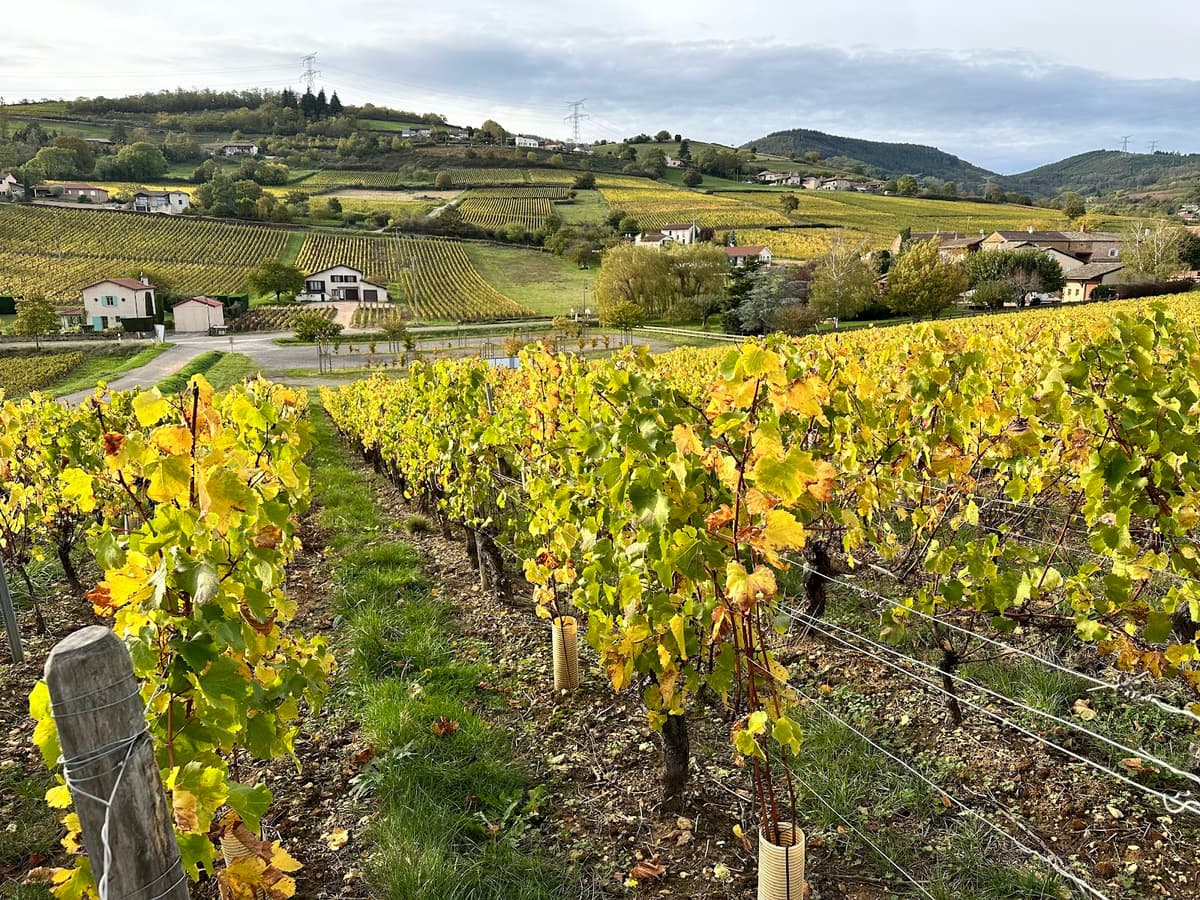
Expect overlapping denominations in one landscape. A single hillside can sit inside a DOCG, a wider DOC and a regional IGT at once, and the grower chooses which rule book to bottle under, plot by plot. Ask which one you are standing in — the answer is usually more interesting than the label.
Use the rule book as a conversation opener. Asking what the local disciplinare requires — the yield ceiling, the ageing minimum, the permitted varieties — moves a tasting from a recital to an actual conversation surprisingly fast.
Do not use the tier to plan your itinerary. Choosing regions by counting DOCGs will send you to the same handful of famous zones everyone else visits. Choosing by what you like to drink, and staying where it is grown, works better.
Where to taste each tier at the source
The most direct way to make this concrete is to sleep inside a denomination and taste where the grapes grow. Three landscapes make the differences unusually legible — Montalcino in southern Tuscany, the Chianti Classico hills between Florence and Siena, and the Langhe in Piedmont:
Resort
4.8(603 reviews)
Castello Banfi Il Borgo
Tuscany, Siena, Italy
Starting from
$642 /night
Resort
4.8(374 reviews)
Villa Dievole Wine Resort
Tuscany, Siena, Italy
Starting from
$290 /night
Hotel
4.9(88 reviews)
Marcarini Agriturismo
Piemonte, Cuneo, Italy
Starting from
$133 /night
Resort
4.6(442 reviews)
Borgo Scopeto Wine & Country Relais
Tuscany, Siena, Italy
Starting from
$451 /night
Staying on the estate turns an abstract rule book into a walk through the plots it governs.
Timing matters as much as geography. Harvest across most Italian zones runs from late summer into autumn, and it is the period when the estate is at its least performative and most interesting. Our guide to global wine harvest seasons sets out when each region picks. If you are choosing what kind of property to book, the difference between an Italian wine relais and the other formats is worth understanding first, and our guide to Italy's wine regions covers the geography in more depth.
Common misconceptions
“DOCG means it is better than DOC.” It means the rule book is stricter and the state seal is mandatory. Quality varies enormously inside every tier.
“IGT is cheap wine.” IGT is a wider geographic indication with looser rules on varieties and method. Some producers choose it deliberately for exactly that freedom.
“DOP and DOCG are rival systems.” They are the same wine described at two levels of law. DOCG and DOC are Italian tiers sitting inside the European DOP category; IGT sits inside IGP.
“The seal certifies quality.” The fascetta is a traceability device with a serial number. It certifies that the bottle can be traced, not that it is good.
“All DOCGs have the same ageing rules.”Each denomination has its own rule book. There is no single national standard for what “Riserva” requires.
The short version
DOCG, DOC and IGT describe how tightly a wine is bound to a place and a rule book. Italy's official register counts 411 DOP and 111 IGP specifications, because the national tiers now sit inside the two European categories — DOCG and DOC under DOP, IGT under IGP. The visible difference on the bottle is the numbered state seal, mandatory on DOCG and applied to DOC and IGT only where the control plan requires it.
None of it ranks flavour. It is a map and a rule book, and it is genuinely useful once you stop reading it as a scoreboard.
Sources & Further Reading
Every figure and rule in this article was checked against the ministry, the certification body or the EU regulation itself rather than against a secondary explainer. Denomination counts change as new specifications are registered, so treat the numbers as current-at-publication rather than permanent.
Masaf — Elenchi e disciplinari vini DOP e IGP — the Italian Ministry of Agriculture's official register: 411 DOP and 111 IGP wine specifications, plus the downloadable rule book for every denomination. The page itself carries no revision date, which is why we describe the figures as current at publication.

 Alex OssoSep 8, 2026
 Build your own directory


