Michelin named 94 Burgundy estates. We opened 33 of their websites: two sell a visit online, and none of the nine top domaines publish a bookable tour.
Most visitors arrive in Bordeaux believing there is a Bordeaux classification — the famous one, from 1855, with its first growths. There are five. The Conseil Interprofessionnel du Vin de Bordeaux lists them plainly on its own site: the 1855 classification of the Médoc and Sauternes, the Crus Classés de Graves, the Saint-Émilion classification, the Crus Bourgeois du Médoc, and the Crus Artisans du Médoc.
They are not five rungs of one ladder. They cover different territories, they are decided by different people, they are revised on wildly different schedules — one has been altered twice in 170 years, another is rewritten every five — and they answer different questions. One is a frozen record of nineteenth-century market prices. Another is a decennial exam with a legal appeal route that reached France's supreme administrative court. A third was annulled by a court of appeal and had to be rebuilt from scratch. Reading a Bordeaux label without knowing which of the five you are looking at is how people end up comparing things that were never on the same scale.
And the CIVB itself adds the caveat that any honest guide has to repeat: the absence of a classification does not stop an appellation or an estate from making great wine. Pomerol, home of some of the most expensive red wine on earth, has no classification at all.
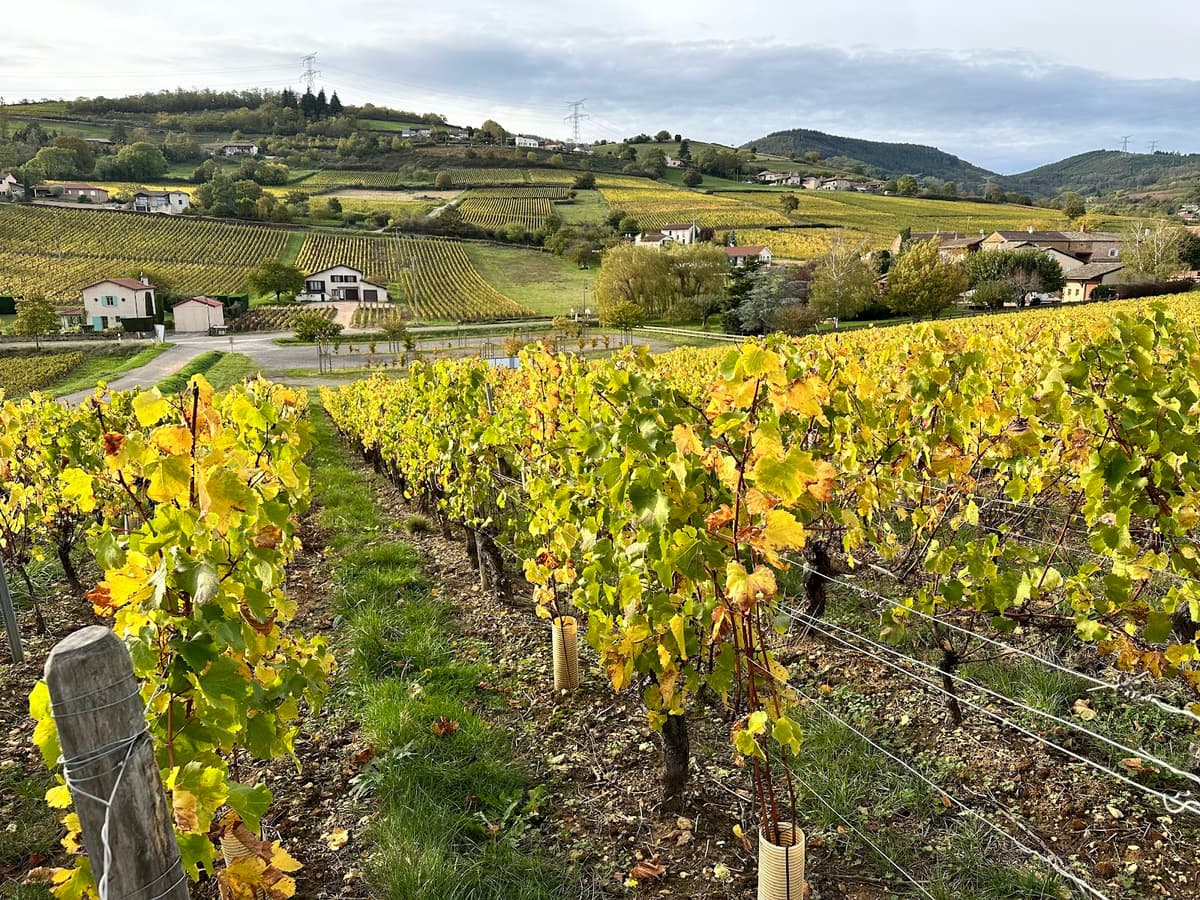
Vineyard tracks near Martillac. Nothing on the ground tells you which classification you are standing in — the boundary is a legal one, drawn on a different map for each of the five.
1855: a price list that never learned to move
The 1855 classification is the one everybody quotes, and it is the least like a modern quality judgement. Its own custodian, the Conseil des Grands Crus Classés en 1855, publishes the history in detail, and the detail is the interesting part.
Nobody tasted anything.
On 5 April 1855 the Bordeaux Chamber of Commerce wrote to the brokers' union asking for a « list of all the red classed growths in the department, as exact and complete as possible, specifying to which of the five classes each of them belongs and in which commune they are located. » The Universal Exhibition in Paris was less than a month away. On 18 April the brokers produced the list.
They could work that fast because they were not inventing a hierarchy — they were transcribing one. Bordeaux's wine trade had been sorting châteaux into price bands for the better part of two centuries: four properties (Haut-Brion, Margaux, Latour, Lafite) had detached themselves into a "first growth" price category by the late 1600s, a group of "second growths" formed by the mid-1700s, and by the 1820s a fourth-growth level existed on published price lists. What the brokers wrote down in April 1855 was the commercial pecking order as it already stood — a long-term track record of sales prices, not a verdict on the 1854 harvest.
That origin explains the classification's single strangest property: it does not update. In 170 years the list has been officially changed exactly twice, and one of those changes happened within the same year. Château Cantemerle was added to the fifth growths on 16 September 1855, five months after the original list. Château Mouton Rothschild was promoted from second to first growth in June 1973. That is the whole record of movement.
The Conseil's current published listing carries 61 red crus across five classes (5 first growths, 14 seconds, 14 thirds, 10 fourths and 18 fifths), plus a separate classification for the sweet wines of Sauternes and Barsac: Château d'Yquem alone as premier cru supérieur, then 11 first growths and 15 seconds. Eighty-eight names in total. One of the reds is not in the Médoc at all: Haut-Brion sits in Pessac, in the Graves, and was included because by the mid-nineteenth century it was the only wine outside the Médoc fetching Médoc prices.
A useful mental correction: the numbers on the 1855 list are historical price bands, not current quality scores. The Conseil says so itself — some classified wines now sell at the level of a class above them, and always have. Treat a "fifth growth" as a mark of 170 years of continuous reputation, not as a rating of the bottle in your hand.
The Crus Classés de Graves: one flat list, two colours
Cross the city to the south and the logic changes completely. The Graves classification, homologated in the 1950s and finalised by ministerial decree in 1959, has no levels at all. There are no firsts and no fifths. There is one flat list of 14 châteaux, published by the Pessac-Léognan syndicat, and a château may be classified for its red wine, for its dry white, or for both. That is the entire structure.
Two consequences are worth carrying around. First, all fourteen sit inside the Pessac-Léognan appellation — which did not exist when the classification was drawn up, since the appellation was created only in 1987. The classification predates its own map. Second, Château Haut-Brion appears in two classifications simultaneously: as a first growth of 1855 and as a Cru Classé de Graves. The same wall of vines, two separate legal instruments, neither of which knows about the other.
For a traveller this is the friendliest of the five, because the Graves are the closest classed vineyards to Bordeaux itself — Pessac and Talence are effectively in the suburbs, and Léognan, Martillac, Cadaujac and Villenave d'Ornon are a short drive south. It is the one classified zone you can visit on a half-day without leaving the city's orbit.
A barrel cellar in Martillac, in the heart of Pessac-Léognan. Cellar tours are where the Graves classification stops being an abstraction — most of the fourteen receive visitors by appointment.
The obvious base is Les Sources de Caudalie at Martillac, set among the vines of a Cru Classé de Graves estate and one of the very few winery hotels in France that sits inside a classified vineyard rather than near one. From there the whole appellation is inside twenty minutes.
Saint-Émilion: the classification that has to earn itself back every decade
Saint-Émilion took the opposite design decision from the Médoc. Its classification, which has existed since 1955, is written into the appellation's own cahier des charges and is revisable every ten years. Nothing is permanent. An estate that stops performing can be demoted or dropped; an estate that improves can climb. Growers do not run it. That job is entrusted to the INAO, France's national origin and quality institute.
INAO's national wine committee approved the current classification on 8 September 2022 and homologated by ministerial order on 15 December 2022. It contains 14 premiers grands crus classés, of which two carry the additional distinction A (Château Figeac and Château Pavie) and 71 grands crus classés. Eighty-five estates. Its 2012 predecessor had 18 premiers and 64 grands.
By Bordeaux standards, the mechanics are unusually transparent. A seven-member classification commission was appointed by the national committee in June 2020; the rules it worked to were approved by decree in May 2020; the two years of assessment were supervised by an independent third party, Bureau Veritas Certification France, appointed through a public tender. Candidates were graded on four criteria. Tasting, the quality and consistency of the wines, is the dominant one and counts for 50% of the final score at every level. The rest covers the estate's reputation, the characterisation of the property (its land base above all) and how the cru is run.
Do not read the tasting weighting as "half the score is the wine, so half is marketing." Two of the remaining criteria are about the vineyard itself and how it is farmed. But it is true that reputation is scored — and that is precisely what the estates that walked away objected to.
Because three of the biggest names in the appellation did walk away. Châteaux Ausone, Cheval Blanc and Angélus — all of them premiers grands crus classés A under the 2012 list — did not appear as candidates in 2022, which is why the top tier went from four estates to two and why Figeac's promotion into it was the story of the year. Their departures were voluntary and were widely reported at the time as objections to criteria that reached beyond the vineyard; we have not seen a primary statement from all three, so we will put it no more strongly than that. What is documented is the arithmetic: four A's became two, and the appellation's most famous labels now sell without any classification on them at all.
Eleven years in court: what Saint-Émilion's litigation actually settled
Saint-Émilion is distinctive for a second reason: its classification is a French administrative decision — which means it can be challenged in court, and it has been, at exhausting length. When it finally ended, the INAO published the full chronology.
Three châteaux contested the commission's 2012 decisions and the ministerial order that approved them. The Bordeaux Administrative Court found the criticisms unfounded on 17 December 2015, and on 12 April 2019 the Bordeaux Administrative Court of Appeal ruled all three petitions inadmissible. Then it turned. On 12 February 2021 the Conseil d'État annulled that appeal ruling on procedural grounds, without touching the classification itself, and sent the case back; the appeal court dismissed all three petitions on the merits on 22 March 2022. One petitioner went up again. Eleven years of proceedings closed on 15 March 2024, when the Conseil d'État confirmed the legality of the 2012 classification.
There is a quiet irony in the outcome. The estate at the centre of the final appeal, Château Corbin Michotte, had gone to law because the 2012 commission refused to classify it. It appears on the 2022 list of grands crus classés — the system it sued eventually let it back in, through the front door, by the ordinary decennial route.
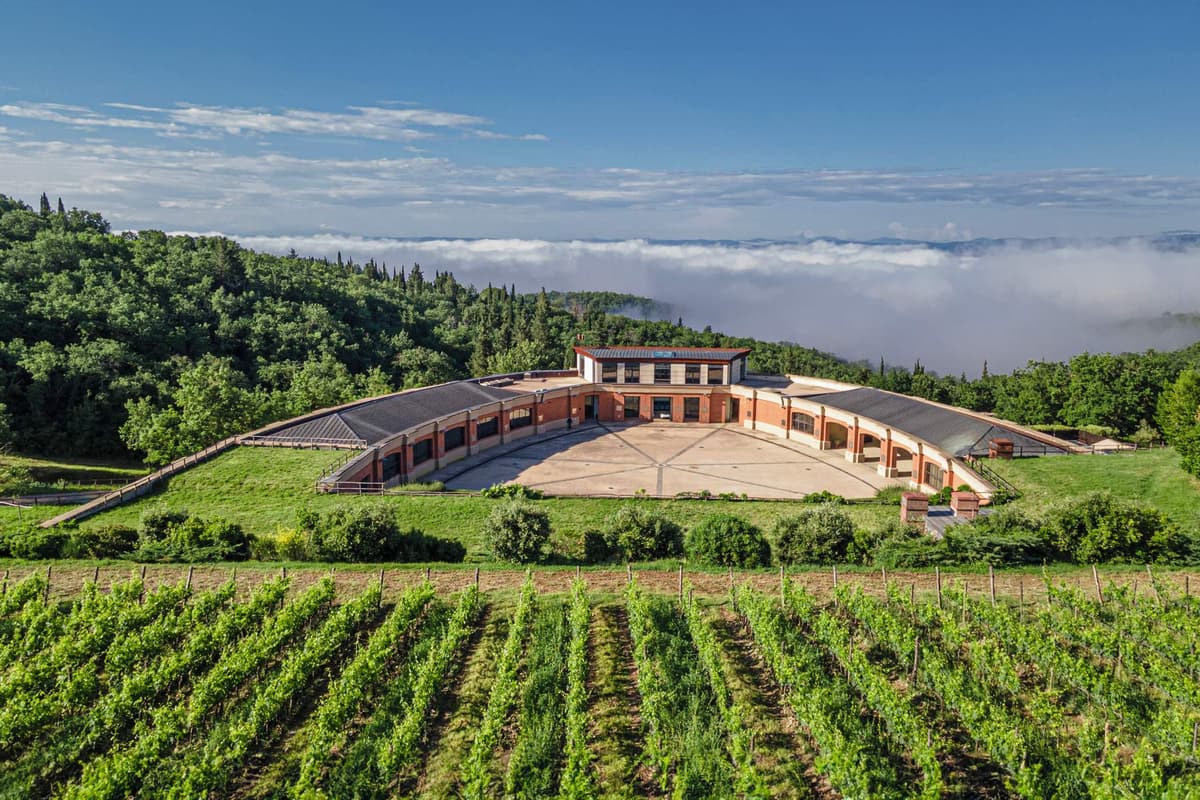
Saint-Émilion. The 2022 classification runs to the 2031 harvest — every estate you visit here is roughly halfway through a ten-year exam.
Saint-Émilion is also the classified zone that most rewards actually staying inside it, because the appellation is small, walkable and unusually dense in estates that receive guests. Château Franc Mayne is a case in point — it appears by name on the INAO's 2022 list of grands crus classés and also runs rooms on the estate, which is a rare combination. A classified château where you can also sleep is not something the 1855 list offers at all.
If you want to visit a classified Saint-Émilion estate, book the visit before you book the room. Compact village, estates close together — an itinerary built around confirmed appointments will nearly always work; an itinerary built around a hotel and improvised wine tasting stops often will not, especially in September and October.
Crus Bourgeois: the classification that was destroyed and rebuilt
The Crus Bourgeois du Médoc have the most turbulent history of the five, and the Alliance des Crus Bourgeois publishes it without flinching in its own press material.
The name is medieval. Under English rule, Bordeaux's merchant "bourgeois" were exempt from duties on wine from their own vines, and from the fifteenth century they bought up the best parcels of the Médoc, which became known as the crus des bourgeois. Prices for them were first set down by the Bordeaux chamber of commerce in 1740; in 1858 a work by d'Armailhac unofficially sorted 248 Crus Bourgeois into three categories.
The first real classification came in 1932: 444 estates, drawn up under the chamber of commerce and the Gironde chamber of agriculture, and never submitted for ministerial homologation. It served as the reference for decades anyway. The growers' syndicat followed in 1962, and in 1979 EU labelling rules recognised "Crus Bourgeois" as a traditional mention.
Then came the collapse.
A first officially homologated classification, by ministerial order in 2003, named 247 châteaux out of 490 candidates: 151 Crus Bourgeois, 87 Supérieurs and 9 Exceptionnels. Unclassified estates challenged it, pointing out that the expert jury included the then president of the growers' syndicat — an arrangement the 2000 ministerial order had actually provided for. In 2007 the Bordeaux Administrative Court of Appeal annulled the 2003 order on a single principle: one cannot be both judge and party. The classification ceased to exist.
What replaced it is the reason the Crus Bourgeois are now, in structural terms, the most rigorous of the five. A quality procedure homologated by decree and order in 2009 produced an annual Official Selection, published every September from 2010 to 2019. In 2016 members voted by 78% to adopt a new specification; it was homologated by ministerial order of 29 December 2017, published in the Journal officiel on 4 January 2018, restoring the three tiers from the 2018 vintage. The first five-year classification under the new formula, in 2020, named 250 châteaux.
The second, published in February 2025, names 170: 120 Crus Bourgeois, 36 Crus Bourgeois Supérieurs and 14 Crus Bourgeois Exceptionnels. It runs for five years and covers the eight red-wine appellations of the Médoc — Médoc, Haut-Médoc, Listrac-Médoc, Moulis-en-Médoc, Margaux, Saint-Julien, Pauillac and Saint-Estèphe. Between them the classified estates account for 21% of the Médoc's production area and 22% of its wine, around 15 million bottles a year.
The method is worth spelling out, because nothing else in Bordeaux works quite like it.
Files were due by 30 September 2023 and verified by the Alliance and then by an outside body, QB Vérification. Every candidate was visited. From February to September 2024, two commissions of five tasters each, drawn from thirty trained professionals, conducted blind vertical tastings of five imposed vintages from a single estate, 2017 to 2021, grading not the best bottle but the consistency across all five, on a scale from A to D.
Candidates for the two upper mentions submitted a second dossier of at most fifty pages, assessed by ten experts who also visited each property. Environmental certification is now compulsory: level 2 for Cru Bourgeois, and levels 2 and 3 for Supérieur and Exceptionnel, the latter being France's Haute Valeur Environnementale. A six-person jury chaired by Philippe Faure-Brac, world's best sommelier in 1992, made the final decisions; the Exceptionnel mention required a two-thirds majority in a secret ballot.
There is no numerus clausus. The entry key to each level is the score.
The Crus Bourgeois jury tastes five vintages of the same estate blind, in a row. Consistency across the run, not a single brilliant year, is what earns the mention.
This is the one classification where the label tells you something about the recent wine. A 2025 Cru Bourgeois Exceptionnel means an estate whose 2017 through 2021 bottles were tasted blind and judged consistent, and whose vineyard holds a state-approved environmental certification. A 1855 growth classification tells you what the property was worth in 1855.
Crus Artisans: the smallest list, and the one about the person
Almost nobody outside the Médoc has heard of the fifth classification, and it is the only one that classifies a way of working rather than a wine or an estate.
A Médoc Cru Artisan must satisfy two conditions, per the CIVB: the owner has to be an artisan winegrower personally involved in the whole chain, from tending the vines to selling the bottles; and the wine has to come from one of the same eight Médoc appellations. The estates are small by definition, and only red Médoc wines qualify.
The name goes back to 1868, when the Cocks & Féret guide coined it for the wheelwrights, blacksmiths, coopers, carpenters and bakers of the Médoc countryside who worked a few rows of vines of their own. It faded in the 1930s as small estates failed, was revived by a growers' association in 1989, was authorised on front labels by the EU in 1994, and became a formal classification in 2006. Since a 2017 change of specification it runs on a five-year cycle. The current list (33 estates, revised in 2022) covers vintages through 2026, which means it is due for renewal now.
For anyone building a Médoc itinerary this is the most useful of the five lists and the least used. Thirty-three owner-operated estates, all in the eight classic appellations, all small enough that the person pouring the wine is likely the person who grew it. It is the opposite of the first-growth experience, and for many travellers a better one.
What none of the five will tell you
Every one of these classifications ranks wine, land or a way of farming. Not one of them ranks hospitality. A classified château may receive nobody, may open two mornings a week by appointment, or may run a full visitor operation with a restaurant — the classification is silent on all of it. This is the same trap we flagged when we looked at the MICHELIN grape rating and at Parker points: a score on the wine is not an invitation, and treating it as one is how good trips go wrong.
Three practical corollaries.
Classification boundaries are not travel boundaries. The satellite appellations north-east of Saint-Émilion — Montagne, Lussac, Puisseguin and Saint-Georges — are separate appellations and are not covered by the Saint-Émilion classification at all. That does not make them less worth visiting; it makes them quieter and easier to get into.
Two lists can describe the same château. Haut-Brion is simultaneously an 1855 first growth and a Cru Classé de Graves. Neither statement is wrong and neither is redundant — they were issued a century apart by different authorities for different reasons.
An unclassified appellation is not an unranked one. Pomerol has never had a classification and does not need one. The market ranks it perfectly well without a list, which is a useful reminder of what these documents are: instruments of trade and reputation, not measurements of pleasure.
Where to stay while you work out which list you are in
Bordeaux's classified zones are spread across three separate sides of the city, and the practical decision is which one you want to be inside. South of Bordeaux, in Pessac-Léognan, you are among the fourteen Crus Classés de Graves and twenty minutes from the city. East, across the Dordogne, Saint-Émilion is a walkable medieval village surrounded by 85 classified estates. North, up the Médoc peninsula, are the 1855 growths, the 170 Crus Bourgeois and the 33 Crus Artisans — the longest drives and the largest properties.
Our Bordeaux entries cluster in the first two. These are vineyard stays on or beside working estates, which is the shortest route from reading about a classification to standing in one:
Hotel
4.7(1,573 reviews)
Les Sources de Caudalie
Bordeaux, France
Starting from
$265 /night
Hotel
4.8(71 reviews)
Château Franc Mayne & Le Relais
Bordeaux, Saint-Emilion, France
Starting from
$200 /night
Hotel
4.9(20 reviews)
Clos de la Barbanne
Bordeaux, France
Starting from
$284 /night
Guest House
4.7(39 reviews)
Au Vélo Dans l'Arbre
Bordeaux, Libournais, Saint-Emilion, France
Starting from
$125 /night
A note on the fourth and third of those, because it is exactly the kind of distinction this article is about. Clos de la Barbanne sits in Montagne-Saint-Émilion — a satellite appellation, outside the classification, and none the worse for it. Au Vélo Dans l'Arbre is a guest house among the vines rather than a classified château. Both are honest wine country bases; neither carries a classified name, and after reading the five lists above you now know precisely why, and precisely how little it should matter to a traveller.
For the wider picture (regions, appellations and how the French system fits together), see our France guide, and if you want to see how a different country solved the same problem, the Italian DOCG / DOC / IGT system took an almost opposite approach: it classifies places, not châteaux.
Sources & Further Reading
Classification data changes on its own schedule: Saint-Émilion every ten years, Crus Bourgeois and Crus Artisans every five, the 1855 list essentially never. The figures below were checked against the awarding or regulating body in September 2026 — re-check them against these same pages before relying on a count.
CIVB — the five classifications of Bordeaux wines — the official interprofessional body's own index, which is what establishes that there are five and not one, and which carries the caveat that a lack of classification does not prevent an estate or appellation from making great wine.
Conseil des Grands Crus Classés en 1855 — history of the classification — the 5 April 1855 request from the Chamber of Commerce and its verbatim wording, the 18 April list, the price-band origin of the five classes, and the statement that the classification has been officially changed only twice: Cantemerle on 16 September 1855 and Mouton Rothschild in June 1973.
Syndicat de Pessac-Léognan — Les Crus Classés de Graves — confirms the flat structure of 14 châteaux with no ranked tiers, classified for red and/or dry white, all of them inside the Pessac-Léognan appellation, Haut-Brion among them.
INAO — Saint-Émilion grand cru: the classification for the next decade — the 8 September 2022 national committee approval, the counts (14 premiers grands crus classés including two with distinction A, and 71 grands crus classés), the 2012 comparison of 18 and 64, the existence of the classification since 1955 with ten-yearly revision, the seven-member commission and its May 2020 rules, the role of Bureau Veritas Certification France, and the 50% tasting weighting.
INAO — Conseil d'État decisions of 15 March 2024 on the Saint-Émilion classification — the full eleven-year litigation chronology used in this article, from the three châteaux' challenge through the 2015, 2019, 2021 and 2022 rulings to the final confirmation, and the identification of Château Corbin Michotte as the estate behind the last appeal.
Alliance des Crus Bourgeois du Médoc — 2025 classification press kit (PDF) — every Crus Bourgeois figure and date here: the 170/120/36/14 split, the eight eligible appellations, 15 million bottles and the 21% and 22% shares, the five-year validity since 2020, the September 2023 filing deadline, the 2024 blind vertical tastings of five imposed vintages (2017–2021) graded A to D, the environmental certification requirement, the six-person jury under Philippe Faure-Brac and the two-thirds secret ballot for Exceptionnel, and the whole historical timeline from the 1740 price list and the 1932 list of 444 estates through the 2003 order, its 2007 annulment on the "judge and party" principle, the 2010–2019 annual Official Selections, the 2017 order restoring the three tiers, and the 250 châteaux of 2020.
CIVB — the Médoc Crus Artisans classification — the two eligibility criteria, the eight Médoc appellations, the count of 33 estates for vintages 2022 to 2026, the five-year cycle introduced by the 2017 specification, and the timeline from the 1868 Cocks & Féret coinage through the 1989 association, 1994 EU labelling authorisation and the first classification in 2006.

 Alex OssoSep 8, 2026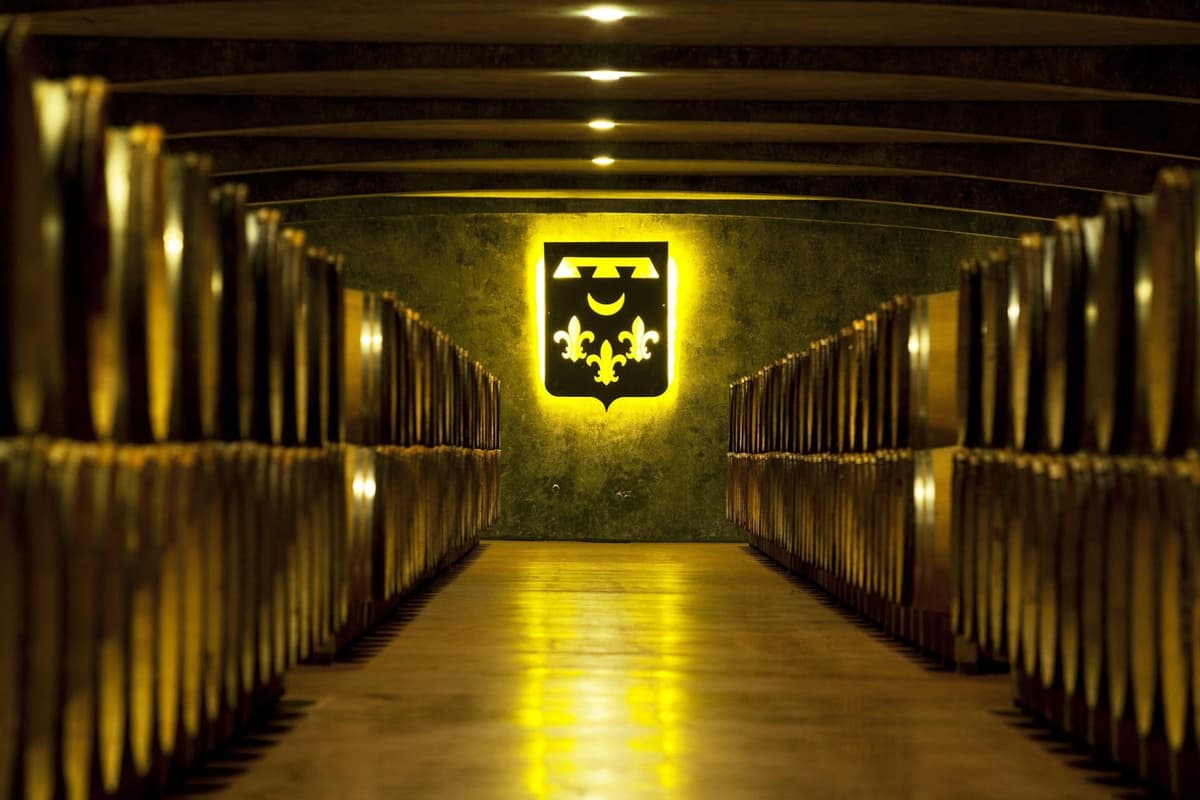
 Build your own directory


