Michelin named 94 Burgundy estates. We opened 33 of their websites: two sell a visit online, and none of the nine top domaines publish a bookable tour.
A gold sticker on a wine bottle does not mean the wine came first in anything. It means that on one morning, in one room, a small panel of tasters who could not see the label scored that particular wine, of that particular vintage, above a threshold that the organisers of that particular competition had defined in advance. Change the competition and the same bottle can move up or down a whole tier — not because anyone is being dishonest, but because the thresholds themselves are set differently, and because some competitions cap how many medals may exist at all while others do not.
Two numbers frame everything that follows. At the Decanter World Wine Awards, on the organisers' own published counts for 2026, the great majority of the roughly 17,000 wines tasted left with a medal. Under the standard published by the International Organisation of Vine and Wine — the intergovernmental body that writes the rulebook for competitions run under its name — «the sum of all the medals awarded to the samples must not exceed 30 % of the total of samples presented at the competition». Both statements are accurate. They simply answer different questions, and the sticker never tells you which question was asked.
This matters more in a tasting room than on a supermarket shelf. If you are planning a trip through wine country and choosing where to book a wine tasting, the medals on a producer's wall are one of the few pieces of evidence available to you before you arrive. They are useful evidence. They are just far narrower than they look.
Everything below is drawn from the competitions' own published rules and results, and from the OIV's own resolution text. Medal counts, entry numbers and thresholds are reviewed annually and the organisers do change them — check the current edition before relying on a figure.
Four scales that look identical and are not
The four names a traveller meets most often are the Decanter World Wine Awards (DWWA), the International Wine & Spirit Competition (IWSC), the International Wine Challenge (IWC) and the Concours Mondial de Bruxelles (CMB). All four taste blind. All four publish medals in gold, silver and — for now, in three of the four — bronze. Underneath, they are not measuring the same thing.
Decanter World Wine Awards
DWWA runs on a 100-point scale with five outcomes. Wines scoring 85 points or fewer get nothing. Bronze is 86–89 and is defined by Decanter as «a well-made, sound and satisfying wine within its category». Silver is 90–94, Gold is 95–96, and Gold winners are then re-tasted in a second week by mixed panels of Regional Chairs and Co-Chairs, where they may be promoted to Platinum (97–100). The five Co-Chairs then re-taste every Platinum to pick the Best in Show. Crucially, wines are flighted by country, region, colour, grape, style, vintage and price band — up to £14.99, £15–49.99 and £50 and above — so a Gold in the cheapest band was judged against its own peer group, not against the £50 flight.
Decanter is explicit that there is no quota: «it is entirely possible for several wines to be awarded a Bronze, Silver or Gold medal in one flight», and there is no limit on how many Golds may be promoted to Platinum. The bar is absolute, not comparative.
IWSC
The IWSC publishes the tightest scale of the four: Gold 95–100, Silver 90–94, Bronze 85–89. Below that, the competition's own scoring sheet is unusually blunt about what a non-medal means: 80–84 is «an acceptable but simple wine, lacking the distinction to be worthy of a medal», 75–79 is «palatable but insufficient», and 74 or below is «faulty/out of condition». Wines are pre-poured into numbered glasses, tasted by panels of three to four judges, and the IWSC caps each panel at 65 samples a day to limit palate fatigue.
International Wine Challenge
The IWC uses the same numeric bands as the IWSC — Gold 95–100, Silver 90–94, Bronze 85–89 — and adds a fourth tier, Commended (80–84), for wines with clear varietal or regional expression. Its distinguishing mechanic runs in the other direction: wines a panel dismisses are re-tasted blind by the Co-Chairs, who can send them back to a different panel for a second hearing. Every Gold candidate is re-tasted by the same five Co-Chairs. The IWC also judges explicitly for style accuracy, regional expression and vintage correctness — in its own words, «if it claims to be Marlborough Sauvignon Blanc, it should taste like it».
Concours Mondial de Bruxelles
The CMB is the outlier, and deliberately so. It splits into four sessions a year, each held in a different wine region — in 2026, rosé in Cirò in Calabria in March, reds, whites and sparkling in Yerevan in May, and sweet and fortified wines in Thuir in Roussillon in October. It awards Silver, Gold and Grand Gold, and it sells its selectivity as the point: its own FAQ says that «unlike some competitions where up to 80% of wines receive awards, the CMB limits its medal rate to around 30%». A second answer on the same page puts the figure at «approximately 33%» — the organisers themselves give two numbers, so treat the precise value as an order of magnitude rather than a constant.
A gold at one of these competitions is not convertible into a gold at another. The IWSC and IWC both start Gold at 95 points; DWWA starts Gold at 95 but caps it at 96 and puts everything above in a separate tier; the OIV standard starts Gold at 89. The word is the same and the bar is not.
A medal is awarded to a bottle like this one — one wine, one vintage, one batch. It is not awarded to the estate, and it does not carry over to the next release. The property shown here is in Saint-Émilion and is not connected to any of the competitions discussed.
The number that never appears on the sticker
What a medal is worth as a signal depends almost entirely on a figure the label never carries: the proportion of entries that received one. For 2026, the competitions have published enough to work it out.
DWWA 2026, whose results were published on 17 June 2026, tasted almost 17,000 wines from 58 countries with 245 judges — including 63 Masters of Wine and 24 Master Sommeliers — travelling from 35 nations. Decanter's own breakdown: 50 Best in Show (0.3% of all wines tasted), 196 Platinum (1.18%, the highest proportion in the competition's history), 924 Gold (5.56%, the highest to date), 6,193 Silver (37.24%, also the highest to date) and 6,805 Bronze. Add those together against just under 17,000 wines and the medal rate lands somewhere around 84–85%, depending on whether you count the top tiers as separate wines or as promotions out of Gold. That arithmetic is ours, not Decanter's — but either reading gives the same conclusion: the large majority of everything entered went home with something.
IWSC 2026 published the same shape of result directly. Announcing its wine results on 20 May 2026 — nearly 4,000 wines from 39 countries, assessed over two weeks by more than 130 UK wine professionals — the competition stated that 3% of wines received gold, 28% silver and 54% bronze. That is 85%, from the organiser's own summary, and it is worth noticing that the IWSC frames the number as evidence of rigour rather than of generosity: on its scale, a bronze still means a technically sound, enjoyable wine, and 15% of entries failed to clear even that.
Against those figures, the CMB's roughly 30% and the OIV's hard 30% ceiling look like a different sport. They are.
Practical reading: at DWWA and the IWSC, a bronze tells you a wine is sound and typical — genuinely useful information, and not nothing. A gold at either is the top few per cent of what was entered, and that is the tier worth crossing a room for.
Absolute bar versus fixed quota: two honest philosophies
The gap between 85% and 30% is not a scandal. It is a design choice, and each option buys something at the cost of something else.
An absolute bar (DWWA, IWSC, IWC) says: we have defined what a sound wine, a distinguished wine and an outstanding wine taste like, and we will award every wine that clears the line. If global winemaking improves, medal counts rise — which is exactly what Decanter reported in 2026, attributing record proportions to advances in viticulture and cellar technique rather than to looser judging. The medal certifies a quality level. It does not certify scarcity.
A fixed quota (the OIV standard, and the CMB by its own account) says: whatever turned up this year, only the top slice may be decorated. The medal certifies scarcity by construction. What it cannot promise is an absolute level — in a weak field, the top 30% is still the top 30%.
Neither design tells you anything at all about the producer as a place to visit. A competition tastes liquid in an anonymised glass. Nobody drove to the estate.
Knowing which philosophy you are looking at is most of the skill. If a shelf-talker says «gold medal», the useful follow-up question is not «how good?» but «out of how many, and against what threshold?»
Under the OIV standard, an entered wine must come from a homogeneous batch of at least 1,000 litres — which quietly excludes the smallest single-barrel cuvées from the results altogether.
What the OIV standard actually demands
The current text is Resolution OIV-OENO 671A-2025, which withdrew and replaced the 2009 standard that had governed OIV competitions until then. It is worth knowing what it requires, because it is the only document in this field written by an intergovernmental organisation rather than by a competition selling entries.
The 30% ceiling. If the total of medals exceeds 30% of the samples presented, the lowest-scoring samples are struck out until it no longer does. Where awards are split into groups by colour, sugar or vintage, the 30% applies inside each group as well.
Three award levels, since a 2024 amendment: Grand gold at 93 points or more, Gold at 89 or more, Silver at 85 or more. Bronze was removed as, in the resolution's own words, «less representative with respect to the silver and gold medals» and, moreover, «granted infrequently».
Only commercial wine. Every sample must come from a homogeneous batch of at least 1,000 litres, reducible to 100 litres only on justification of particularly low production.
Anonymity is not a courtesy. Bottles are re-packaged to hide their shape, corks are replaced with anonymous closures where needed, the service number on the packaging must differ from the registration number, and an OIV expert commissioner controls and validates how anonymity is guaranteed.
Palate limits. No more than 45 samples per juror per day for wine, normally in three sessions of about fifteen. Juries of at least five, seven recommended, with nationals of any one country not more than half.
The medal must carry the year of the competition, and the number of medals issued is «strictly limited to the declared available number at the time of registration» — so the sticker cannot legitimately outlive the batch that earned it.
That last rule is the one most worth carrying into a tasting room. And the 30% cap is not a recent reaction to medal inflation: in almost identical wording, it already appears in the OIV's 1994 standard, long since withdrawn. The discipline is more than thirty years old.
If a medal sticker does not show a year, or the vintage on the bottle is not the vintage that was entered, the medal is decoration. Asking «which vintage won that?» is a completely normal question at a cellar door, and a good producer will answer it in a sentence.
The change almost nobody has noticed
Two things shifted in the last eighteen months, and neither has reached the average shelf-talker.
The first is the disappearance of the OIV bronze, described above. For competitions run to the OIV standard, the entry-level medal simply no longer exists — which means that a bronze on a bottle is now, by definition, a medal from a competition running its own scale.
The second is larger. The OIV's own patronage page carries a notice that, within the framework of its Strategic Plan 2025–2029 and recent decisions of its Executive Committee, the organisation is reviewing its rules and procedures for sponsorships and patronage and, pending that review, has suspended the grant of patronage requests for wine and vitivinicultural spirits competitions from 31 December 2025. Competitions already carrying patronage continue to appear in the OIV's public calendar — the Sélections mondiales des vins du Canada is listed for 8–10 October 2026 in Montréal — but no new grants are being made while the review runs.
The practical consequence for a drinker is modest but real: the one layer of external, non-commercial oversight sitting above this whole system is paused, and while the suspension lasts the set of competitions bound by the OIV's scarcity rule cannot grow. That is not a reason to distrust any particular medal. It is a reason to know whose rules produced it.
Fortified wines had an outstanding 2026 at the IWSC: more than 80 medals, 17 of them gold, with Port and Madeira taking eight and five golds respectively.
Who is missing from every results list
The most consequential limitation of a medal has nothing to do with judging. Competitions are entered, not surveyed. Nobody goes out and collects the wines of a region; producers choose to send bottles, pay a fee, and generally send only what they expect to do well.
It costs money. The CMB publishes a degressive fee starting at roughly €200 for a first wine; DWWA and the IWSC each require four bottles of every entry and the CMB three bottles of 75 cl, all fully labelled and shipped at the producer's expense.
It requires volume. Under the OIV standard, a batch below 1,000 litres — about 1,300 bottles — is admissible only by exception. A grower making one barrel of a single-parcel wine may simply be ineligible.
It requires the wine to be ready. The IWC now runs two entry tranches precisely because southern-hemisphere and northern-hemisphere release cycles do not align; its 2026 Tranche 1, announced in December 2025, produced 37 golds, 191 silvers and 276 bronzes, heavily weighted towards Australia, New Zealand, Argentina and South Africa.
And it requires the producer to care. Plenty of estates with long waiting lists have never entered anything, because they have nothing to gain from a sticker.
So an absence of medals is not evidence of anything. A wall covered in them tells you the producer has an export-minded commercial team, which is useful to know but is a different fact from the one you were looking for.
Reading a medal at a cellar door: six checks
If you are standing in a tasting room in Rioja or the Douro with a glass in your hand and a wall of stickers in front of you, these are the questions that convert decoration into information.
Which competition? DWWA, IWSC, IWC and CMB all publish searchable result databases. A medal whose results you cannot find is not verifiable.
Which vintage, and which year of the competition? The medal belongs to one release. Under the OIV standard the year must be printed on the medal itself.
Which tier, in that competition's own words? A DWWA bronze at 86–89 points and an IWSC bronze at 85–89 are close cousins. A gold at 89 under the OIV standard is not the same animal as a gold at 95 at Decanter.
Which price band? DWWA judges under £15, £15–50 and over £50 separately. A gold in the first band is a strong value signal, not a claim to fine-wine status.
Is the wine you are being poured the wine that won? Often it is the current release and the medal is two vintages old. That is normal; just be clear which is which.
And does any of it bear on your visit? It does not. Whether the estate has a tasting room, takes bookings, or has rooms upstairs is unrelated to how the wine scored.
That last point is the one we keep returning to on this site, because it is where trip planning goes wrong. A wine score and a hospitality rating are separate instruments, and the wine world runs at least five of them in parallel.
The moment the medal is meant for: a line-up at a cellar door, where the label is visible and the judging was not.
A medal is not a tourism award
Five different marks circulate in wine tourism, and conflating them is the single most common mistake we see. Each measures one thing and is silent on the rest.
A competition medal — DWWA, IWSC, IWC, CMB — measures liquid in an anonymised glass. Nothing else.
A MICHELIN grape rates a wine producer's output across its range. Not a hotel, not a restaurant.
MICHELIN Keys rate a hotel as a place to stay. They say nothing about the wine.
MICHELIN stars rate restaurants.
Best Of Wine Tourism and The World's 50 Best Vineyards rate how an estate receives visitors — the mark closest to what a traveller actually wants to know.
Where to stay in the regions that showed up in 2026
If the medal tables are good for one thing on a trip-planning level, it is as a map of where the energy is. Three regional stories stood out in the 2026 results, and all three are places where you can sleep among the vines.
Spain had its strongest DWWA in memory: 160 top medals, a 52% increase on 2025 and enough to overtake Italy, with Jerez responsible for three of the five Spanish Best in Show wines and Rioja taking eight Platinum and 24 Gold. At the IWSC, Spain took the most golds of any country — 21 — with Rioja again leading. Portugal's fortified wines swept the IWSC, and the highest score of the whole 2026 wine judging, 98 points, went to a Colheita Port. Argentina drew praise at both for fresher, lower-alcohol high-altitude Malbec, and took its first-ever DWWA gold for an orange wine.
For Rioja and the Douro, these are two of the deepest concentrations of winery hotels anywhere — estates where the cellar, the tasting room and the bedrooms sit on the same property.
Hotel
4.5(4,169 reviews)
Hotel Marqués de Riscal
Rioja, Rioja Alavesa, Spain
Starting from
$812 /night
Hotel
4.3(695 reviews)
Quinta de la Rosa
Douro, Portugal
Starting from
$213 /night
Hotel
4.7(245 reviews)
Ventozelo Hotel & Quinta
Douro, Portugal
Starting from
$270 /night
In Bordeaux and Saint-Émilion, the appeal of vineyard stays is the density: dozens of appellations inside an hour's drive, and enough visitable châteaux to fill a week without repeating a style.
Hotel
4.7(1,573 reviews)
Les Sources de Caudalie
Bordeaux, France
Starting from
$265 /night
Hotel
4.9(20 reviews)
Clos de la Barbanne
Bordeaux, France
Starting from
$284 /night
Hotel
4.8(71 reviews)
Château Franc Mayne & Le Relais
Bordeaux, Saint-Emilion, France
Starting from
$200 /night
And in Mendoza, where the 2026 tastings kept coming back to Uco Valley and Gualtallary, the lodging sits among the vines at altitude.
Hotel
4.6(1,503 reviews)
Club Tapiz
Mendoza, Maipú, Argentina
Starting from
$170 /night
Hotel
4.8(133 reviews)
Finca Adalgisa
Mendoza, Luján de Cuyo, Argentina
Starting from
$420 /night
Before you book a wine tour around a medal, check the producer's own visits page. Competition results and visitor access are maintained by completely different people, and a long list of golds is no guarantee that the gate opens to the public.
The estate shop is where the stickers do their work. Ask which vintage and which competition, and the wall turns into a list you can actually check.
Every threshold, count and rule above comes from the organisation that sets or publishes it. Medal counts, entry numbers and scoring bands are annual and the competitions revise them, so re-check the current edition before relying on a figure. One note on completeness: the IWSC's HTML pages block automated verification, so although its 2026 results announcement of 20 May 2026 and its judging-process page were both consulted directly for the figures used here, only the competition's scoring-system PDF — which returns cleanly — is linked below.
OIV — patronage — the notice that patronage requests for wine and vitivinicultural spirits competitions are suspended from 31 December 2025 pending a review under the Strategic Plan 2025–2029, and the calendar entry for the Sélections mondiales des vins du Canada, 8–10 October 2026.
Decanter World Wine Awards — how the judging and medals work — the point bands for Bronze, Silver, Gold, Platinum and Best in Show, the three price brackets, the three-stage judging process, the four-bottle entry requirement, and Decanter's statement that there is no cap on medals per flight or on Platinum promotions.
Decanter — World Wine Awards 2026 results, published 17 June 2026 — the 2026 entry and judge figures, the full medal breakdown (50 Best in Show, 196 Platinum, 924 Gold, 6,193 Silver, 6,805 Bronze) with Decanter's own percentages, and the Spanish, Portuguese and Argentine regional results quoted above.
IWSC — wine scoring system (PDF) — the Gold, Silver and Bronze point bands and the competition's own descriptions of the three no-medal categories, including «an acceptable but simple wine, lacking the distinction to be worthy of a medal».
International Wine Challenge — judging process — blind flighting and anonymisation, panels of three to four judges, the Co-Chair re-taste of every Gold candidate, the re-hearing of dismissed wines by a second panel, and the criteria including style accuracy and vintage correctness.
Concours Mondial de Bruxelles — frequently asked questions — the competition's own statements that it limits its medal rate to around 30% and that approximately 33% of entries receive a medal, the entry fee of roughly €200 for a first wine, the three-bottle requirement, and the Silver, Gold and Grand Gold tiers.
Concours Mondial de Bruxelles — the contest — the four-session structure and the 2026 host cities and dates for the rosé, red and white, sparkling, and sweet and fortified sessions.

 Alex OssoSep 8, 2026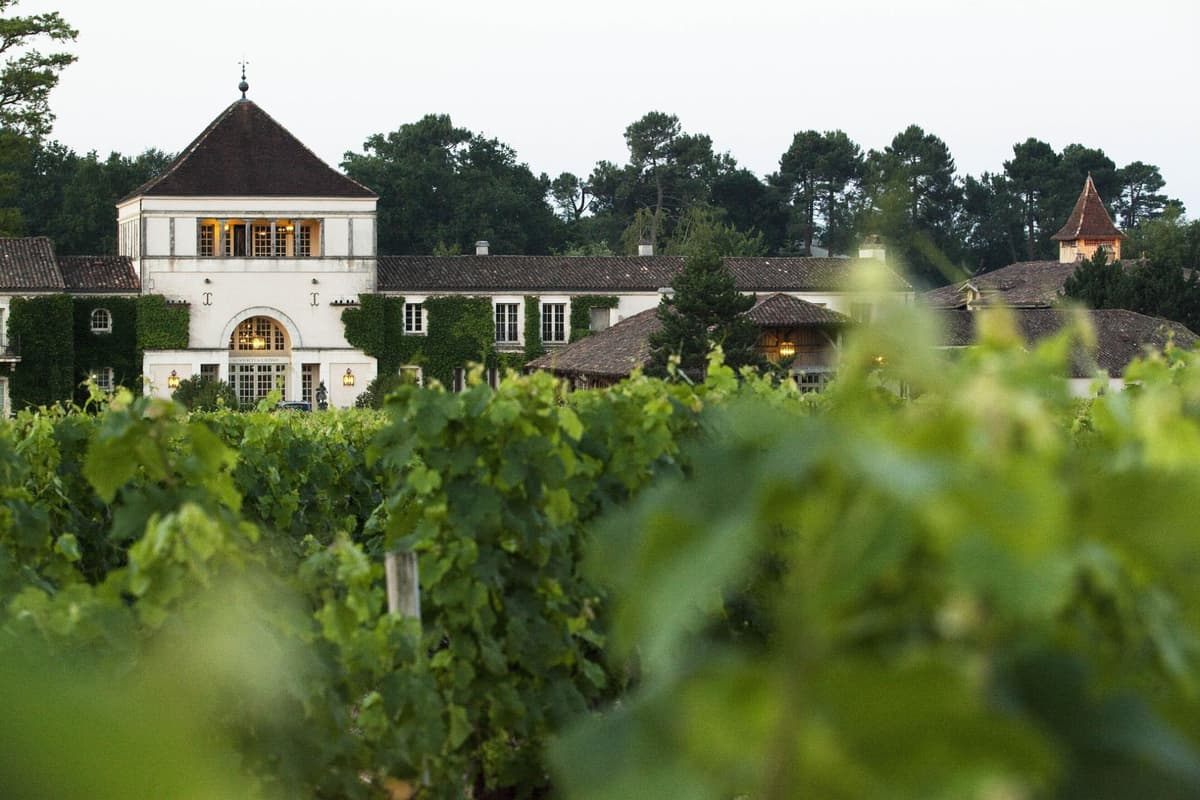

 Build your own directory


