Michelin named 94 Burgundy estates. We opened 33 of their websites: two sell a visit online, and none of the nine top domaines publish a bookable tour.
The MICHELIN grape is a distinction the MICHELIN Guide awards to wine estates — the producer, not the bottle, not the restaurant and not the hotel. Estates receive One, Two or Three grapes, or sit in a fourth tier the Guide calls Selected. Michelin announced the system on 2 December 2025 and published the first selection on 7 July 2026, in Dijon, at the Palace of the Dukes of Burgundy.
If you take one thing from this article, take this: the grape is an assessment of winemaking. It says a great deal about what is likely to be in the glass and almost nothing about whether you can walk through the gate, taste, or sleep on the property. Those are separate questions, measured by separate instruments, and the fastest way to plan a disappointing trip through wine country is to confuse them.
That confusion is easy to fall into, because Michelin now runs several rating systems at once. Stars are for restaurants. Keys are for hotels. Grapes are for wine estates. A separate family of awards, run by other organisations entirely, measures how well a winery receives visitors. Below is how each one works, what the grape actually rewards, and what a traveller should do with the information.
The confusion is not entirely the reader's fault, either. Michelin gave the grape the same red florette it uses for restaurant stars — one, two or three of them, exactly as with the stars. On the page, the two distinctions look identical; only the context tells you whether you are reading about a kitchen or a vineyard.
The four tiers, in Michelin's own words
Michelin published definitions for each level when it announced the system. They are worth reading closely, because every one of them is phrased in terms of the wine, not the welcome.
Three grapes
Exceptional producers. Whatever the vintage, wine lovers can turn to the estate's creations with complete confidence.
Two grapes
Excellent producers who stand out as exceptional within their peer group and region for both quality and consistency.
One grape
Very good producers who craft wines of character and style, especially in the best vintages.
Selected
Dependable producers chosen for regular review, producing well-made wines that deliver a quality experience.
The four levels, with Michelin's own symbol and wording. Note that Selected carries no symbol at all.
Three grapes— "Exceptional producers. Whatever the vintage, wine lovers can turn to the estate's creations with complete confidence."
Two grapes— "Excellent producers who stand out as exceptional within their peer group and region for both quality and consistency."
One grape— "Very good producers who craft wines of character and style, especially in the best vintages."
Selected— "Dependable producers who have been chosen for regular review, producing well-made wines that deliver an experience quality."
Note what the top tier promises. It is not "the best wine in the region" but a guarantee of reliability across vintages — the Guide is betting that the estate will hold its standard in a difficult year, not merely shine in a glorious one. That is a very Michelin idea, and it is the same logic that underpins the third restaurant star.
The five criteria behind the score
Michelin says the same five criteria are applied uniformly, wherever in the world the estate sits. The framework was clearly built to travel: nothing in it is specific to Burgundy, Bordeaux or any other appellation system.
Quality of agronomy — soil vitality, the balance of the vine stocks, and the care given to the vineyard.
Technical mastery — precise, rigorous winemaking producing well-developed wines that reflect terroir and grape variety, without distracting flaws.
Identity — wines that express the personality, the sense of place and the culture behind them.
Balance — the harmony between acidity, tannins, oak, alcohol and sweetness.
Consistency — quality assessed across multiple vintages, including the difficult ones.
Two of the five — agronomy and identity — reach beyond the tasting bench and into how the estate farms and what it is trying to say. That matters for anyone booking a wine tour, because they are the criteria most likely to be visible on a visit: you can see canopy management and vine age from the row, and you can hear an estate's identity in ten minutes of conversation with whoever pours.
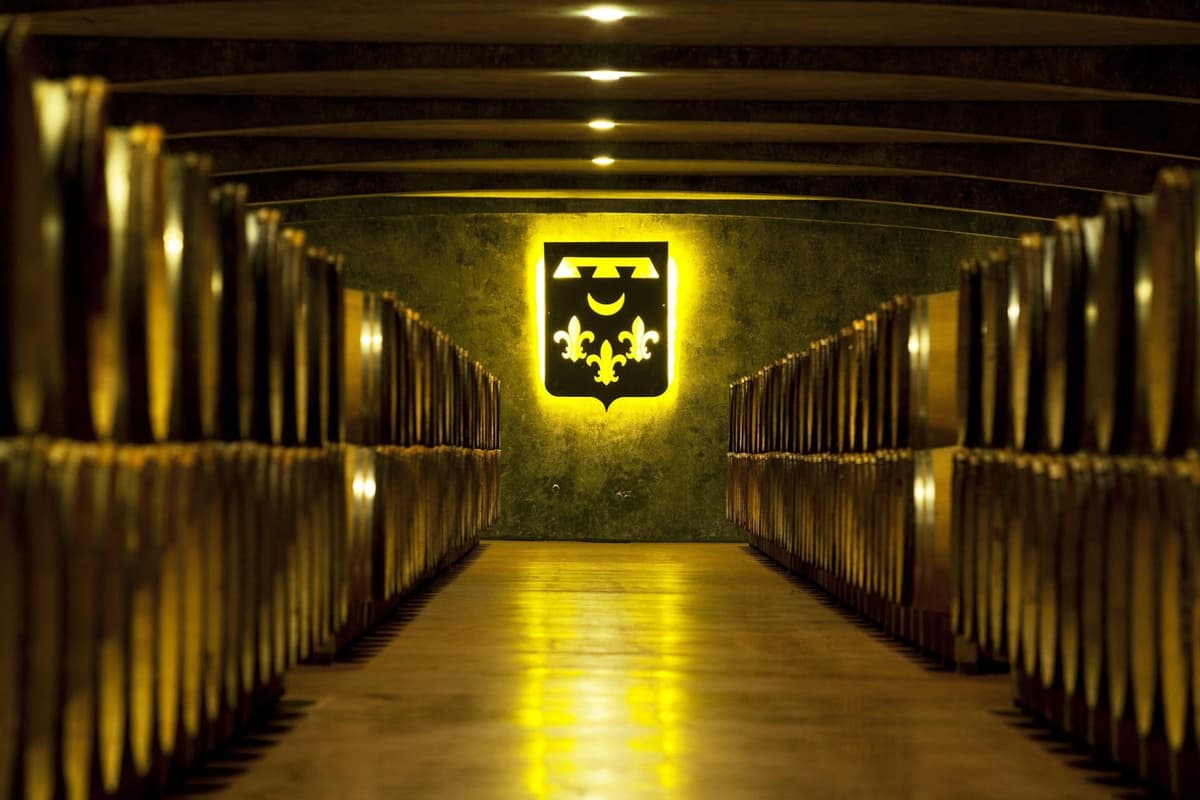
Technical mastery and consistency are judged here, in the cellar, across several vintages rather than a single good year.The MICHELIN grape symbol. Michelin uses the same red florette it uses for restaurant stars, repeated once, twice or three times — which is exactly why the scales get confused for one another.
Four scales, four different things. MICHELIN Stars rate restaurants. MICHELIN Keys rate hotels. MICHELIN grapes rate wine estates. The Best Of Wine Tourism Awards, run by a different body altogether, rate how a winery receives guests. A grape is not a star for wineries, and it is not a hospitality prize.
Who does the assessing
The selections are made by wine inspectors employed by the Michelin Group. According to the Guide, the team combines seasoned specialists with newly recruited inspectors, all of them professionals from the sector — former sommeliers, specialised critics or production experts. Recommendations are made collectively, and the assessments run through a panel review process with editorial supervision on top.
Michelin has not published the number of inspectors, the tasting protocol, or whether tastings are conducted blind. That gap has drawn comment in the trade press, and it is a fair thing to keep in mind: the grape is currently a judgement you either trust on the strength of the Michelin name or you do not, because the working method behind it has not been laid out the way the criteria have.
Why a tyre company is rating wine
The move looks stranger than it is. The MICHELIN Guide has been building wine expertise for two decades. In 2004 it introduced a wine pictogram to flag restaurants with outstanding food and wine pairings. In 2019 it added the MICHELIN Sommelier Award. And in the background sits a much larger piece of the puzzle.
Michelin bought a 40% stake in Robert Parker's Wine Advocate in 2017, then announced on 22 November 2019that it had become the publication's 100% shareholder. The Wine Advocate is the home of the 100-point scale that has shaped how the world talks about wine since the late 1970s. News of the full takeover came roughly six months after Robert Parker Jr formally retired from reviewing wines for it.
So Michelin has owned the most recognisable wine-scoring instrument on the planet for years. The grape is a second, differently shaped instrument sitting alongside it: the 100-point score rates a wine; the grape rates an estate. Michelin has not said publicly how the two are meant to coexist over the long run, and that question is still open.
If you see a specific "Parker score" quoted on a producer's own page or a retailer's listing, treat it as marketing until you have checked it. Since 2019 those scores are awarded by Robert Parker Wine Advocate's reviewers rather than by Parker personally, and the only authoritative place to confirm a number is robertparker.com.
The first selection: Burgundy, July 2026
Michelin recognised 94 Burgundy estatesin the inaugural edition: nine with Three grapes, 20 with Two, 33 with One, and 32 as Selected. The territory covered the Côte de Nuits, the Côte de Beaune and the Côte Chalonnaise, spanning the Côte-d'Or and Saône-et-Loire departments.
The nine Three-grape estates were Domaine de la Romanée-Conti, Domaine Leroy, Domaine d'Auvenay, Cécile Tremblay, Dugat-Py, Roumier, Coche-Dury, Jean-Marc & Thomas Bouley and Hubert Lamy. Five sit in the Côte de Nuits and four in the Côte de Beaune. Lalou Bize-Leroy was the only grower to place two separate estates at the top level, with Domaine Leroy in Vosne-Romanée and Domaine d'Auvenay in Saint-Romain.
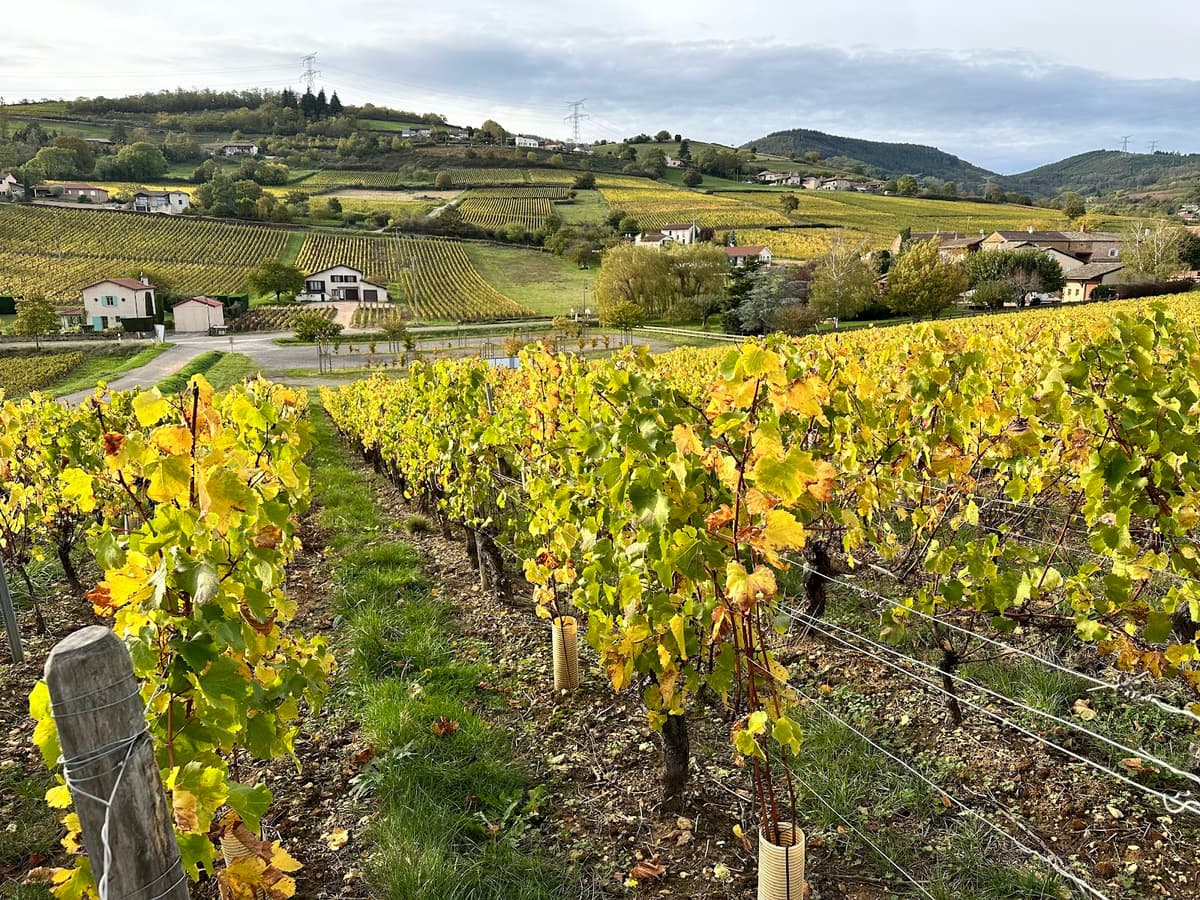
Burgundy's estates are small and split across many parcels — which is exactly what makes grading them on consistency a harder test than it looks.
Burgundy was an obvious opening move and a demanding one. The region is where the modern idea of terroir was worked out over centuries, and its estates are mostly small, family-owned and fragmented across many parcels. Grading a place like that on consistency across vintages sets a higher bar than grading a region of large, uniformly resourced châteaux.
Michelin's December 2025 announcement named Burgundy and the Bordeaux region as the two areas the programme would begin with in 2026. Burgundy came first. At the time of writing, the Bordeaux selection has not been published, and Michelin has not confirmed a date for it on its corporate press pages.
The pushback: one estate asked to be removed
Not everyone welcomed the arrival. Arnoux-Lachauxin Vosne-Romanée, which received One grape, formally requested removal from the guide. In a statement reported by the drinks business, the estate said that since 2020 it had "deliberately chosen not to submit our wines for press reviews or ratings", and that it did not know how the domaine's rating "could have been established as we have not received Michelin or presented wines to the press since the 2020 vintage".
This is the structural tension in every unsolicited rating system, and Michelin has lived with it in restaurants for a century: the Guide rates whoever it chooses to rate, whether or not the subject asked to be included. In restaurants the convention is settled. In wine, where a great many top estates have spent years deliberately withdrawing from the scoring economy, it is not.
What a grape does not tell you
Here is the honest frame, and it is the reason this article exists. A three-grape rating is not an invitation. Several of the estates at the top of the Burgundy list have no public tasting room, no booking page and no mechanism for receiving visitors who are not in the trade. Turning up in Vosne-Romanée with a printout of the selection will not get you through a gate.
Nor is the grape a guide to the quality of a wine tasting experience, the cellar tour, the food, or the bed. Those things are measured — when they are measured at all — by entirely different awards, and a producer can be superb at one and indifferent to the other. The grape is a promise about the bottle. Read it as exactly that.
Everything the grape measures ends up here. Nothing it measures tells you whether the door will be open when you arrive.
Before building a trip around a specific estate, check its own site for a visits or booking page. If there is no such page, the accurate conclusion is that there is no public booking route — not that the estate refuses guests. Tour-operator listings and review-site pages are not evidence either way.
The productive way to use the selection is as a map of where quality is concentrated, then to plan the trip around villages and appellations rather than around individual names. That is also, incidentally, how experienced eno-tourism travellers have always done it.
Where to stay if you are going to Burgundy anyway
The Côte de Beaune is the practical base. Four of the nine Three-grape estates are there, the villages are close enough together to walk between some of them, and — unlike the Côte de Nuits — there is vineyard accommodation in the middle of the vines rather than a drive away. Basing yourself between Meursault, Puligny-Montrachet and Saint-Aubin puts you inside the stretch the Guide singled out for white wine.
Further south, the Mâconnais is a quieter and considerably less expensive alternative, with château stays set among Chardonnay vineyards and an easy run north into the Côte Chalonnaise, which placed two estates at the Two-grape level.
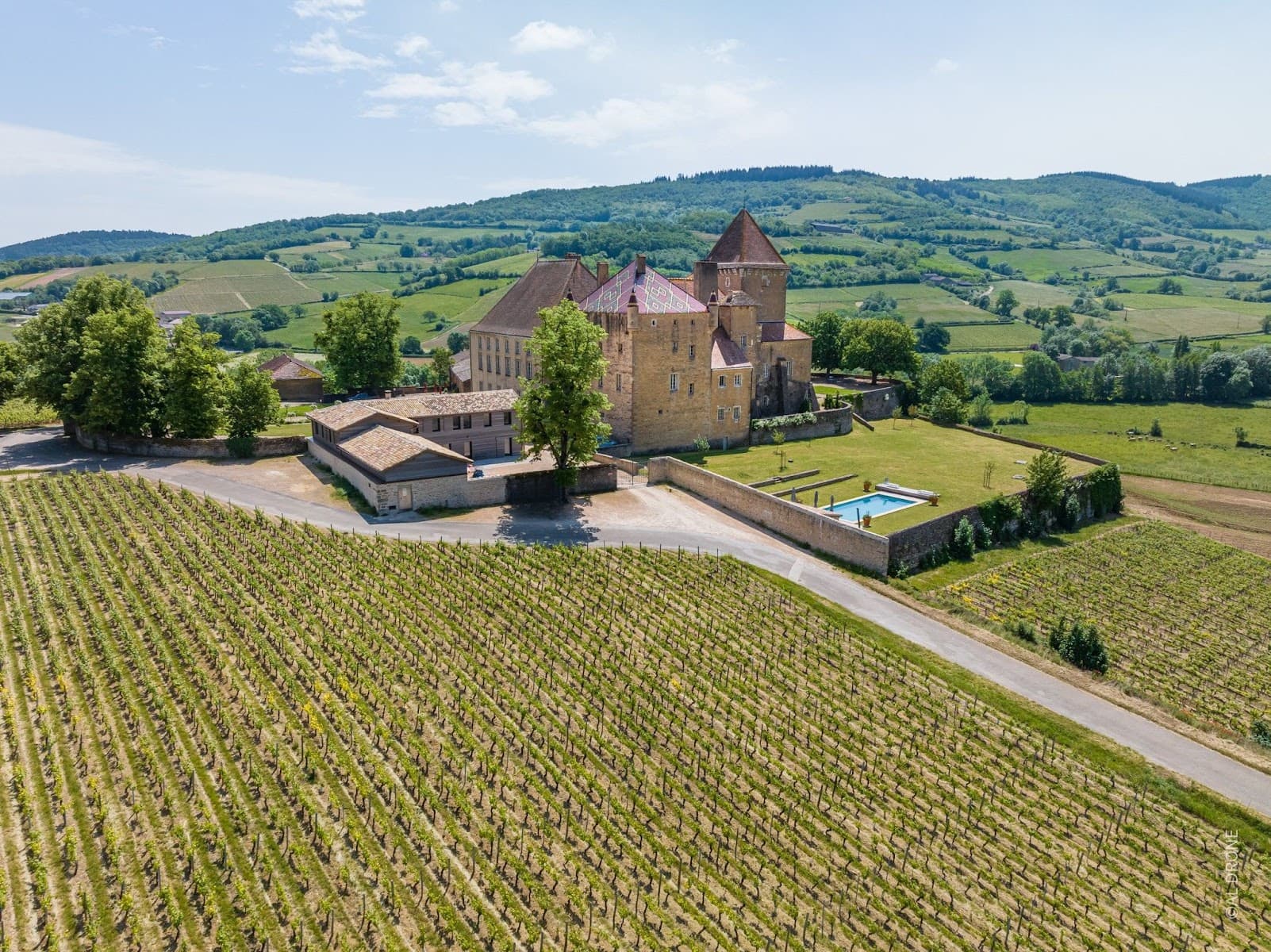
The Mâconnais gives you Burgundy at a slower pace, and puts the Côte Chalonnaise within comfortable reach for a day of tasting.
Guest House
4.8(16 reviews)
Le Hameau De Blagny
Burgundy, France
Starting from
$520 /night
Hotel
4.6(483 reviews)
Castle Pierreclos
Burgundy, France
Starting from
$151 /night
Burgundy's village-level stock is small and books out early for September and October. If your trip is tied to harvest, treat the booking as the fixed point and build the tasting itinerary around it, not the other way round.
And if Bordeaux is next on your list
Michelin has said Bordeaux is one of the two founding regions of the programme, so the selection is coming even though the date has not been confirmed. Bordeaux is also the easier region to visit: the estates are larger, receiving guests is long established, and winery hotels are woven into the landscape in a way they simply are not in the Côte de Nuits.
Pessac-Léognan, a short drive from the city of Bordeaux — vines and cellar door in the same frame, which is rarely how Burgundy works.
Saint-Émilion is the other obvious base, and it carries a useful lesson for anyone learning to read wine badges: the village has its own classification, revised periodically, which is separate from the 1855 Médoc classification and separate again from Cru Bourgeois. Three different instruments, three different meanings — the same trap the grape now adds a fourth layer to. If you enjoy untangling this sort of thing, our guide to Italian wine classifications works through the same problem in a different country.
Saint-Émilion runs its own classification, revised periodically — one more badge to keep separate from the 1855 list, from Cru Bourgeois, and now from the grape.
Hotel
4.7(1,573 reviews)
Les Sources de Caudalie
Bordeaux, France
Starting from
$265 /night
Hotel
4.9(20 reviews)
Clos de la Barbanne
Bordeaux, France
Starting from
$284 /night
You can browse the full set of French properties in our France collection, or work outwards from the directory if your plans are still open.
The short version
The MICHELIN grape is a serious, transparently criteria-based assessment of wine producers, backed by a company that has quietly owned the world's best-known wine-scoring publication since 2019. It is genuinely useful if you are deciding what to buy, or which villages deserve your attention on a trip.
It is not a hospitality rating, not a hotel rating, not a restaurant rating and not a promise that anyone will open the door. For those questions you need the estate's own visits page, a hotel rating that actually measures hotels, and a plan built around a place to sleep. The grape tells you where the good wine is made. The rest of the trip is still yours to design.
Sources & Further Reading
Every figure, definition and date below was taken from the organisation that issued it — the Michelin Group's own corporate press releases for the rating system and the Burgundy results. The selection is an annual exercise, so treat the counts and the list of estates as current at the time of publication rather than permanent.
Michelin — the 2 December 2025 press release as a PDF — the version that shows the symbol itself. Source for the fact that the grape uses the same red florette as the restaurant stars, repeated one to three times, and that the Selected level carries no symbol at all.
Michelin — press release, 7 July 2026: the first grape selection in Burgundy — source for the Dijon venue, the totals (9 / 20 / 33 / 32, 94 in all), the three sub-regions covered, the full list of nine Three-grape estates, and the note that Lalou Bize-Leroy is the only grower with two estates at the top level.
Decanter — Michelin Guide buys The Wine Advocate — source for the 40% stake taken in 2017, the announcement of full ownership on 22 November 2019, and the detail that Robert Parker Jr had formally retired from reviewing for the publication about six months earlier.

 Alex OssoSep 8, 2026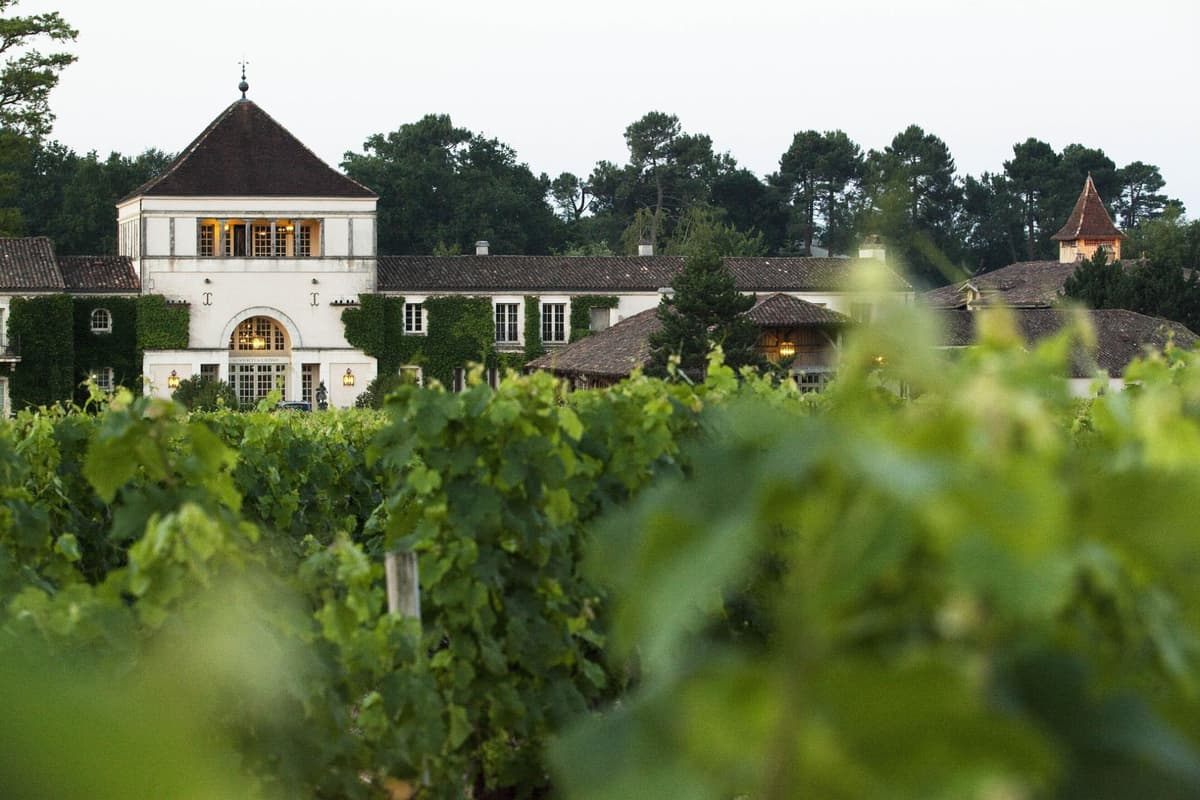
 Build your own directory