Michelin named 94 Burgundy estates. We opened 33 of their websites: two sell a visit online, and none of the nine top domaines publish a bookable tour.
On 7 July 2026, at the Palace of the Dukes of Burgundy in Dijon, the MICHELIN Guide published its first-ever grape selection. Ninety-four wine estates were recognised: nine at Three grapes, twenty at Two, thirty-three at One, and thirty-two in the fourth tier the Guide calls Selected. Those are the numbers every write-up led with, and they are the last time this article will repeat them.
What almost nobody did was open the list and ask where the ninety-four actually are. Do that, and a very specific picture of Burgundy emerges — one that is much narrower than the region itself, weighted heavily toward a handful of villages, and revealing in what it quietly omits. For anyone planning a trip through this stretch of wine country, the geography is far more useful than the ranking.
If you have not met the distinction before, the mechanics — the five criteria, the four tiers, who the inspectors are, and why a grape is not a Star, a Key or a wine-tourism award — are covered in full in our explainer on what the MICHELIN grape is. This article assumes that groundwork and goes straight to the map.
Where the ninety-four actually sit
Michelin's own release organises every tier by sub-region, which makes the totals countable. Add them up and the distribution is lopsided in a way the headline figures hide.
Côte de Beaune — 52 estates. Four at Three grapes, twelve at Two, thirteen at One, twenty-three Selected. More than half the entire selection.
Côte de Nuits — 39 estates. Five at Three grapes, six at Two, twenty at One, eight Selected.
Côte Chalonnaise — 3 estates. Two at Two grapes, one Selected, and nothing at all in the One-grape tier.
Read that against the received wisdom and it inverts it. The Côte de Nuits is the slope the auction market worships, and it does take five of the nine top places. But the Côte de Beaune supplies the volume — fifty-two of ninety-four — and it dominates the two tiers most travellers can realistically drink from. The Guide's own framing of the top tier is that Three grapes fell across both slopes, "reaffirming the status of these two slopes as Burgundy's ultimate touchstone territories." The tiers underneath tell a less even story.
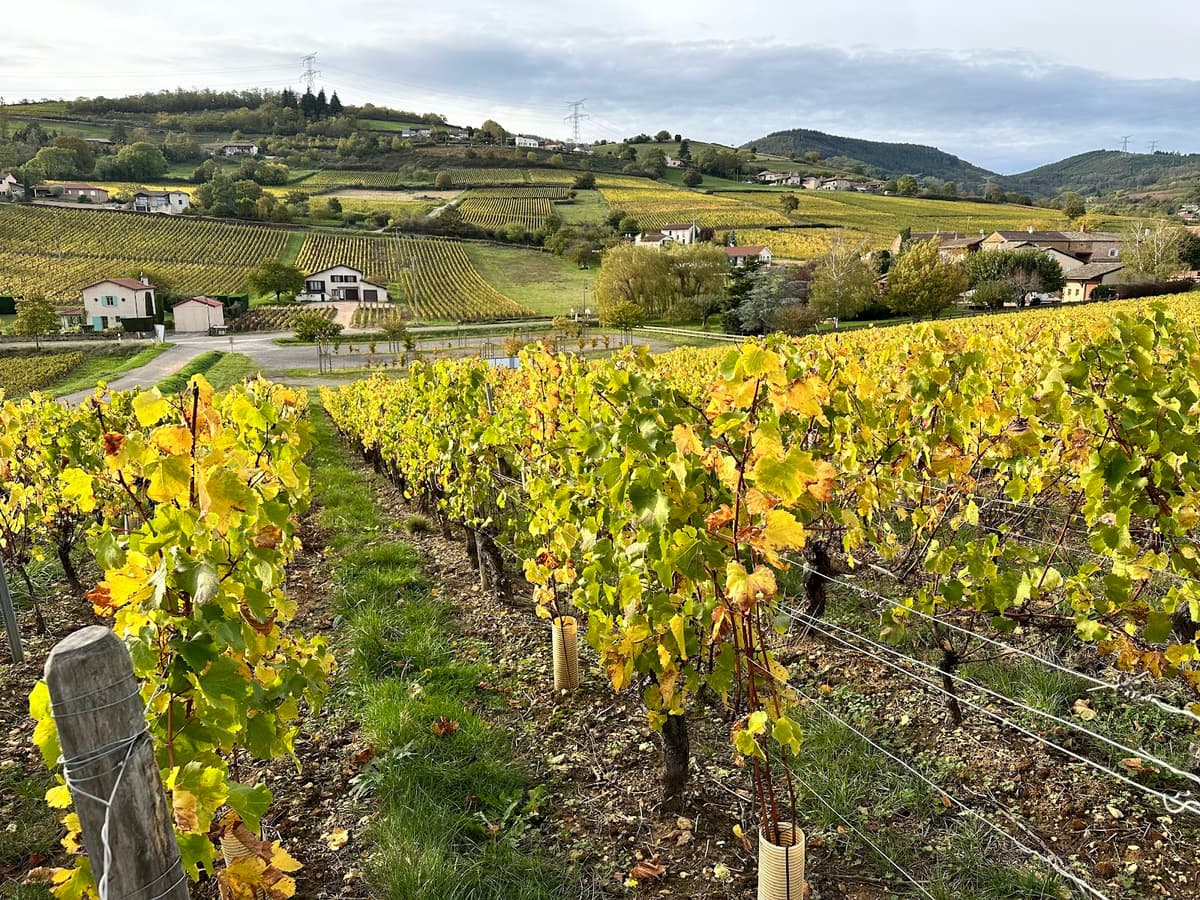
Late-season vines in southern Burgundy. The 2026 selection maps only three slices of the region — this one is not among them.
The village concentration is the real headline
Go one level finer than the sub-region and the clustering gets sharper still. Counting only the estates Michelin's release explicitly places in a village:
Meursault accounts for at least fifteen of the ninety-four — one at Three grapes (Coche-Dury), one at Two (Domaine des Comtes Lafon), five at One, and eight in the Selected tier. No other village comes close.
Gevrey-Chambertin takes nine, spread across all four tiers.
Vosne-Romanée takes eight, including two of the nine Three-grape estates.
Volnay takes five — one at the top and four at One grape — which for a village of its size is a striking density.
A traveller can use this directly. The selection is not a scatter across two hundred kilometres of vineyard; it is dense in a handful of communes that sit within a short drive of one another. Meursault, Puligny-Montrachet, Saint-Aubin, Chassagne-Montrachet and Volnay are close enough that a single base serves all of them, which is exactly why the Côte de Beaune is the practical centre of gravity for a wine tour built around this list.
These figures are annual
Michelin has said the grape selection will be reviewed and republished. Every count in this article is drawn from the inaugural 2026 release; check the Guide's current publication before relying on any of it for a future edition.
Why the Côte Chalonnaise got exactly three
Three estates out of ninety-four is a rounding error, and it is worth sitting with. The Côte Chalonnaise is a real winegrowing area with its own appellations, and Michelin included it in the scope of the selection — yet it came away with two estates at Two grapes and one Selected, and a complete blank at One grape.
The three are Bruno Lorenzon in Mercurey, Dureuil-Janthial in Rully, and Maxime Cottenceau in Montagny. The Guide's own description of Dureuil-Janthial is the tell: Vincent Dureuil, it writes, has demonstrated "that well-sited, carefully cultivated vineyards can produce wines of near–grand cru quality." That is a compliment framed entirely in terms of the Côte d'Or benchmark. Cottenceau, for his part, trained for three years under Dureuil before taking over family vineyards in Montagny that had previously gone to the local cooperative.
Whether three is too few is a judgement about Michelin's calibration, not a fact we can settle. What is factual and useful is the practical consequence: the Chalonnaise remains the part of Burgundy where a visitor is most likely to find an unhurried tasting room and a winegrower with time to talk, precisely because it has not been swept up by the same attention.
A route worth considering
Rully, Mercurey and Montagny sit roughly twenty to thirty minutes south of Beaune. If the Côte de Beaune is booked out — and in September it usually is — the Chalonnaise is close enough to serve as a base rather than a compromise.
What the map leaves out
This is the omission that matters most, and it is easy to miss because Michelin never framed it as one. The 2026 selection covers the Côte de Nuits, the Côte de Beaune and the Côte Chalonnaise. That is it.
Burgundy is a great deal larger. The Bourgogne Wine Board (BIVB), the region's own interprofessional body, counts exactly 84 Appellations d'Origine Contrôlée across roughly 28,715 hectares stretching from Auxerre in the north to the Mâcon region in the south, and it presents the vineyard in winegrowing areas that also include Chablis and the Grand Auxerrois, the Mâconnais, the Châtillonnais, and the Hautes Côtes above both main slopes. None of those appear in the grape selection at all.
So no Chablis. No Pouilly-Fuissé. No Saint-Véran, no Viré-Clessé, no Crémant de Bourgogne from the Châtillonnais. Whole appellations that most drinkers would name in their first ten guesses about Burgundy are simply outside the frame. Michelin has not said these areas were assessed and passed over; it defined a narrower scope from the outset. That is a meaningful distinction, and it is the difference between reading the selection as a verdict on Burgundy and reading it as what it is — a first, partial survey.
Absence is not a judgement
An estate's absence from the 2026 selection tells you nothing about its wine if the estate sits outside the three areas Michelin covered. A Mâconnais or Chablis producer had no opportunity to be included.
The organic question, counted honestly
Michelin's first published criterion is "the quality of agronomy," which the Guide defines as an assessment of "the vitality of the soil, the balance of the vine stocks as well as the care provided for the vines." That wording invited an obvious question, and independent commentators asked it: if soil vitality is criterion number one, how much organic and biodynamic farming does the selection actually reward? One such analysis, published by the natural-wine site The Grape Reset, put the share at a little over a fifth and called the result a missed opportunity. That is an independent count against no published register, so we cannot verify it, and we are not repeating its figure as fact.
What can be verified is what Michelin itself chose to write. Read the release line by line and thirteen of the ninety-four estates are described by the Guide, in its own prose, as farming organically or biodynamically — from Domaine de la Romanée-Conti "farmed biodynamically" to Sylvain Pataille ploughing by animal traction to Domaine Felettig taking its first organic certification with the 2024 vintage. Of those thirteen, five sit in the nine-estate top tier: Cécile Tremblay, Dugat-Py, Domaine de la Romanée-Conti, Domaine Leroy and Domaine d'Auvenay.
Two caveats keep that honest. The release gives narrative paragraphs to some estates and lists others by name only, so an estate mentioned in passing gets no farming description either way — this counts what Michelin wrote, not what every estate does. And the published methodology does not require organic or biodynamic certification; it assesses vine care, not paperwork. A grape is not, and was never presented as, a sustainability mark.
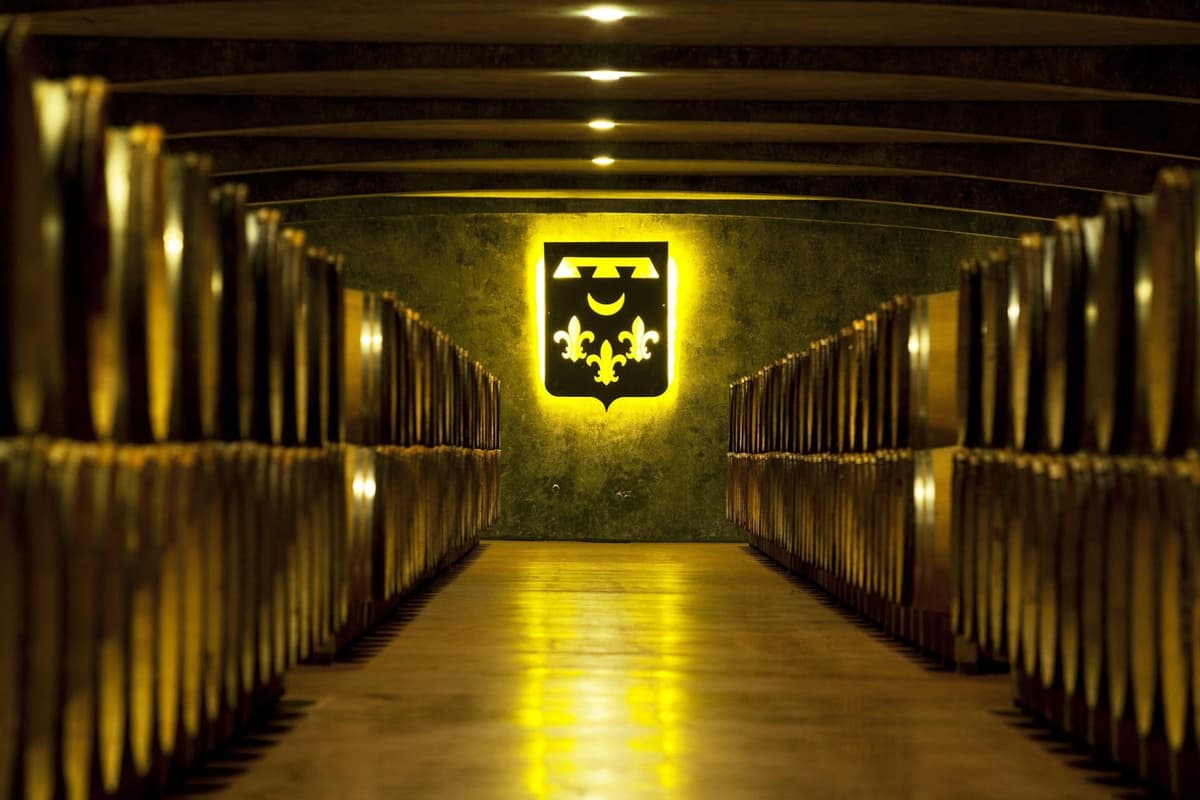
Barrel cellar in a Burgundian estate. Two of Michelin's five criteria — technical mastery and balance — are decided in rooms like this one.
The estate that asked to be taken off the list
One name in the One-grape tier came with a public objection. Arnoux-Lachaux, in Vosne-Romanée, formally asked to be removed from the Guide, stating that since 2020 it has deliberately chosen not to submit wines for press reviews or ratings, and that it did not know how its rating could have been established given it had neither received Michelin nor presented wines to the press since the 2020 vintage. The episode was reported by the drinks business on 15 July 2026.
It is a small story with a large implication for how you read any rating. Michelin's grape, like its Stars, is awarded rather than applied for — an estate does not opt in, and cannot straightforwardly opt out. The wider context of that model, and how it sits alongside the Wine Advocate scoring system Michelin's parent group also owns, is covered in our first article in this series.
What a traveller should actually do with the list
Here is the part the coverage skipped almost entirely. The grape rates winemaking. It carries no information about whether an estate receives visitors, runs a tasting room, or has a booking page — and at the top of this particular list, most do not. Turning up in Vosne-Romanée with a printout of the Three-grape estates is a plan for a disappointing afternoon.
A better plan uses the region's own visitor infrastructure, which is unusually good. The Cité des Climats et vins de Bourgogne runs three sites — Beaune, Chablis and Mâcon — each with an immersive tour that ends in a tasting of two glasses. Beaune is the largest and handles the region's history and heritage as a whole, while the Mâcon site covers precisely the areas the grape selection left out: the Mâconnais, the Côte Chalonnaise and the Côtes du Couchois. The École des Vins de Bourgogne holds tastings inside the Cités, and the BIVB's Vignobles & Découvertes scheme flags estates, cooperatives and négociant houses that are genuinely set up to receive guests.
Book the estate visits, not the ratings. Start from who publishes a visit or booking page, then cross-reference the selection — never the other way round.
Use the négociant houses. Several appear in the selection — Joseph Drouhin and Louis Jadot in Beaune at One grape, Albert Bichot and Bouchard Père & Fils among the Selected — and négociant houses are, as a category, far more geared to receiving visitors than small family domaines.
Give the Climats their own half day. The Climats of Bourgogne are inscribed on the UNESCO World Heritage list, and the dedicated space in the Beaune Cité explains the parcel logic that makes the rest of the region legible.
September is the exception, not the rule
Harvest is the worst time to expect a leisurely cellar visit and the best time to see the region working. Decide which of the two you came for before you build the itinerary — and if it is the harvest, book the room months ahead.
Where to stay for the Côte de Beaune
Because the selection concentrates so heavily in the Côte de Beaune, and Meursault in particular, lodging between Meursault and Puligny-Montrachet puts you inside the densest part of the map. Blagny is the hamlet that straddles the boundary between those two communes — which makes it about as central a base as the geography allows for this kind of vineyard stay.
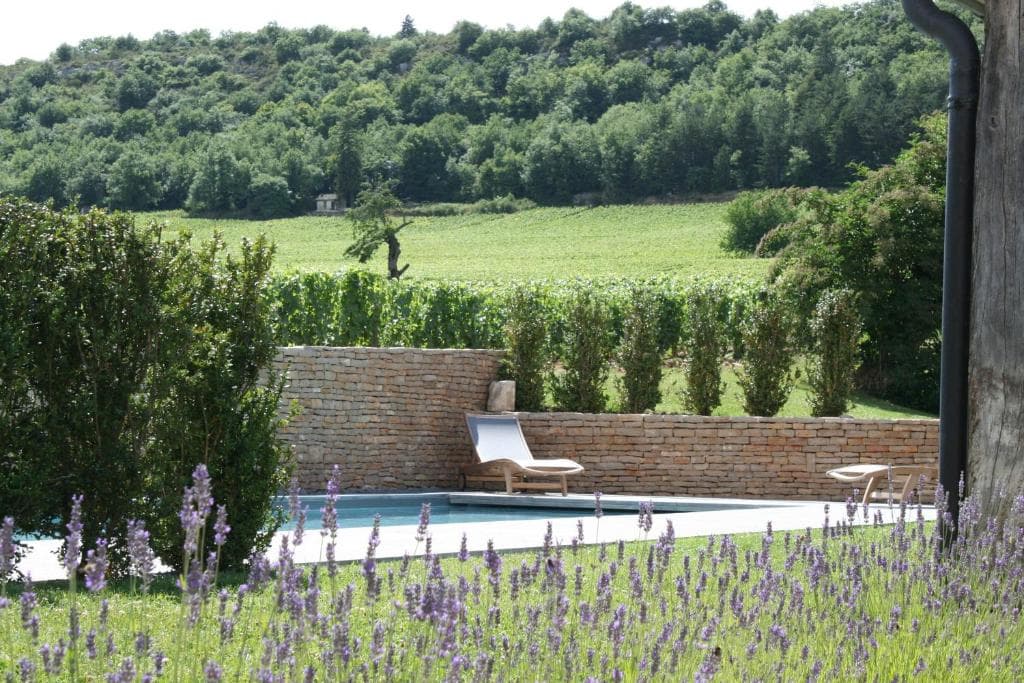
Le Hameau de Blagny, between Meursault and Puligny-Montrachet. The property is not part of the MICHELIN grape selection, which rates producers rather than places to stay.
Guest House
4.8(16 reviews)
Le Hameau De Blagny
Burgundy, France
Starting from
$520 /night
Further south, the Mâconnais offers a different proposition: outside the selection entirely, considerably quieter, and priced accordingly. Both properties below sit among working vines in Saône-et-Loire, within reach of the Côte Chalonnaise appellations and about an hour from Beaune. If your reading of this article is that the interesting Burgundy is the one the map missed, this is where to start looking for winery hotels in Burgundy.
The Mâconnais from the air — vines to the boundary wall, and no MICHELIN grape within fifty kilometres.
Hotel
4.6(483 reviews)
Castle Pierreclos
Burgundy, France
Starting from
$151 /night
For the full picture of what is bookable across the country, our France collection covers every region we list, and the World's 50 Best Vineyards explainer covers the one major ranking that does measure how an estate receives visitors — which is the question the grape deliberately does not answer.
Sources & Further Reading
Every count in this article was made from Michelin's own 7 July 2026 release rather than from secondary coverage. The selection is republished periodically and the appellation figures are revised, so treat all numbers as belonging to the dates given.
 Alex Osso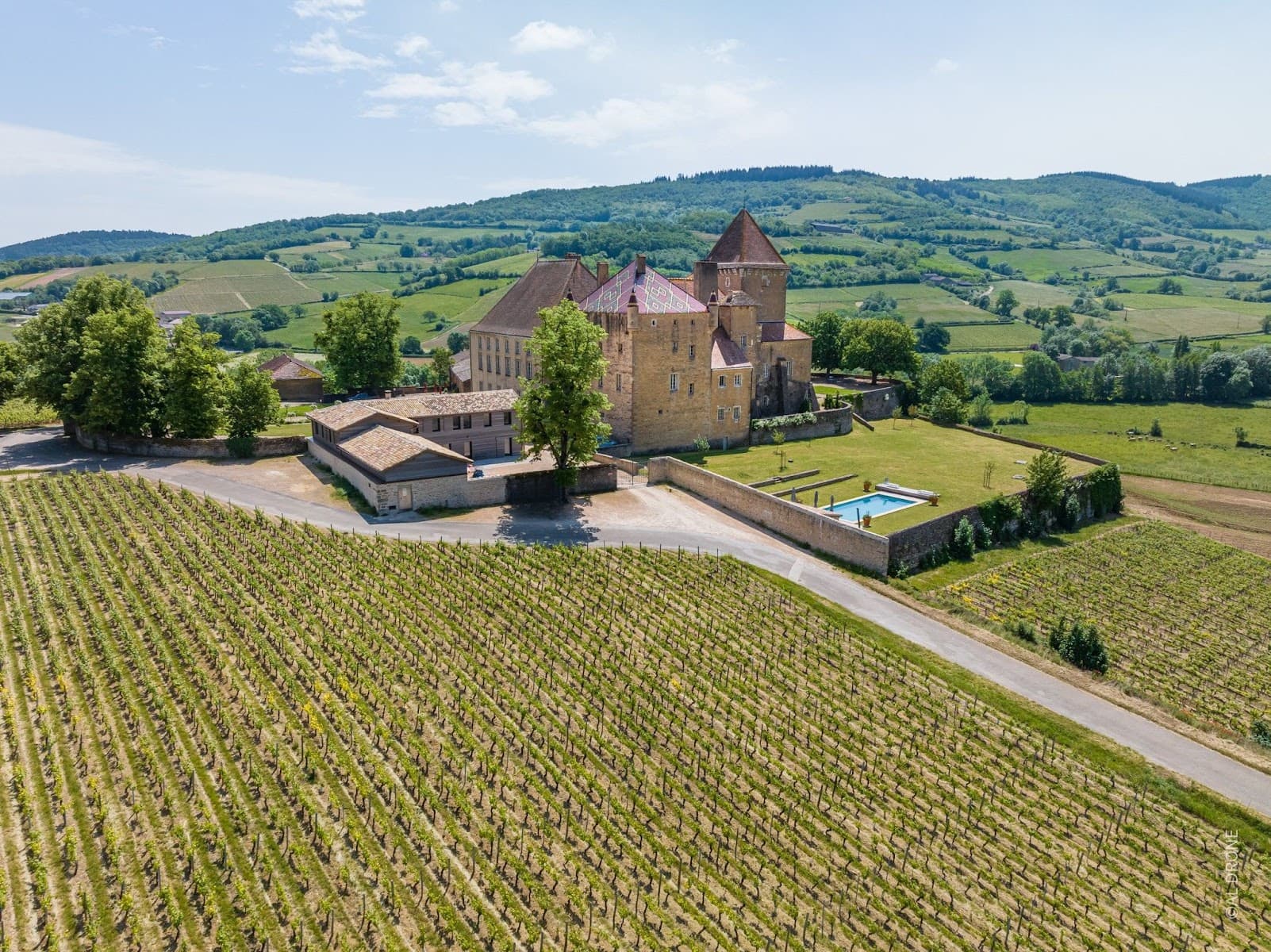

 Build your own directory