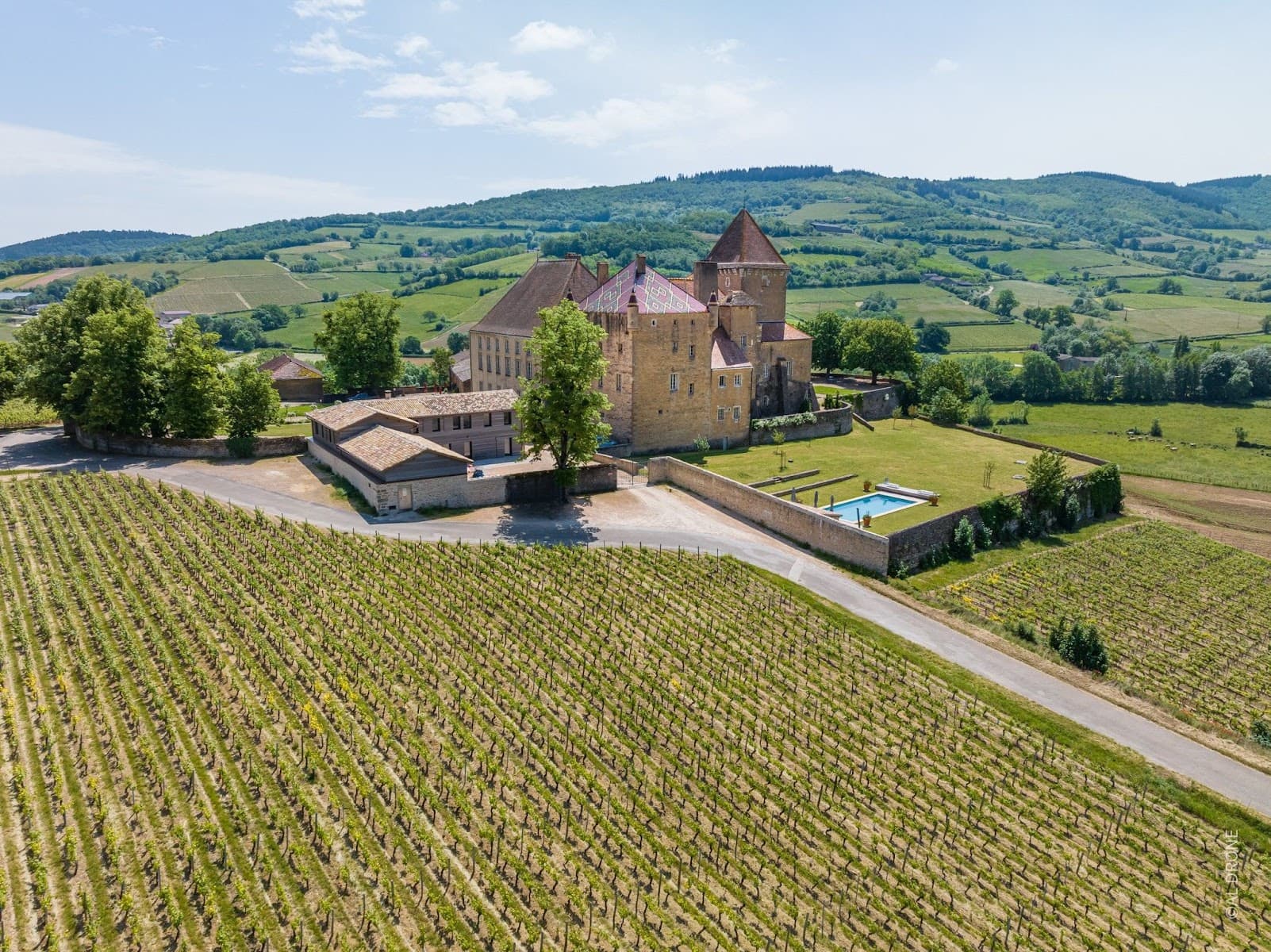
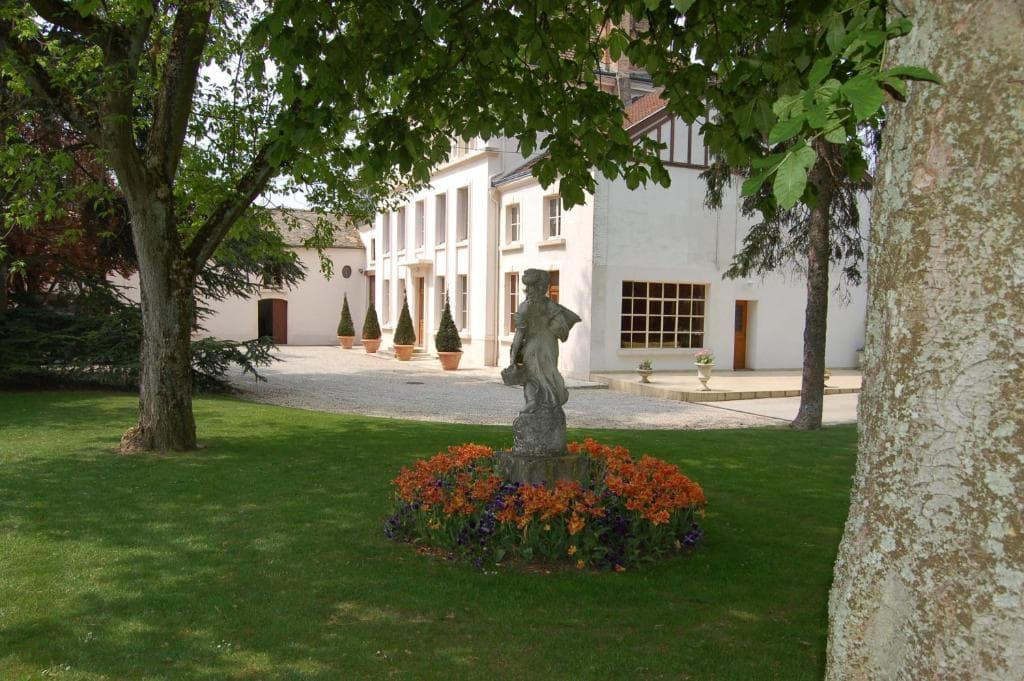
Michelin named 94 Burgundy estates. We opened 33 of their websites: two sell a visit online, and none of the nine top domaines publish a bookable tour.
A «Parker point» is a score out of 100 published by Robert Parker Wine Advocate, the subscription wine review that Robert M. Parker Jr founded in 1978 and whose 100-point rating system he created with its first issue. The phrase is colloquial and, today, slightly misleading: Parker himself formally retired from reviewing wines for the publication on 16 May 2019. Scores published since then are the work of the publication's reviewers, each responsible for named regions.
If you take one thing from this article, take this: a score answers one narrow question — how good is this wine, in this critic's judgement, relative to its peer group? It does not answer whether the estate opens its gate, whether there is a bed on the property, whether the bottle you will be poured in the tasting room is the vintage that earned the number, or whether you will personally enjoy it. Those are four different questions, and planning a trip through wine country on the strength of a number is the fastest way to arrive somewhere closed.
What follows is where the scale came from, who assigns the numbers now, what the man who invented the scale said about reading it, the one distinction the same publication awards to estates rather than bottles, and how a traveller should actually use any of it.
A score printed on a producer's own website, on a shelf-talker or in a merchant's catalogue is a marketing claim until you have checked it. The only authoritative place to confirm a Wine Advocate number is robertparker.com, where the reviews live. We do not quote specific scores in this article for exactly that reason.
Where the number came from
The origin story is unusually well documented, because the publication has told it itself. Parker first travelled to France in 1967, following a young woman studying in Alsace — she became Patricia Parker — and discovered wine on that trip. He graduated from the University of Maryland School of Law in 1973 and went to work as a lawyer in Baltimore, but he had been turning over the idea of his own wine guide since the late 1960s.
The trigger was Ralph Nader. Parker, reading the American consumer advocate in the early 1970s, concluded that most of what was then written about wine came from people with a financial interest in selling it. He wanted a publication funded purely by its subscribers, with no advertising and no trade money. In 1978, still practising law and backed by a small loan from his mother, he launched The Baltimore-Washington Wine Advocate. It was renamed The Wine Advocate in 1979.
What made it famous was a disagreement. In 1983, Parker published enthusiastic reviews of the 1982 Bordeaux vintage, tasted from barrel at the properties. Most established writers of the day held that the wines were too ripe and too approachable young, and would therefore not age. Parker's readers bought accordingly, and by the time the wines were bottled the argument had been settled in his favour. In 1984 his subscriber numbers were large enough that he left the law. By 2019 the publication reported subscribers in every US state and in more than 40 countries.
Most travellers meet scores here — on a shelf-talker in an estate shop, long after the tasting that produced them. The boutique at a Bordeaux property in our catalogue.
Who assigns the number today
Two changes matter, and both happened within eighteen months of each other.
The first is editorial. Parker's retirement was announced on 16 May 2019 by the publication's then editor-in-chief, who described him as «formally hanging up his wine criticism boots». Since then, the reviews carry other names. Each reviewer is responsible for a defined territory, so «a Wine Advocate score» is really shorthand for «a score from the reviewer who covers that region». The right follow-up questions are which reviewer, and in which year.
The second is corporate. Michelin bought 40% of the publication in 2017 and became its sole owner in 2019 — which is why the MICHELIN grape and the «Parker point» now belong to the same company. We covered that in detail in our guide to what the MICHELIN grape is, so we will not repeat it here.
The scale of the operation is worth knowing too, because it explains what a score can and cannot be. The publication has said that each of its reviewers submits on the order of 4,000 tasting notes a year. Its Italy reviewer put the arithmetic bluntly in 2018: eleven wines a day, including Sundays, birthdays, Christmas and New Year, and eighty-eight waiting on the desk after a week off. A number produced at that cadence is a professional judgement made quickly and comparatively — which is exactly what it claims to be, and nothing more.
Be especially careful with the word «Parker» on a label or in a listing. Since 2019 the person has not been the reviewer, and the publication's own reviews are behind a subscription. If a number cannot be traced to robertparker.com, treat it as a claim rather than a fact.
What the scale measures — in its inventor's own words
The most useful thing ever written about how to read a wine score was written by the man who invented this one, and printed in the small type where nobody reads it. Parker's line, long carried on the cover of the print edition and on the website, is quoted above in his card: a score places a wine against its peer group, and the description of style, personality and potential matters just as much.
There is a second line, which the publication says appeared on the cover of every issue until 2017 and still stands on the site: «However, there can never be any substitute for your own palate nor any better education than tasting the wine yourself.» For a directory of vineyard stays, that sentence is close to a mission statement. The scale's creator put the reader's own glass above his own number, on the cover, for four decades.
The publication's own editors have made the same argument at length. In a 2017 defence of tasting notes, its then editor-in-chief wrote that «buying wines purely by numbers robs wine lovers of a chance to know a wine better before they buy it», and pointed out the obvious gap: a score cannot tell you whether a wine is dry or sweet, full-bodied or delicate, youthful or over the hill, tannic or soft and juicy. You could buy a 95-point wine and dislike it, simply because it is not the style you like. That is not a failure of the score. It is a category error about what the score is for.
Two more details from the publication give the number its proper shape. Every review carries an anticipated drinking window, which is a statement about time, not just quality. And the top of the scale is openly part-subjective: the publication has quoted Parker to the effect that a 100-point wine is 90% the tasting quality of the wine and 10% pure emotion, and its managing editor noted in 2018 that wines with that kind of potential are rarely tasted blind, if at all.
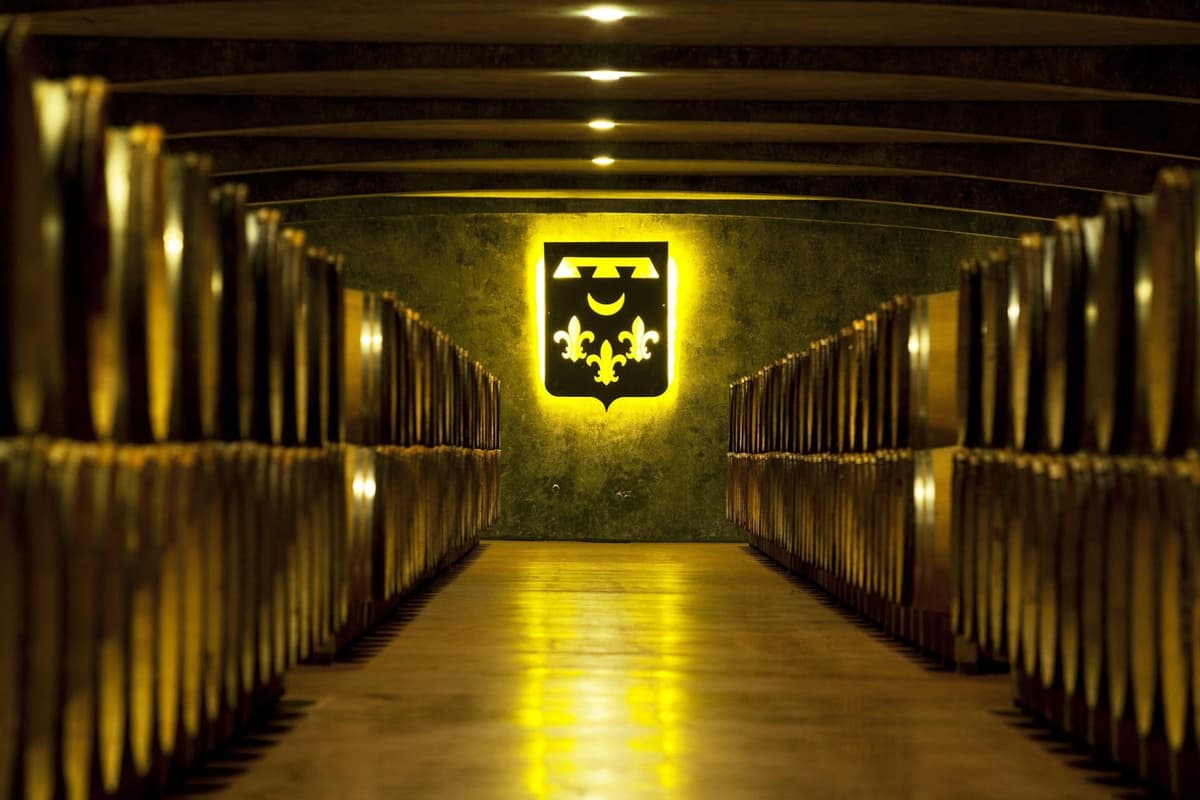
A score is a verdict on liquid that spent years in a room like this one, and it is delivered in a single sitting. Barrel cellar in the Mâconnais, southern Burgundy.
Four things a score does not tell a traveller
Whether you can visit. Nothing in the rating process requires an estate to receive the public. Some of the most highly rated addresses in Burgundy and Bordeaux have no tasting room and no visit booking page at all.
Whether you can sleep there. Lodging is a separate business from winemaking, and most great estates are not in it.
Which vintage you will be poured. The score belongs to one vintage. The tasting room is usually pouring a different one.
Whether you will like it. The score ranks quality within a peer group; it says nothing about whether that style suits your palate.
The vintage point is the one that catches people out most often. A rating is a photograph of one bottle at one moment, with a drinking window attached. Two years later the same cuvée from a different harvest is a different wine, made in a different season, and it carries its own review or none at all. Arriving at a cellar door quoting a number from four vintages ago is a good way to be gently corrected by the person pouring.
One label, many vintages. A score attaches to a single harvest — not to the name on the bottle. Clos de la Barbanne, Montagne-Saint-Émilion, Bordeaux.
When you book a tasting, ask which vintages will be open rather than which scores the estate holds. It is a more useful question, it is one the estate can actually answer, and it tends to get a warmer response.
«Parkerization», and why the publication rejects the word
No account of wine scores survives contact with the internet without meeting the term Parkerization — the claim that producers worldwide reshaped their wines into a ripe, concentrated «international style» in order to chase high scores. It is worth knowing that Robert Parker Wine Advocate has published a detailed rebuttal, and worth knowing equally that the publication is an interested party.
The rebuttal, published on 12 June 2018 by the then editor-in-chief — who opened it by declaring her own bias outright — argues that consumer taste moved first and the scores followed. Its sharpest piece of evidence is a counter-example drawn from the publication's own database: across Parker's career, Alsace has one of the highest proportions of wines he rated 95–100, at 14.2% — ahead of California at 10.9%, the Rhône at 6.5% and Bordeaux at 5.3%. If high scores alone drove plantings and styles, the argument runs, the 1980s and 1990s should have produced a global wave of Riesling and Gewürztraminer imitators. They did not. More than 87,000 of Parker's reviews, those written since 1992, sit in the publication's searchable database for anyone with a subscription to check.
You do not have to accept the conclusion to find the numbers useful. What they establish is that the relationship between critics, styles and markets is a good deal messier than a slogan — and that regional style shifts over decades are real. Which is an argument for going and tasting: a region you decided you disliked in 2005 may not make that wine any more.
The Green Emblem: the one mark that rates the estate, not the bottle
There is one distinction from the same publication that behaves differently, and it is the one most relevant to anyone planning wine tourism. The Robert Parker Green Emblem is awarded to a producer, not to a wine, for sustainability. Launched in 2020 as an annual distinction, it is assessed as a holistic matter across three areas the publication names explicitly:
Viticulture and winemaking — farming techniques, soil health, biodiversity.
Organisation and facility — energy sources, waste management, packaging policy, carbon footprint.
Ambassadorial role — estates that share their approach with their communities and help build a sustainable culture.
Once a winery holds it, all of its wines may carry the Emblem going forward, until changes at the estate cause it to be rescinded. That is a meaningfully different instrument from a score: it attaches to the place and the practice rather than to a single harvest.
The numbers, as published with the 2023 selection on 13 October 2023: 50 wineries in total since the launch, of which 11 were added that year. Counting the published list by country gives France 13, the United States 9, Italy 8, then Australia, Germany, Portugal, South Africa and Spain on 3 each, Austria on 2, and Argentina, Chile and New Zealand on 1 each — twelve countries in all. France alone accounts for roughly a quarter of the list.
The 2023 write-ups are worth reading for the specifics rather than the label. Petrolo was recognised in part for its work towards making the Valdarno di Sopra DOC in Tuscany the first certified-organic wine appellation in Europe. San Salvatore 1988 in Campania has become self-sufficient on renewable energy with solar panels and biogas. Clemens Busch in the Mosel harvests by hand and uses very low quantities of sulphur. Filipa Pato in Portugal uses pigs to aerate and fertilise the soil; Pingus in Castilla y León uses cows. Emiliana in Chile is described as the largest biodynamic winery in the world, and Chacra in Patagonia was cited for cover cropping and for building what amounts to a small village around the vineyard with its partners.
One cross-reference is genuinely interesting for anyone following the MICHELIN grape. At least two Green Emblem holders also appear in the Guide's first grape selection for Burgundy, published in July 2026: Domaine Leroy, one of the nine estates at the three-grape level, and Domaine Bruno Lorenzon in Mercurey, one of only three estates distinguished in the Côte Chalonnaise. We mapped that selection in full in our guide to the Burgundy grape map. But note what still has not changed: neither mark says anything at all about whether those estates receive visitors.
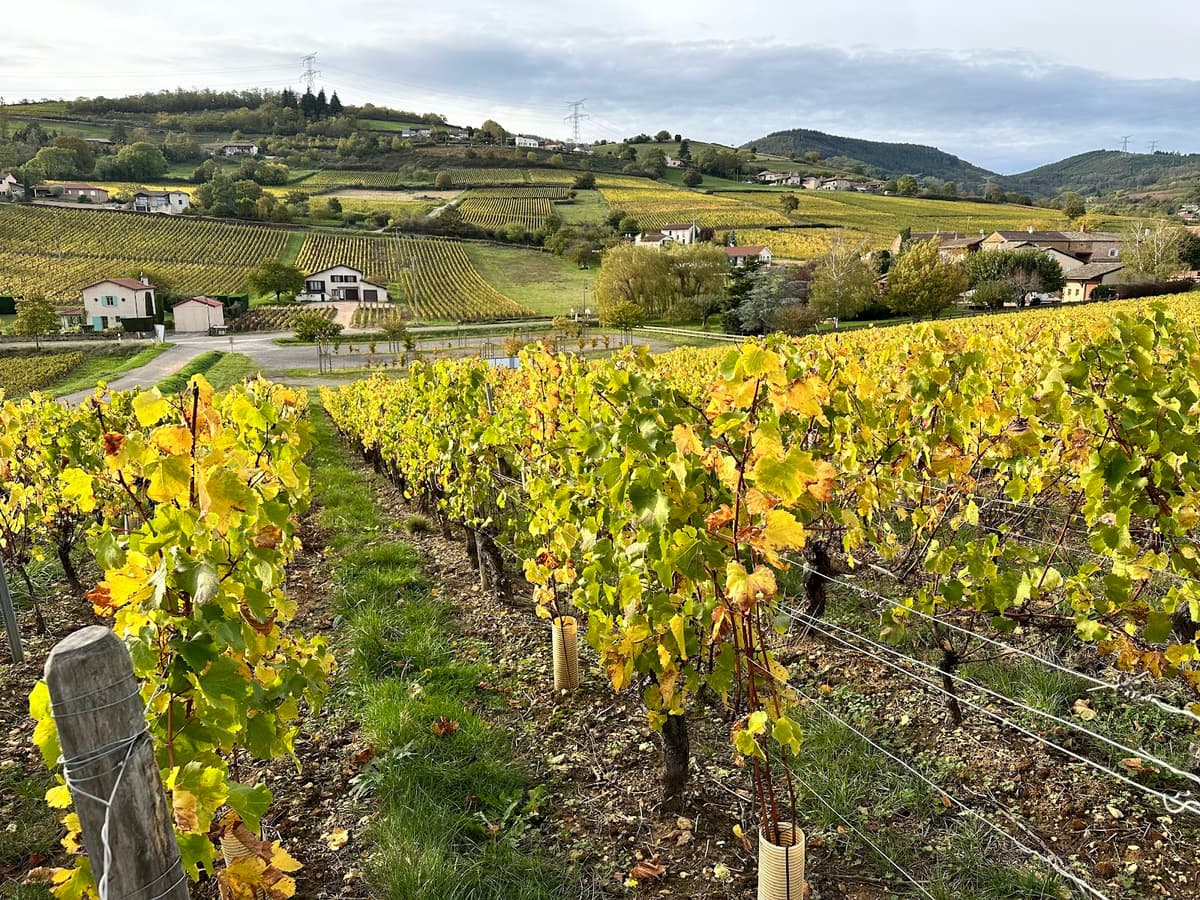
Soil health, biodiversity and farming practice are what the Green Emblem looks at — the vineyard rather than the vintage. Vines in the Mâconnais, southern Burgundy.
The Green Emblem is annual, so the count moves. The 50-winery figure above is the total published with the October 2023 selection; we could not verify a more recent published count through sources open to us, so treat it as a floor rather than a current tally and check the publication's own list before quoting it.
Five marks, five different questions
A traveller planning a week among winery hotels now faces a shelf of symbols, several of them owned by the same company and none of them measuring the same thing. Sorted by the question each one answers:
A 100-point score — how good is this wine, relative to its peer group, in one reviewer's judgement, in one vintage.
The Robert Parker Green Emblem — how seriously does this producer farm and operate, sustainably, as a business.
The MICHELIN grape — how good is this estate at making wine, across its range.
The MICHELIN Key — how good is this hotel as a place to stay. MICHELIN Stars, separately, are for restaurants.
Only the last pair is a travel signal. Everything else is about the wine, the farming or the bed.
How to plan the trip instead
A working method that does not depend on scores at all:
Start from the bed, not the bottle. Decide where you can sleep inside the region first; the tastings arrange themselves around it. That is what our catalogue of winery hotels is for.
Check the estate's own visit page. Not a review site, not a tour operator listing. If there is no booking page, assume there is no public visit and plan around it.
Pick the season deliberately. Harvest is thrilling and it is also the worst time to expect a leisurely tasting: everyone who would normally show you round is on the sorting table.
The most reliable predictor of a good tasting is not the estate's rating. It is whether the estate has a page explaining what a visit involves, in a language you read, with a way to book. That page tells you they want you there.
Where to stay in the regions behind the scores
A score will not get you through a gate, but staying inside the appellation usually will get you closer to one. These properties in our catalogue sit in regions that come up constantly in Wine Advocate coverage — Bordeaux and Saint-Émilion, southern Burgundy, Rioja, Tuscany, Champagne and Penedès — and they are places where the vineyard is the reason the hotel exists.
Hotel
4.7(1,573 reviews)
Les Sources de Caudalie
Bordeaux, France
Starting from
$265 /night
Hotel
4.9(20 reviews)
Clos de la Barbanne
Bordeaux, France
Starting from
$284 /night
Hotel
4.6(483 reviews)
Castle Pierreclos
Burgundy, France
Starting from
$151 /night
Resort
4.8(603 reviews)
Castello Banfi Il Borgo
Tuscany, Siena, Italy
Starting from
$642 /night
Hotel
4.6(49 reviews)
La Villa Champagne Ployez-jacquemart
Champagne, France
Starting from
$195 /night
Hotel
4.6(1,405 reviews)
Mastinell Cava & Boutique Hotel
Catalonia, Penedès, Spain
Starting from
$326 /night
Sleeping inside the appellation is a better plan than chasing a number. Vineyard lodging in Bordeaux.
Wherever you end up, the sentence to keep is the one the inventor of the 100-point scale printed on his own cover for forty years: there is no substitute for your own palate. A wine tasting in the cellar where the wine was made will teach you more in an afternoon than a column of numbers ever will.
Sources & Further Reading
Everything above is taken from Robert Parker Wine Advocate's own publications and from Michelin's corporate press material. Green Emblem figures are annual and were correct at the date of the release cited; individual scores are behind a subscription and are deliberately not quoted here. Verify any specific number on robertparker.com before repeating it.
Robert Parker Wine Advocate — A Tribute to Robert M. Parker Jr (16 May 2019) — the publication's own announcement of Parker's formal retirement from reviewing, and the source for the 1967 first trip to France, the 1973 law degree, the 1978 launch as The Baltimore-Washington Wine Advocate, the 1979 renaming, the 1982 Bordeaux controversy, the 1984 departure from law and the 40-plus-country subscriber base.
Robert Parker Wine Advocate — The Big Parkerization Lie (12 June 2018) — the publication's rebuttal of the Parkerization thesis, and the source for the Alsace 14.2% / California 10.9% / Rhône 6.5% / Bordeaux 5.3% comparison, the 87,000-plus reviews since 1992, the Ralph Nader influence, the loan from Parker's mother and the «no substitute for your own palate» cover line.
Robert Parker Wine Advocate — official site — the only authoritative place to verify a specific score, the reviewer roster and the current Green Emblem list. Reviews sit behind a subscription, which is why no individual score is quoted in this article.

 Alex OssoSep 8, 2026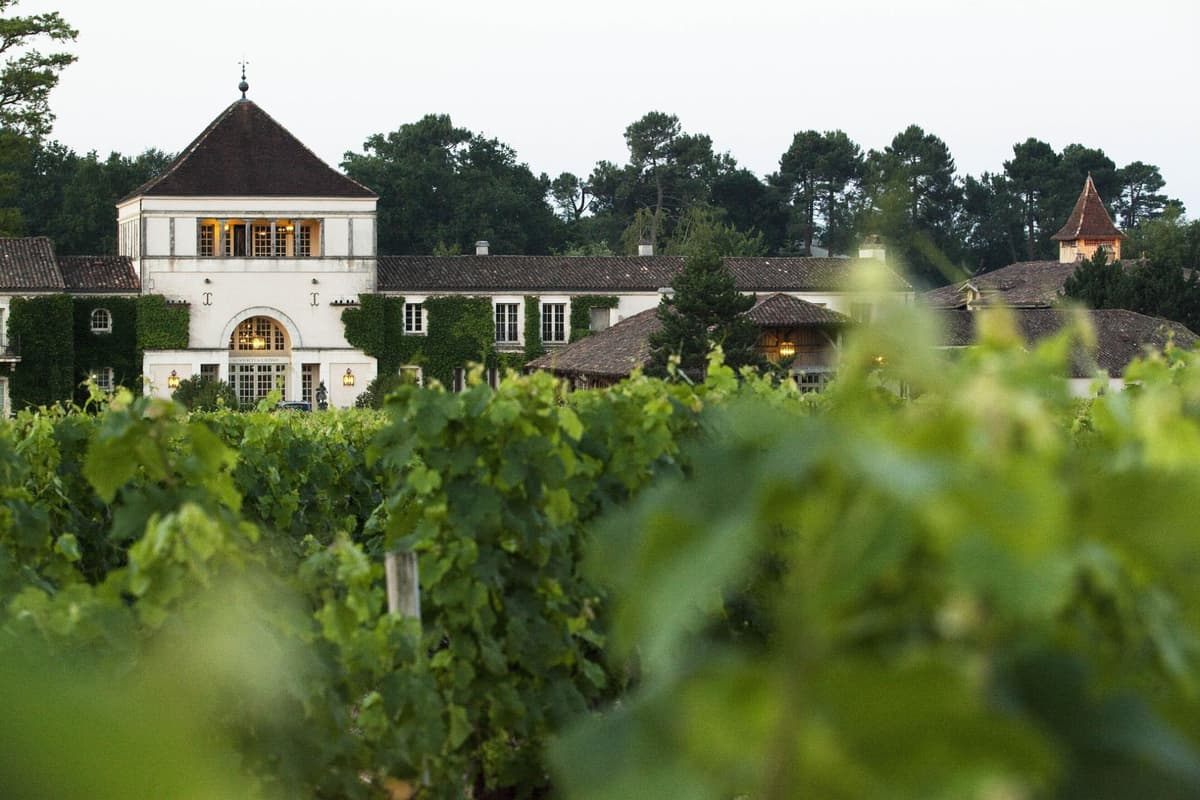
 Build your own directory