Michelin named 94 Burgundy estates. We opened 33 of their websites: two sell a visit online, and none of the nine top domaines publish a bookable tour.
One variety, 115 recorded names, three completely different rulebooks
A bottle from Montalcino says Brunello. One from Montepulciano says Prugnolo Gentile. One from the Maremma says Morellino. A Corsican label says Nielluccio, and an old Chianti estate may still write Sangioveto. Most visitors assume these are related grapes, or local clones, or at least meaningfully different plants.
They are not. The Vitis International Variety Catalogue — the reference register kept by the Julius Kühn-Institut in Germany — files every one of those names as a synonym of a single variety, number 10680, prime name SANGIOVESE. There are 115 synonyms on that record. What genuinely separates a Chianti Classico from a Brunello from a Vino Nobile is not the plant in the ground. It is the rulebook each appellation writes around it: how much Sangiovese must be in the blend, what may be blended with it, how much fruit may be picked, how long the wine must sit in wood and glass, and when it may legally be sold.
This is the third entry in our varieties series, after the Malbec piece on Cahors and Luján de Cuyo and the Tempranillo piece on Rioja, Ribera del Duero and Toro. The method is the same: no tasting-note poetry, just the published specifications read side by side, with the practical consequences for anyone planning a wine tour through this stretch of Tuscan wine country. If you want the wider Italian framework first — DOCG against DOC against IGT — we covered it in the classifications guide.
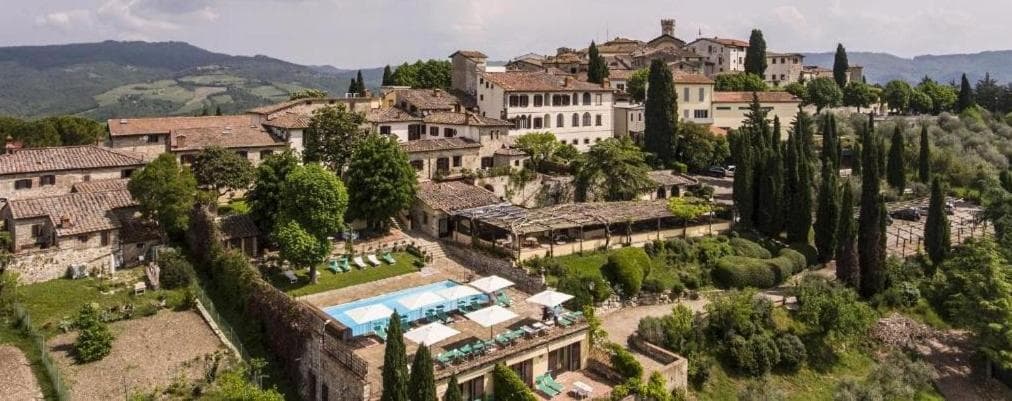
The Chianti Classico specification restricts registered vineyards to hillside sites below 700 metres — which is why the vines here sit in blocks between woodland rather than covering the valley.
The register entry — and the parentage nobody has settled
Start with what is actually recorded rather than what is repeated. The VIVC passport for Sangiovese gives variety number 10680, country of origin Italy, black-skinned berries, Vitis vinifera subsp. sativa, hermaphrodite flowers, chlorotype D, and a single listed use: wine grape. The official name registered in Italy is not Sangiovese at all — the register flags SANGIOVETO as the Italian official name.
Then comes the part that separates Sangiovese from the other varieties in this series. For Malbec and Tempranillo, VIVC gives a parentage confirmed by DNA markers and closes the question. For Sangiovese, the pedigree field does not give an answer at all. It says: different propositions, see the marker bibliography. Open that page and the database prints its own warning — several parentage hypotheses exist, and additional nSSR or SNP markers, or other proofs, are needed to determine the correct one.
Two hypotheses are listed, both traced to the same study — a large-scale parentage analysis of grapevine cultivars published in Theoretical and Applied Genetics in 2013, run over twenty microsatellite loci. One proposes Frappato di Vittoria crossed with Foglia Tonda. The other proposes Gaglioppo crossed with Foglia Tonda. Foglia Tonda is common to both; the second parent is not. That is the honest state of play, and it is a good deal more interesting than the tidy story usually told.
The tidy story usually involves Ciliegiolo, and it has the arrow pointing the wrong way. Ciliegiolo has its own VIVC record, number 2660, and there the pedigree field is filled in and marker-confirmed: Moscato Violetto crossed with Sangiovese, with the register naming the Muscat parent under its own prime name, Muscat Rouge de Madère. In other words, the reference register treats Ciliegiolo not as a parent of Sangiovese but as its offspring.
A synonym is not a clone and it is not a quality grade. Brunello, Prugnolo Gentile and Morellino tell you where the bottle comes from, not what is planted. When an estate wants to talk about plant material rather than place, it will talk about clones and massal selections — which is a completely separate conversation from the name on the label.
Keep the Foglia Tonda and Ciliegiolo names in mind, because they come back. Both appear on the short list of varieties that Chianti Classico permits in its top tier. An appellation that has spent forty years pushing Sangiovese toward purity ended up formally authorising, as blending partners, one candidate parent of the variety and one confirmed child of it. Nobody designed that. It fell out of two separate processes — a genetics programme and a committee vote — and it is the kind of detail that no producer's website will tell you.
Chianti Classico: 80 per cent, and 90 at the top
The Chianti Classico zone was drawn by interministerial decree on 31 July 1932 and has been confirmed by every subsequent instrument since. The specification puts its extent at 71,800 hectares of territory in central Tuscany, split between the province of Florence (30,400 hectares) and the province of Siena (41,400). That is the whole delimited area, not the vineyard — the planted share is a small fraction of it, which the aerial view above makes obvious.
The specification also carries its own history section, and it is worth reading because it is the appellation making claims about itself in a legal document. It records a decree issued in 1716 by Cosimo III, Grand Duke of Tuscany, that fixed the boundaries within which Chianti could be produced — running, in the original, «Dallo Spedaluzzo fino a Greve; di lì a Panzano» and on through the Podesteria of Radda — and set up a supervisory body against fraud that the text calls a forerunner of the modern consortia. The specification states flatly that this makes the Chianti Classico zone the first wine production area in the world to have been defined by law.
The same section records that until the end of the 1700s the wine of the Chianti area was made from Sangiovese alone, and that blending began in the early 1800s. Then it names the man who wrote the recipe down.
Between 1834 and 1837, according to the specification, Ricasoli publicised the composition he judged best: 70 per cent Sangioveto — the local name for Sangiovese — 15 per cent Canaiolo and 15 per cent Malvasia, together with the practice of the governo all'uso toscano. That white grape in a red blend looks eccentric now. It was the official basis of Chianti for well over a century, and getting rid of it took decades of argument.
What the current specification requires
Chianti Classico and Chianti Classico Riserva must come from vineyards whose registered composition is Sangiovese from 80 per cent up to 100 per cent. Red grapes from other varieties suitable for cultivation in Tuscany and entered in the national vine register may make up the remaining 20 per cent at most.
Gran Selezione is a different rule. Its vineyards must be Sangiovese from 90 per cent up to 100 per cent, and the only permitted companions are eight named Italian varieties — Colorino, Canaiolo, Ciliegiolo, Mammolo, Pugnitello, Malvasia Nera, Foglia Tonda and Sanforte — together or singly, to a maximum of 10 per cent. International varieties are simply not on the list. The specification is careful about timing: these provisions take effect from the fifth harvest following approval of the amendment, and until then vineyards conforming to the 80 per cent rule remain eligible. Press accounts have named particular vintages for the switchover; the specification itself counts harvests rather than naming a year, so that is how we are reporting it.
The viticultural rules are unusually prescriptive about site. Only hillside vineyards with suitable aspect may be registered, on land no higher than 700 metres above sea level, whose soils are predominantly sandstone, calcareous marl, clay schist, sand and pebble beds. Damp ground, valley floors and soils dominated by Pliocene clay are declared unsuitable and cannot be registered even if they fall inside the delimited zone. Minimum planting density is 4,400 vines per hectare. Maximum crop is 7.5 tonnes per hectare and no more than 2 kilograms per vine. The pressing yield is capped at 70 per cent grape to finished wine, and the must must reach a natural alcohol of at least 11.50 per cent.
One line in the specification settles the question every visitor asks. Inside the Chianti Classico zone you may not register vineyards for the Chianti DOCG, and you may not produce Chianti DOCG or Chianti Superiore DOCG at all. They are not a hierarchy of the same wine — they are two appellations that legally cannot overlap.
Ageing is where the three Tuscan rulebooks diverge most sharply. Chianti Classico Riserva asks for 24 months, Gran Selezione for 30; Brunello holds its wine back for five years from the vintage.
Ageing, release and the eleven UGAs
Annata Chianti Classico may not be released before 1 October of the year following the harvest. Riserva requires at least 24 months of ageing including at least 3 months in bottle. Gran Selezione requires at least 30 months, again including at least 3 in bottle. All of it is counted from 1 January of the year after the harvest. At release the minimum total alcohol is 12.00 per cent for the annata, 12.50 for Riserva and 13.00 for Gran Selezione, with minimum non-reducing extract of 24, 25 and 26 grams per litre respectively.
Two further Gran Selezione rules matter more than the numbers. The grapes must come exclusively from vineyards farmed by the bottling estate, so it cannot be assembled from bought fruit. And enrichment with exogenous products is forbidden, with any increase in natural alcohol capped at 1 per cent by volume.
Finally, the labelling article introduced eleven additional geographical units — Castellina, Castelnuovo Berardenga, Gaiole, Greve, Lamole, Montefioralle, Panzano, Radda, San Casciano, San Donato in Poggio and Vagliagli — usable in labelling for Gran Selezione only. The unit name must follow the words Gran Selezione, sit in the same visual field as the mandatory information, and be printed in characters no taller than those of the denomination itself. Lamole, Montefioralle and Vagliagli become usable at the end of the third year after the amendment enters into force, with a transitional arrangement for estates that had been labelling under Greve or Castelnuovo Berardenga.
For a traveller this is the most useful change in decades. Until the UGAs, a Chianti Classico label told you nothing about which commune the fruit came from. Now the top tier names it — and several of those names are places you can actually sleep in, which makes it possible to plan a wine tasting route around one unit at a time instead of criss-crossing the whole zone.
Two institutional facts round the picture out. The specification records that a clonal research project called Chianti Classico 2000 began in 1987 and selected and homologated new clones of Sangiovese and Colorino — the plant-material half of the story the label never shows. And the Consorzio Vino Chianti Classico, founded in 1924 and the first of its kind in Italy, states that it today represents 480 producers, of which 342 come to market under their own label bearing the Gallo Nero mark.
Brunello di Montalcino: the 100 per cent rule
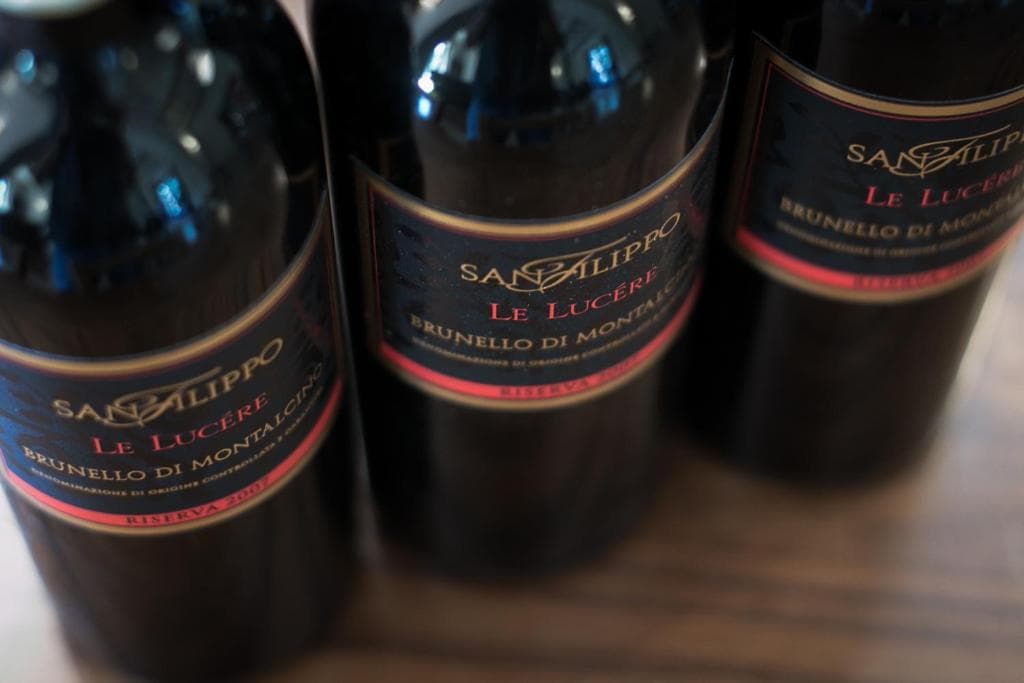
Montalcino takes the opposite design decision, and takes it absolutely. Under the current specification, approved by decree of 27 October 2015, Brunello di Montalcino must be made from vineyards composed, within the estate, exclusively of Sangiovese. No complementary varieties, no percentage to argue about. The older ministerial text was even more explicit about the naming, spelling it out as Sangiovese — called, at Montalcino, Brunello.
The zone is equally simple: the entire administrative territory of the comune of Montalcino in the province of Siena, as delimited at 30 November 2011. The specification describes it as 243.62 square kilometres bounded by the valleys of three rivers — the Orcia, the Asso and the Ombrone — forming a roughly square shape with sides averaging 15 kilometres, some 40 kilometres south of Siena. Vineyards run from about 120 metres along the rivers to about 650 metres near Poggio Civitella, the high point of the territory. Average annual rainfall is around 700 millimetres, and above 400 metres snow is possible in winter.
The production rules are tighter than Chianti Classico's in the places that count. New plantings and replantings from 1 January 2016 require a minimum of 4,000 vines per hectare. Maximum crop is 8 tonnes per hectare in specialised vineyard, equal to 54.4 hectolitres of wine; if the vigna or vigneto single-vineyard mention is claimed, that falls to 7 tonnes and 47.6 hectolitres. Young vineyards ramp up slowly: nothing may be claimed in the first two growing years, 30 per cent in the third, 70 per cent in the fourth, 100 per cent from the fifth. Minimum natural alcohol is 12.00 per cent, rising to 12.50 for a single-vineyard wine, and the pressing yield is capped at 68 per cent — two points tighter than either of its neighbours.
A Riserva label commits the producer to a sixth year before release. The bottle format is prescribed too: dark Bordeaux-type glass, sealed with a one-piece cork.
Ageing is where Brunello earns its reputation for patience. The wine must spend at least twenty-four months in oak containers of any size, and the start and end dates of that period must be documented in the cellar registers. Bottle ageing adds at least four months, or six for a Riserva. A small allowance lets 6 per cent of the vintage be aged in vessels of any type. And then the release date: Brunello may not be sold before 1 January of the year following the end of five years counted from the vintage year — six years for Riserva.
Do not read «five years» as five years in oak. The specification sets a minimum of 24 months in wood and then a release date five years out from the vintage. What happens in the remaining time — larger casks, smaller barrels, steel, bottle — is the producer's choice within those limits. If a cellar visit is the point of your trip, the difference between those two readings is the difference between an informed question and a repeated marketing line.
The specification also legislates the object in your hand. Brunello must be released in dark Bordeaux-type glass bottles closed with a one-piece cork; agglomerated corks and any other closure system are banned outright, and permitted formats are listed by capacity from 0.375 up to 18 litres. Fancy or undignified packaging is prohibited. So is a list of label words: Extra, Fine, Scelto, Selezionato, Selezione, Superiore, Tradizionale, Tradizione, Vecchio, Collezione and anything similar. A batch that does not make the grade can be reclassified as Rosso di Montalcino DOC, which is why the two appellations move together in difficult vintages.
At release the wine must show a minimum total alcohol of 12.50 per cent, minimum total acidity of 5.0 grams per litre and minimum non-reducing extract of 26.0 grams per litre — the highest acidity floor of the three appellations here. The historical section names the people who built the reputation: Clemente Santi, whose Vino Scelto of the 1865 vintage took a silver medal from the district committee in 1869; a wine of Raffaello Padelletti awarded by the Ministry of Agriculture in 1893; and Riccardo Paccagnini's Brunello, decorated at the Franco-Italian Exposition in Rome in 1910. Brunello was approved as a DOC in 1966 and elevated to DOCG in 1980, among the first Italian wines to hold the top classification.
Vino Nobile di Montepulciano: 70 per cent, and a top tier built on parish boundaries
Montepulciano sits at the permissive end of the three. Vino Nobile must be made from vineyards containing a minimum of 70 per cent Sangiovese — known locally as Prugnolo Gentile — with up to 30 per cent complementary varieties suitable for cultivation in Tuscany, of which white grapes may not exceed 5 per cent. Aromatic varieties are excluded, with a single exception carved out for Malvasia Bianca Lunga.
The zone is the territory of the comune of Montepulciano excluding the Valdichiana, limited to well-exposed vineyards between 250 and 600 metres above sea level. Maximum crop is 8 tonnes per hectare and the pressing yield is capped at 70 per cent. Vinification and compulsory ageing must take place within the comune.
The ageing article is the most flexible of the three, and worth understanding because it explains why two Vino Nobile bottles of the same vintage can taste so unalike. Counting from 1 January following the harvest, the wine must age at least two years, and the producer chooses among four routes: 24 months in wood; or at least 18 months in wood with the balance in other vessels; or at least 12 months in wood plus at least 6 in bottle with the balance elsewhere. In the second and third cases, wood ageing must begin no later than 30 April of the year after the harvest. Riserva requires grapes reaching a minimum natural alcohol of 12.50 per cent and at least three years of ageing including six months in bottle. Minimum total alcohol at release is 12.50 per cent, or 13.00 for Riserva.
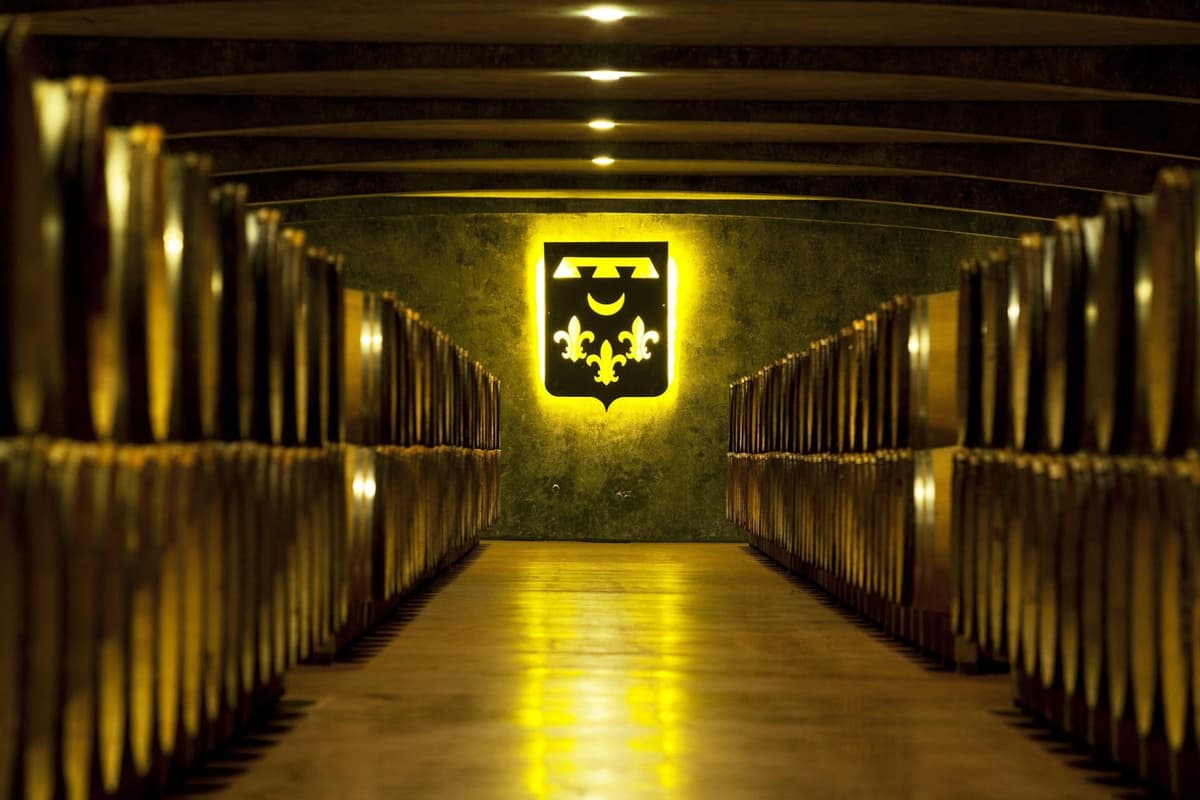
Montepulciano's ageing rules let producers choose how much of the required time goes into wood — which is why the barrel room and the bottle racks sit in the same cellar here.
Pieve: an old map turned into a legal category
The interesting development is the newest one. On 3 August 2023 the Comitato Nazionale Vini gave its final approval to the specification for Vino Nobile di Montepulciano «Pieve», a new tier of the appellation; the regulations were provisionally published in the Official Journal on 21 November 2024. The Consorzio announced that the wine would go on the market from 1 January 2025 with the 2021 vintage, a first release of around 300,000 bottles, with more than 700,000 bottles of the 2022 already in cellar — about 10 per cent of total Vino Nobile production.
The Pieve rules are the strictest in Montepulciano and, on several measures, stricter than anything in Chianti Classico. The wine must contain no less than 85 per cent Sangiovese, with up to 15 per cent from four named Italian varieties only — Canaiolo nero, Ciliegiolo nero, Mammolo nero and Colorino nero, the last capped at 5 per cent. The fruit must come from vineyards at least 15 years old, between 250 and 600 metres, directly managed by the winery that bottles the wine. Yield is capped at 7,000 kilograms per hectare and 2.5 kilograms per vine. Ageing runs three years from 1 January following the harvest: at least 12 months in wooden barrels, then at least 12 months in bottle, with the chemical, physical and sensory analysis carried out only after bottle ageing is complete rather than before it.
At release a Pieve must show a minimum total alcohol of 13 per cent, minimum total acidity of 5.0 grams per litre, minimum non-reducing extract of 26 grams per litre — and a maximum of 450 micrograms per litre of volatile phenols. That last figure is the unusual one. It is a ceiling on the compounds associated with Brettanomyces character, written into the release specification as a number rather than left to a tasting panel's judgement.
The name is the other half of the idea. Historical, geological and landscape research led the Consorzio to identify twelve zones, defined in the specification as additional geographical units, whose names are placed after the word Pieve on the label. Those toponyms come from the ancient parishes into which the territory was divided as far back as the late Roman and Lombard periods — a division that still shows in the Catasto Leopoldino, the Tuscan land survey of the early nineteenth century. Where Chianti Classico drew its eleven units around modern communes and hamlets, Montepulciano went back to the parish map.
If tasting the new top tiers is the point of your trip, plan around release dates rather than harvest. Gran Selezione needs 30 months, Pieve needs 36 with a year of that in bottle, and Brunello does not appear until five years after the vintage. Harvest season is wonderful for atmosphere, but the wine being poured in the tasting room was picked several years earlier.
Reading the three rulebooks side by side
Put the three specifications next to each other and the pattern is not a ladder. It is three different answers to the same question.
Minimum Sangiovese. Chianti Classico 80 per cent, rising to 90 for Gran Selezione. Brunello di Montalcino 100 per cent, with no blending permitted at all. Vino Nobile 70 per cent, rising to 85 for Pieve.
What may be blended. Chianti Classico's base tier accepts any red variety authorised in Tuscany; its top tier accepts eight named Italian varieties. Vino Nobile's base tier accepts Tuscan varieties including up to 5 per cent white; its top tier accepts four named Italian reds. Brunello accepts nothing.
Crop and pressing. Chianti Classico 7.5 tonnes per hectare and 70 per cent pressing yield; Brunello 8 tonnes and 68 per cent; Vino Nobile 8 tonnes and 70 per cent, tightening to 7 tonnes for Pieve.
Release. Chianti Classico annata from 1 October of the following year; Riserva at 24 months; Gran Selezione at 30. Vino Nobile at two years, Riserva at three, Pieve at three with a full year in bottle. Brunello five years from the vintage, Riserva six.
The temptation is to read 100 per cent Sangiovese as the top of a quality scale. That is not what the documents say. Montalcino made a monovarietal rule and built everything else around it; Chianti Classico codified an old regional habit of blending and has been tightening it ever since; Montepulciano kept the widest base and bolted a strict new tier on top. Three design choices, not three grades.
What the three top tiers do share is more revealing. Chianti Classico Gran Selezione, Brunello Riserva and Vino Nobile Pieve all reach for the same three levers: fruit from vineyards the estate farms itself, lower yields, and longer ageing with a mandatory spell in bottle before the wine is judged. None of them reaches for oak volume, extraction or alcohol. That is a real shift in what Tuscan appellations think quality is made of, and it has happened almost entirely in the last decade.
Where to base yourself for each rulebook
The three zones are close enough to combine in a single week and different enough that it is worth sleeping inside each rather than commuting from Siena or Florence. All of the properties below are estates in our directory with vines on site or immediately around them, and they sit within the zones described above.
Chianti Classico
The obvious approach is to pick one of the eleven geographical units and stay in it. Around Castellina, the hamlet of Fonterutoli is a working estate village; Radda and Vagliagli each give their name to a unit as well, and there are vineyard stays in both. Staying inside a unit makes the label vocabulary concrete in a way no tasting flight does.
Hotel
4.6(353 reviews)
Castello Di Fonterutoli
Tuscany, Siena, Italy
Starting from
$188 /night
Hotel
4.2(228 reviews)
Relais Vignale & Spa
Tuscany, Siena, Italy
Starting from
$140 /night
Resort
4.8(374 reviews)
Villa Dievole Wine Resort
Tuscany, Siena, Italy
Starting from
$290 /night
Resort
4.6(442 reviews)
Borgo Scopeto Wine & Country Relais
Tuscany, Siena, Italy
Starting from
$451 /night
Montalcino
Montalcino is compact — a comune of roughly 15 kilometres a side — so a single base covers it. The contrast between the north-western side of the hill and the warmer, lower southern slopes is the main thing to feel on the ground, and it is easiest to feel by driving between two estates on opposite sides in one afternoon.
Hotel
4.7(600 reviews)
Castiglion Del Bosco, A Rosewood Hotel
Montalcino, Italy
Starting from
$2500 /night
Resort
4.8(603 reviews)
Castello Banfi Il Borgo
Tuscany, Siena, Italy
Starting from
$642 /night
Hotel
4.8(33 reviews)
San Filippo Tenuta
Tuscany, Italy
Starting from
$376 /night
Montepulciano
Montepulciano rewards a stay below the town rather than in it: the vineyards that matter sit between 250 and 600 metres, and the Pieve names refer to parishes spread across that band. From here, Montalcino is a short drive west and the southern edge of Chianti Classico a short drive north — which is why this corner works well as the middle night of a three-zone trip.
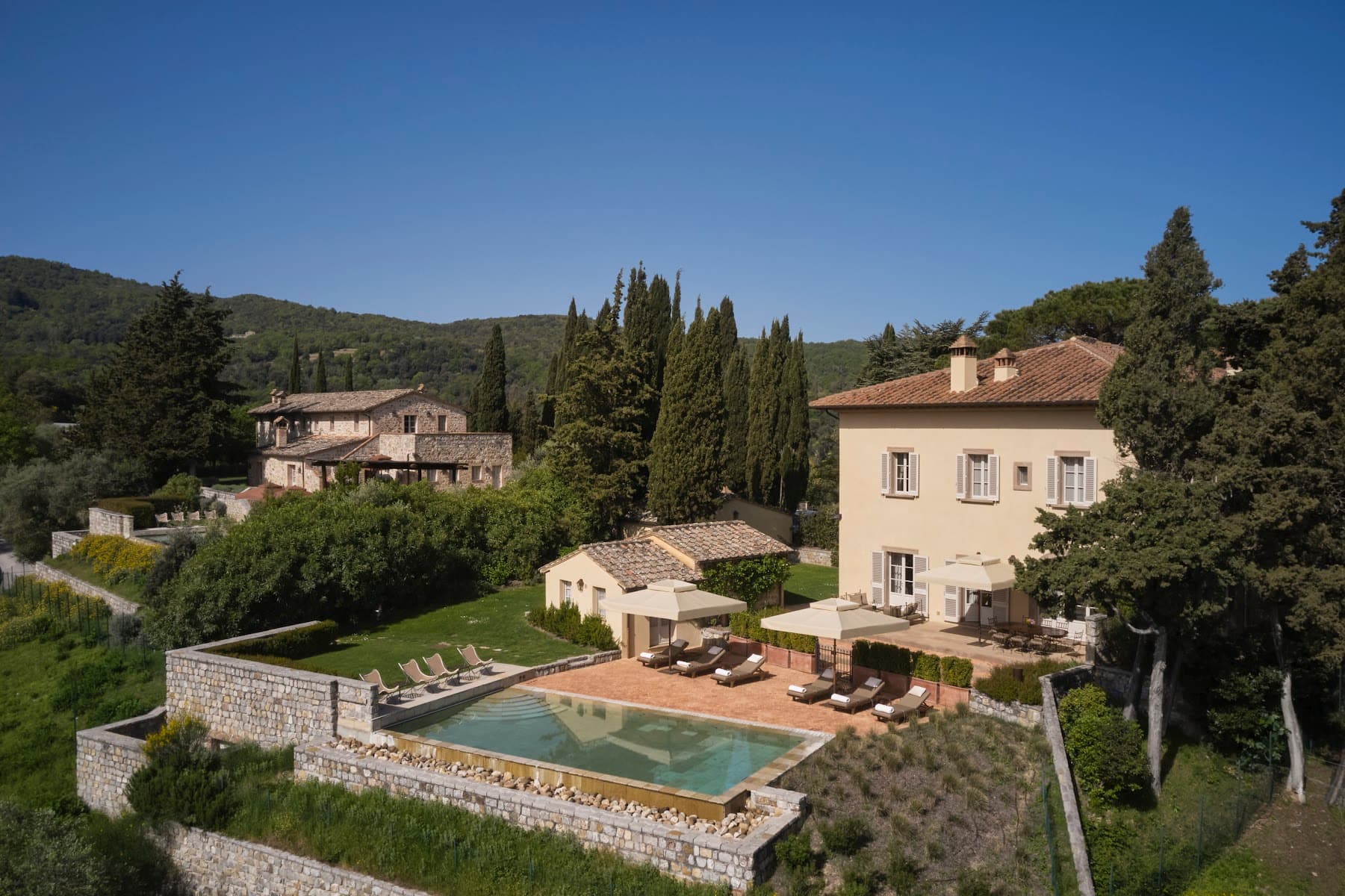
Below the walls of Montepulciano, the vineyard band the specification defines — 250 to 600 metres — is also where most of the winery hotels are.
Resort
4.7(70 reviews)
Villa Svetoni Wine Resort
Tuscany, Siena, Italy
Starting from
$357 /night
Resort
4.6(1,011 reviews)
Il Borro Relais & Châteaux
Tuscany, Arezzo, Italy
Starting from
$604 /night
For the wider picture of what a Tuscan estate stay involves, our Italy country guide collects the properties by region, and the full directory lets you filter by grape variety and amenities.
Sources & Further Reading
Every rule and figure above is taken from the body that sets or records it — the production specifications published by the Italian Ministry of Agriculture and by the three consortia, and the Vitis International Variety Catalogue. Specifications are amended and production figures are re-issued annually, so percentages, yields and bottle counts should be re-checked against the current version before being relied on.
Consorzio Vino Chianti Classico — consolidated DOCG production specification — the current text used here for the 80 and 90 per cent thresholds, the eight permitted complementary varieties, densities and yields, ageing periods, the eleven additional geographical units, the 71,800-hectare zone, the 1716 decree and the Ricasoli formula.
Consorzio del Vino Nobile di Montepulciano — production specifications — the 70 per cent base rule, the altitude band, the four ageing routes, Riserva requirements, and the full Pieve specification including the 85 per cent minimum, the 15-year vineyard age, yields, three-year ageing and the 450 microgram volatile phenol ceiling.

 Alex OssoSep 8, 2026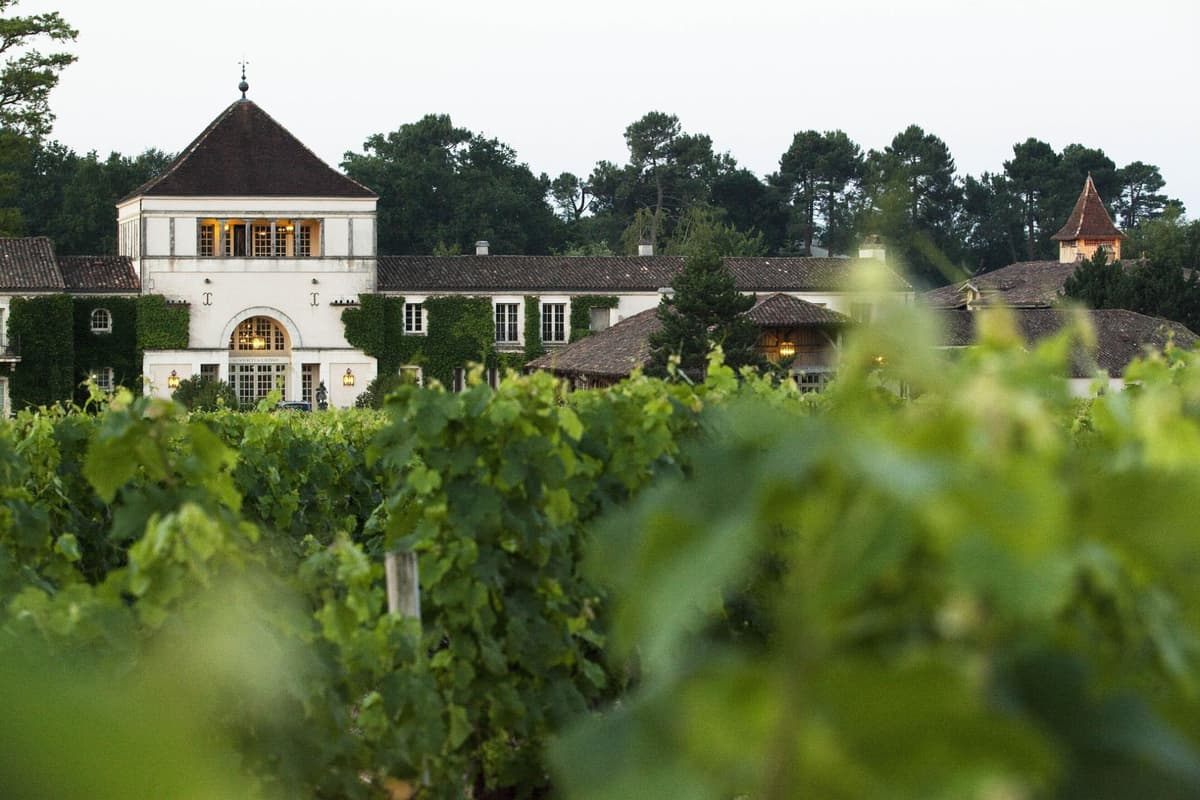

 Build your own directory