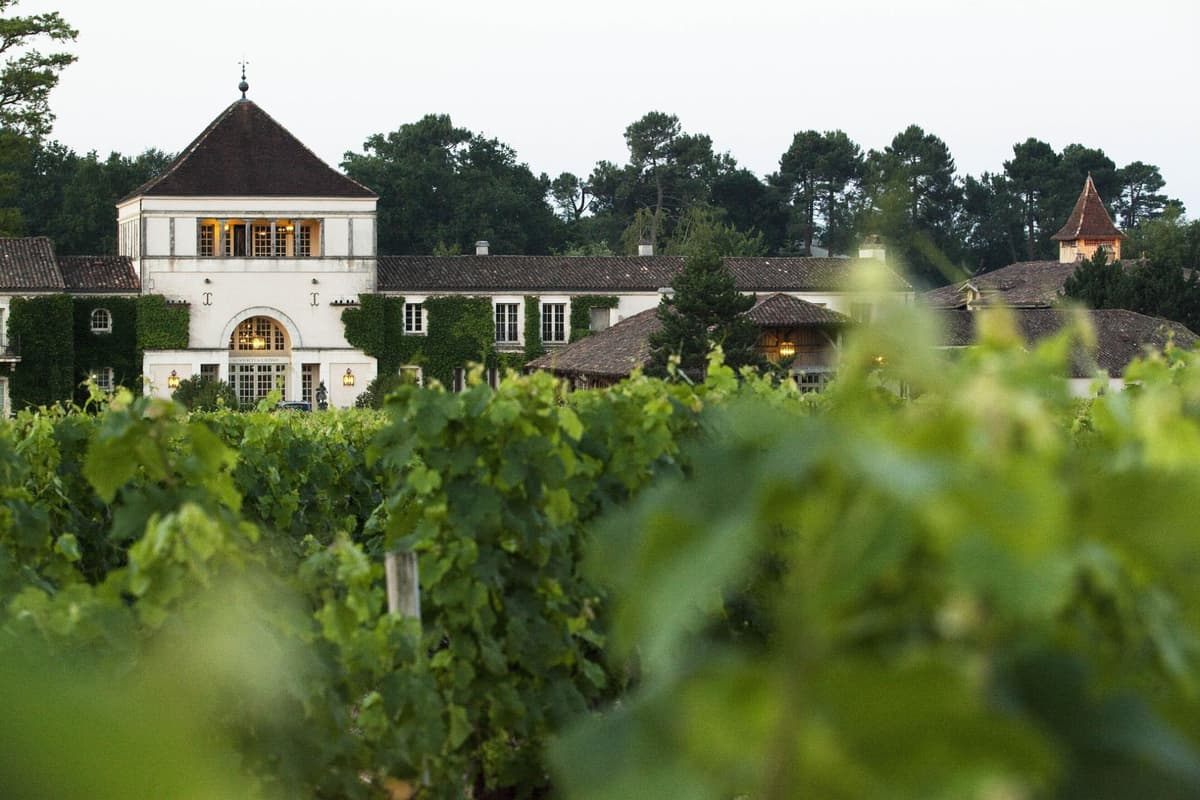
Cover: an estate in the Bordeaux vineyards. The badge is Michelin's own Three-Keys mark from the 2025 edition, shown because it is what this article explains — the property pictured does not hold a Key.
Loading content...
Related Reading
Continue exploring our wine tourism guides and travel insights
Michelin named 94 Burgundy estates. We opened 33 of their websites: two sell a visit online, and none of the nine top domaines publish a bookable tour.
A second global Key selection lands on 18 September 2026
The MICHELIN Key is the Guide's distinction for hotels. Properties receive One, Two or Three Keys, and the Guide describes it in exactly the terms you would expect: the hotel equivalent of the Star it awards restaurants. The MICHELIN Guide has said it will unveil its full 2026 selection of One-, Two- and Three-Key hotels, together with four Special Award winners, on its website, app and social platforms on 18 September 2026 — the second consecutive year the Keys are announced globally.
For anyone who plans trips around wine country, that date matters less than a distinction almost nobody makes clearly. A Key is a judgement about a stay. It is not a judgement about the wine, about the vineyard, or about whether the estate will let you through the gate. Michelin now runs several rating systems that sit side by side and measure entirely different things, and the fastest way to plan a frustrating week in the vines is to read one as if it were another.
Below: what a Key is, the five criteria Inspectors use, the numbers from the first global selection, the four Special Awards and their 2026 nominees so far, and the honest answer to the question our readers actually ask — how much does a Key tell you about a winery hotel?
A Key selection is unveiled at a live ceremony — this is the 2024 edition for Japan, with the Key symbol on the banners either side of the stage. The 2026 global list is announced the same way on 18 September. Photograph: MICHELIN Guide.
The three levels, in the Guide's own words
Michelin published definitions for each level when it launched the global selection. They are worth reading closely, because not one of them mentions food, wine or agriculture. Every clause is about the experience of staying.
One MICHELIN Key — A very special stay
«This is a true gem with its own character and personality. It may break the mold, offer something different, or simply be one of the best of its type. Service always goes the extra mile and provides significantly more than similarly priced establishments.»
Two MICHELIN Keys — An exceptional stay
«Somewhere truly unique and exceptional in every way, where a memorable experience is always guaranteed. A hotel of character, personality and charm that's operated with obvious pride and considerable care. Eye-catching design or architecture, and a real sense of the locale make this an exceptional place to stay.»
Three MICHELIN Keys — An extraordinary stay
«It's all about astonishment and indulgence here – this is the ultimate in comfort and service, style and elegance. It is one of the world's most remarkable and extraordinary hotels and a destination for that trip of a lifetime.»
Michelin's own wording for each level. Note that the Guide does not draw a separate glyph per level: it repeats one symbol — the florette it uses for restaurant stars, given a key shaft — once, twice or three times.
Read them as a set and the ladder is clear. One Key is about being better than its price band. Two Keys is about character, design and a sense of place. Three Keys is about a property that is itself the reason for the journey. None of these levels is a proxy for size, brand or luxury tier — the Guide's own criteria explicitly weigh what you get against what you pay.
The five criteria — and a small wording change worth noticing
Every Key decision is made by MICHELIN Guide Inspectors against five universal criteria. In the October 2025 results release, Michelin set them out in a footnote:
The hotel is an open door to the destination.
Excellence in interior design and architecture.
Quality and consistency in service, comfort and maintenance.
Consistency between the level of the experience and the price paid.
Individuality, reflecting personality and authenticity.
Michelin's earlier announcement of the global selection, published on 16 July 2025, listed the same five criteria with slightly different phrasing: criterion one read «the hotel is a gateway to the destination» and criterion five read «uniqueness, personality and authenticity». The substance did not move; the vocabulary did. We flag it because if you find the two versions quoted side by side elsewhere and assume one is a misquote, it is not — both are Michelin's.
Three of the five criteria are about the building and the service. One is about value. Only the first — the «open door to the destination» — reaches outside the property at all, and even that is about how well the hotel connects a guest to where it stands, not about what the estate grows or bottles.
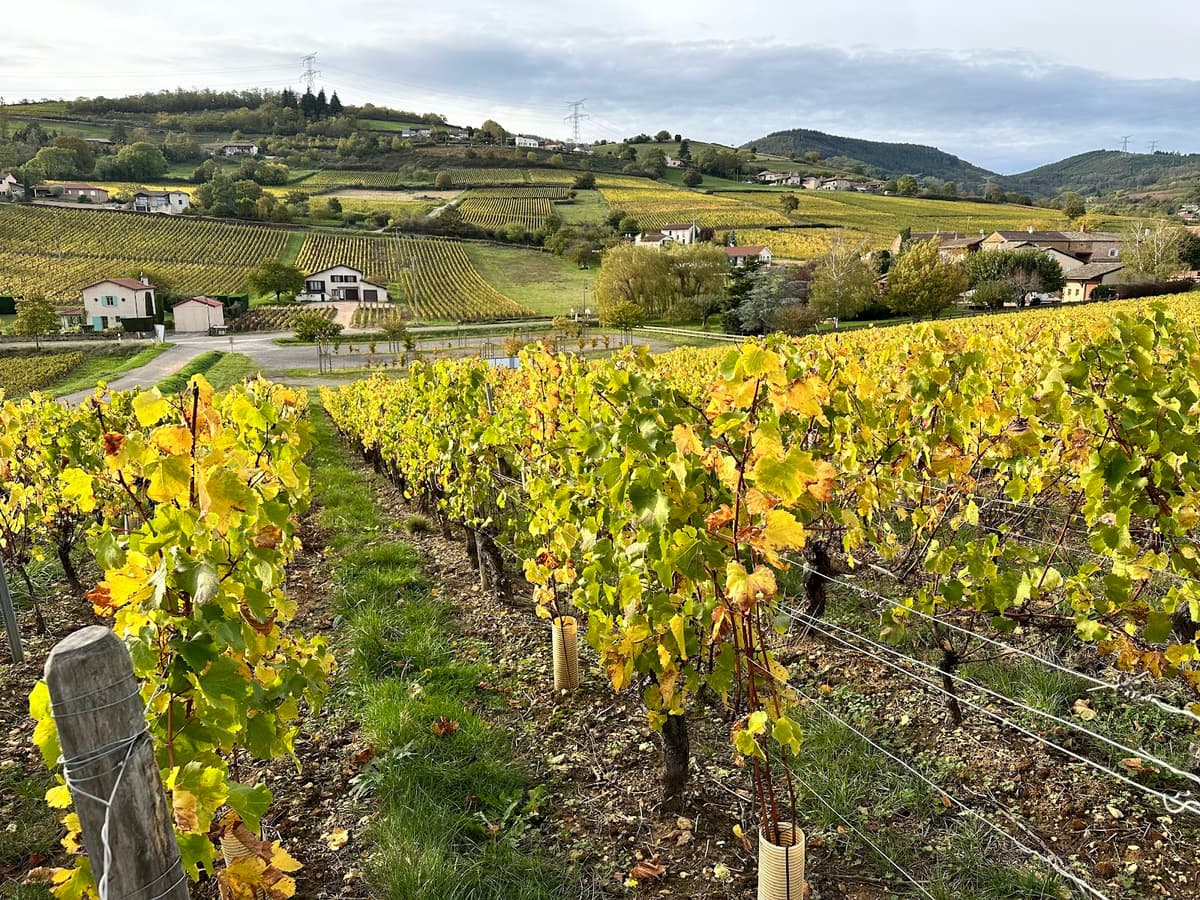
The «open door to the destination» criterion is about how a hotel connects you to its setting — not about the vines themselves. Vineyards in the Mâconnais, southern Burgundy.
If you are comparing two properties in the same appellation and one carries a Key, you have learned something about the bed, the service and the design. You have learned nothing about the cellar. Those questions have to be asked separately, and usually of the estate itself.
What the first global selection actually looked like
The Keys were not new in 2025. Michelin rolled them out across 15 top travel destinations in 2024 and early 2025, recognising more than 1,500 hotels in those first regional selections. The release's own footnote enumerates those destinations as France, Spain, Italy, UK & Ireland, Germany, Austria, Switzerland, Portugal, Greece, the US, Canada, Mexico, Japan and Thailand — fourteen entries for fifteen destinations, with the UK and Ireland listed as a single line.
The first genuinely global list arrived on 8 October 2025, announced online and at a ceremony at the Musée des Arts Décoratifs in Paris. Inspectors worked from a hotel selection of more than 7,000 properties and awarded Keys to 2,457 hotels: 1,742 at One Key, 572 at Two, and 143 at Three.
Do that arithmetic and the shape of the thing becomes clear. Roughly one in three hotels in the Guide's selection received a Key at all, and Three Keys went to about six per cent of Key holders — a little under two per cent of the selection. The Key is not a participation mark, but nor is it as thin at the top as a Three-Star restaurant list.
Two of the round 2025 badges — the marks Michelin issues to distinguished hotels for their own use, dated by edition. 572 properties earned the Two-Key badge that year; 143 earned the Three.
Geographically, Europe dominated. France led with 203 Key hotels, Italy followed with 188 and Germany with 130. North and Central America plus the Caribbean took 526 Keys in total (23 Three, 123 Two, 380 One). South America received 84 across seven countries (5 Three, 21 Two, 58 One). Oceania's first-ever Keys covered 63 hotels across Australia, New Zealand, Fiji and French Polynesia. Dubai was awarded 13 Key hotels; Doha, 10.
By 2026 the pool has grown. The Guide now describes its hotel selection as more than 9,000 properties across more than 100 countries, and says every hotel in that selection, wherever it sits, is again eligible for a Key. That is the number the 18 September list will be drawn from.
Key counts are annual and they move. A property that held Two Keys in the 2025 list is not guaranteed to hold two after 18 September 2026, and hotels are added to the underlying selection continuously between announcements. Check the current status on the MICHELIN Guide before you use it as a tiebreaker.
A Key is not a wine rating. Four marks, four different questions.
This is the part that costs travellers money. Four distinctions circulate in wine tourism and they are routinely treated as interchangeable. They are not. Each answers a different question.
MICHELIN Key
Goes to a hotel. Measures the stay.
MICHELIN grape
Goes to a wine estate. Measures the winemaking.
One florette, two distinctions: the Key adds a shaft, the grape does not. Side by side they are easy to tell apart. In a property's own marketing, far less so.
MICHELIN Keys answer: how good is the stay? Awarded to hotels, at three levels, on the five criteria above.
MICHELIN Stars answer: how good is the cooking? Awarded to restaurants. A starred restaurant inside a hotel does not confer a Key on the hotel, and a Key says nothing about the kitchen.
Best Of Wine Tourism and The World's 50 Best Vineyards answer: how well does this estate receive visitors? Neither is run by Michelin, and both are explained in our guides to the Great Wine Capitals awards and the 50 Best Vineyards ranking.
The practical consequence: an estate can hold Three MICHELIN grapes and have no guest rooms, no tasting room and no public booking page. A hotel can hold Three Keys and sit two hundred kilometres from a vine. And a winery that wins a visitor-experience award may make wine you would never seek out. Nothing about any of these marks is contradictory — they are simply measuring different objects.
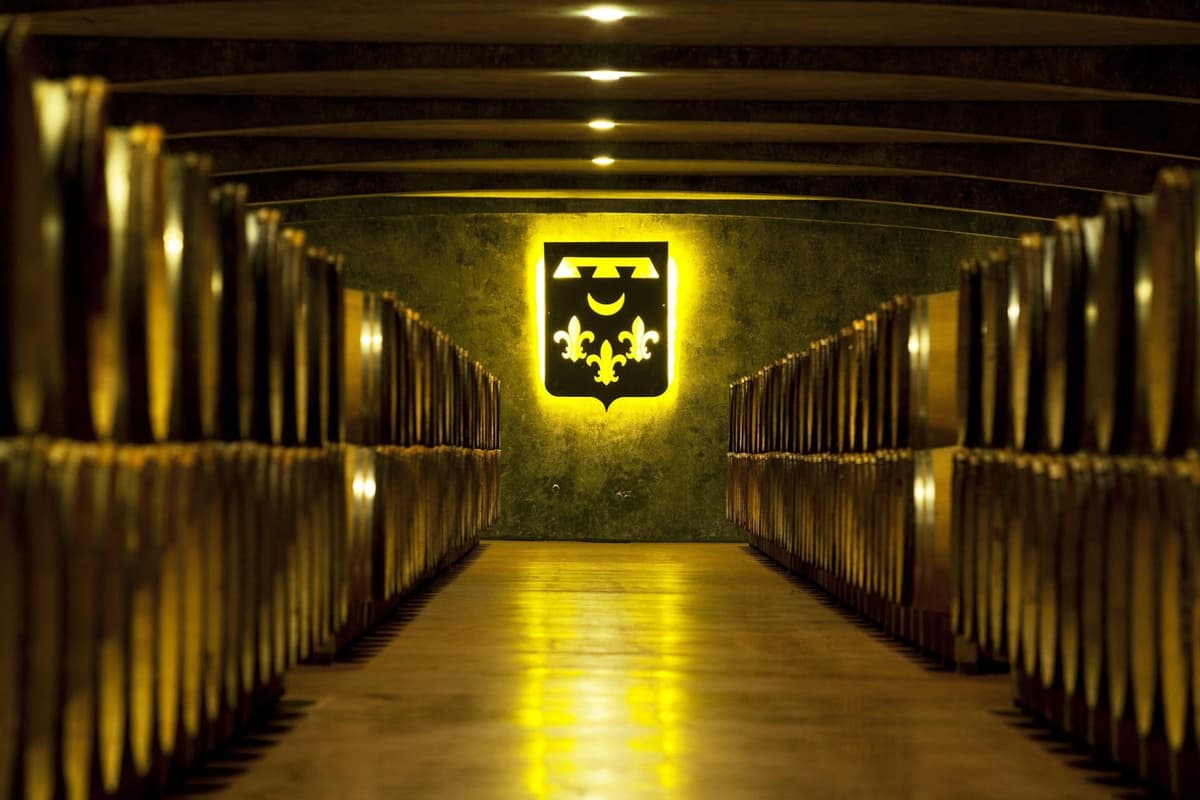
A barrel cellar in the Bordeaux vineyards. Nothing an Inspector assesses for a Key happens in this room — that is the grape's territory, and a different set of criteria entirely.
Why wine estates are thin on the Key list
Read Michelin's 2025 results release end to end and the properties it chose to spotlight are safari camps, riads, ryokans, cliffside modernism, private atolls and courtyard houses. Vineyards barely feature. The two explicitly wine-linked properties named anywhere in that release are Vazisubani Estate in Gurjaani Municipality, Georgia — described by the Guide as a wine estate, and among the first Keys ever awarded in the country — and Stoneridge Estate, a One-Key luxury lodge near Queenstown, New Zealand, which the release notes has its own vineyard.
That is not evidence that Inspectors dislike vineyard hotels. It is what you would predict from the criteria. A working wine estate that opens a dozen rooms is optimising for harvest logistics, cellar access and a tasting programme. A hotel is optimising for service consistency, design and the guest's day. Those two projects overlap, but they are not the same project, and the Key measures only the second one.
It also means a very good winery with lodging can be absent from the Key list for reasons that have nothing to do with quality — a property that is not in the Guide's hotel selection cannot receive a Key at all, however well it hosts. Absence of a Key is not evidence of anything.
A useful reading order for a wine trip: pick the region first, then the estates you want to taste at (using grapes or visitor-experience awards), then the bed. Letting a Key choose your region is how people end up staying beautifully an hour from anything they wanted to drink.
The four Special Awards, and where 2026 stands
Alongside the Keys, Michelin introduced four Special Awards in 2025, each going to a single property: the MICHELIN Architecture & Design Award, the MICHELIN Wellness Award, the MICHELIN Local Gateway Award and the MICHELIN Opening of the Year Award, the last of which is supported by United Overseas Bank. Five nominees are published per category ahead of the ceremony, and the winners are announced on the day.
The 2025 winners were Atlantis The Royal in Dubai for Architecture & Design; Bürgenstock Resort Switzerland for Wellness; La Fiermontina Ocean in Larache, Morocco, for Local Gateway; and The Burman Hotel in Tallinn, Estonia, for Opening of the Year.
For 2026, nominee lists are being released in the weeks before 18 September. The five Architecture & Design nominees, published on 19 August 2026, are Mandarin Oriental Qianmen in Beijing, The Maybourne Riviera on the Côte d'Azur, The Lindis in New Zealand's Ahuriri Valley, Desert Rock Resort in Saudi Arabia's Hijaz mountains and Ambiente in Sedona, Arizona. The Local Gateway nominees, published on 1 September 2026, are Gangtey Lodge in Bhutan, Nihi Sumba in Indonesia, Cascioni Eco Retreat in Sardinia, Londolozi Game Reserve in South Africa and Amanfayun in Hangzhou.
Of the ten nominees announced so far, exactly one is an agricultural estate: Cascioni, which the Guide describes as a stay conceived as a tribute to the farm it stands on, producing honey, fruit, herbs, grains and olive oil on site. No wine estate appears on either shortlist. If a vineyard property is going to surface in 2026, the Wellness and Opening of the Year lists are where to watch.
A table above the Douro. The Local Gateway Award rewards precisely this — a property that hands you its landscape — which is the one criterion where wine estates ought to compete well.
How to use a Key when you are planning a wine trip
Used correctly, the Key is a good instrument. It is independent, it is applied by the same inspectorate worldwide, and its fourth criterion — value for what you pay — is unusual among hospitality marks and genuinely useful. Here is how to get something out of it.
Treat it as a filter, not a ranking
The Guide is explicit that One Key means «significantly more than similarly priced establishments». That makes One Key a strong signal for a mid-priced vineyard stay, and arguably a more actionable one than Three Keys, which is filtering for trip-of-a-lifetime properties where price has stopped being the question.
Cross-check the Key against a wine signal
If the point of the trip is the wine tasting, pair the Key with something that actually measures wine or hospitality at the estate. A Key plus a visitor-experience award is a strong combination. A Key alone tells you the stay will be good and says nothing about whether there is a cellar door within walking distance.
Do not read a Key as access
This is the same trap the grape sets. A distinguished property is not obliged to run a wine tour, and many working estates with rooms limit visits sharply during harvest. Confirm the tasting programme with the property before you book the room, not after.
Nominee lists are not results. Being shortlisted for a Special Award is a real distinction, but four of the five nominees in each category will not win on 18 September. Anyone marketing a nomination as a win is overselling it.
Wine-country stays worth knowing, whatever the list says
We do not publish Key status for the properties in our catalogue, and we would rather say so than guess: the authoritative, current list lives with the MICHELIN Guide and is reissued annually. What follows is simply a set of estates and winery hotels across regions where the 2026 announcement is likely to be read closely — Bordeaux, Rioja, Tuscany, the Douro, Ribera del Duero and Kakheti.
Hotel
4.7(1,573 reviews)
Les Sources de Caudalie
Bordeaux, France
Starting from
$265 /night
Resort
4.8(603 reviews)
Castello Banfi Il Borgo
Tuscany, Siena, Italy
Starting from
$642 /night
Hotel
4.9(1,726 reviews)
Six Senses Douro Valley
Douro, Portugal
Starting from
$1529 /night
Resort
4.7(755 reviews)
Abadia Retuerta LeDomaine
Castile and León, Ribera del Duero, Spain
Starting from
$747 /night
Hotel
4.9(463 reviews)
Giuaani Winery
Manavi, Georgia
Starting from
$69 /night
The Georgian entry is there for a specific reason. Michelin's first Keys in Georgia landed in Gurjaani Municipality, in Kakheti — the same corner of the country our own catalogue covers. Whatever happens on 18 September, a selection that has started paying attention to Kakheti is a selection that has started paying attention to wine country.
Lodgings at the edge of the vines in Bordeaux. Distance to the nearest cellar door is not one of the five Key criteria — but for most of our readers it is the first question.
A full One-, Two- and Three-Key list, drawn from a selection of more than 9,000 hotels in over 100 countries. Four Special Award winners chosen from the shortlists above. And, based on the first edition, a set of headline numbers — total Keys, national leaders, new countries — that will be quoted everywhere within hours.
What will not be in it: any statement about the wine. That remains the grape's job, and the grape has so far visited exactly one region. For everything in between — the estate that hosts beautifully but does not appear in any guide, the appellation nobody has rated yet — the work is still yours, and that is not a bad thing.
Sources & Further Reading
Key counts, national totals and award winners are annual figures and are superseded with each new edition. The links below are the pages we checked; where a number appears above, it comes from one of them.
Michelin — press release on the first global MICHELIN Key selection (9 October 2025) — the totals of 2,457 / 1,742 / 572 / 143, the pool of more than 7,000 hotels, the wording of the three Key levels, the five criteria as published in October 2025, the regional and national breakdowns quoted here, the four Special Award winners and their nominees, and the mentions of Vazisubani Estate in Gurjaani and Stoneridge Estate near Queenstown.
Michelin — announcement of the first global hotel Key selection (16 July 2025) — the rollout across 15 destinations in 2024 and early 2025, the more than 1,500 hotels recognised in those first selections, the Paris ceremony at the Musée des Arts Décoratifs on 8 October 2025, and the earlier phrasing of criteria one and five noted above.
Michelin — corporate press-release archive — checked on 1 September 2026 to confirm that no corporate release on the 2026 Key selection had yet been issued; the 18 September date and the 9,000-property figure come from the MICHELIN Guide's own editorial announcement of 29 July 2026 rather than from a corporate release.
 Alex Osso

 Build your own directory


