Michelin named 94 Burgundy estates. We opened 33 of their websites: two sell a visit online, and none of the nine top domaines publish a bookable tour.
Six names, one variety, three completely different rulebooks
Stand in front of a Spanish wine list and you will meet the same grape under at least four aliases. A Rioja calls it Tempranillo. A Ribera del Duero bottle says Tinto Fino or Tinta del País. A Toro says Tinta de Toro. A Catalan label says Ull de Llebre; a bottle from La Mancha says Cencibel. Most people assume these are cousins, or local clones, or marketing.
They are not. Spain's own national vineyard register does not even bother to separate them: in the Ministry of Agriculture's statistical annex, the line reads, verbatim, «Tempranillo, Cencibel, Tinto Fino, Tinta de Toro, Tinta del País, Ull de Llebre» — a single entry with a single hectare figure. What genuinely differs between those bottles is not the plant. It is the rulebook each appellation writes around it: how densely you may plant, how much fruit you may pick, how hard you may press, how long the wine must sit in oak, and — the detail almost nobody checks — whether the appellation requires any Tempranillo in the blend at all.
This is the second entry in our varieties series, after the Malbec piece on Cahors and Luján de Cuyo. The method is the same: no tasting-note poetry, just the published specifications, read side by side, with the practical consequences for anyone planning a trip through this stretch of wine country.
One bunch, six Spanish names. Photo by laimagendelvino.com, CC BY 2.5 ES, via Wikimedia Commons.
What the registers actually say
The Vitis International Variety Catalogue (VIVC), the reference register maintained by the Julius Kühn-Institut, files the variety under the prime name TEMPRANILLO TINTO, variety number 12350, country of origin Spain. It records 96 synonyms. Among them: Aragonez, Tinta Roriz, Tinta del País, Tinto Fino, Cencibel, Ull de Llebre, Ojo de Liebre, Tinta de Toro, Tinto de Toro, Tinta de Madrid, Valdepeñas.
The parentage is the part that rarely makes it into wine writing. VIVC lists it as confirmed by markers: Tempranillo is the offspring of Albillo Mayor × Benedicto. Hold that thought — Albillo Mayor is going to reappear later, in the appellation you would least expect.
A synonym list is a record of names that have been applied to a variety, not a guarantee that each name is used only for it, which is exactly why the register rather than the label is the authority. But the Spanish state agrees with VIVC where it counts. In the ministry's Annex V, the distribution of planted winegrape area at 31 July 2025, all six of those Spanish names sit on a single line.
190,407 hectares of Tempranillo and its Spanish synonyms — the single largest winegrape holding in the country.
182,929 hectares of Airén, the white workhorse it overtook, now second.
Against a national planted winegrape area of 903,170 hectares at the same date. Roughly one Spanish vine in five is this grape.
The regional split inside that figure is where the travel logic starts. Castilla-La Mancha holds the largest block at 64,088 hectares, Castilla y León 43,144, La Rioja 35,468, Extremadura 14,773, the Basque Country 12,162 and Navarre 7,616. The three appellations this article is about sit inside the second and third of those numbers — and account for a far larger share of the bottles a visitor will actually be poured.
One separate line in the same register is worth knowing about: Tempranillo Blanco, a white mutation, is counted independently at 866 hectares nationally — 694 of them in La Rioja. If a white Rioja on the list says Tempranillo Blanco, it is not a mislabelled red.
Registers are older than databases. The plate Jules Troncy drew for Viala and Vermorel's Ampélographie files the variety under exactly the name VIVC still treats as prime. Public domain (CC0), via Wikimedia Commons.
Rioja: the appellation that never mentions a Tempranillo minimum
Here is the fact that surprises people who have drunk Rioja for years. The published specification of the Denominación de Origen Calificada Rioja — the version currently in force was last modified by resolution of 21 October 2025, published in the BOE on 30 October 2025 — sets no minimum percentage of Tempranillo anywhere.
What it requires is collective. A red made from destemmed fruit must be at least 95% from the five authorised red varieties taken together — Tempranillo, Garnacha Tinta, Graciano, Mazuelo and Maturana Tinta. For whole-bunch reds the figure drops to 85%. A legally impeccable Rioja could, in principle, contain no Tempranillo at all. That it usually does is a matter of grower economics and taste, not of law.
The rest of the rulebook is unusually specific. Planting density is bounded on both sides: not fewer than 2,850 vines per hectare and not more than 10,000. Maximum production is 6,500 kg per hectare for red varieties — the specification does the arithmetic for you and calls it 45.5 hectolitres. Pressing may not exceed 70 litres of wine per 100 kilograms of fruit. Red grapes must arrive at a minimum natural strength of 11% vol.
The ageing terms everyone recognises are defined to the month, and the numbers are worth carrying in your head on a tasting:
Crianza (red): at least two calendar years of ageing, of which a minimum of one continuous, uninterrupted year in oak casks of approximately 225 litres, followed by bottle ageing. Minimum 11.5% vol.
Reserva (red): 36 months total, of which at least 12 in oak barrel and at least 6 in bottle. Minimum 12% vol.
Gran Reserva (red): 60 months total, at least 24 in oak barrel followed by at least 24 in bottle.
Rioja's specification names the vessel as well as the clock: casks of roughly 225 litres, and for Crianza a continuous year in wood with no interruptions.
Since 2017 the appellation has also recognised a smaller geographical unit, Viñedo Singular — a named site inside a municipality with its own agro-ecological character, backed by a technical dossier. The qualifying bar is deliberately steep: the vineyard must be at least 35 years old, yield is capped at 5,000 kg per hectare for reds instead of 6,500, and the pressing yield is fixed at 65 litres per 100 kg with the text stating plainly that this figure may not be modified under any circumstances. Anything above it loses the denomination outright. Individual singular vineyards are listed by ministerial order and the list has been extended almost every year since 2019.
The territory itself is defined at 63,593 protected hectares spread across 144 municipalities — 118 in La Rioja, 18 in Álava, 8 in Navarre — divided into the three zones Rioja Alta, Rioja Alavesa and Rioja Oriental, with vineyards climbing to around 700 metres. Rioja became the first Spanish denomination raised to Calificada status, by ministerial order of 3 April 1991. Its most contested rule — that wine must be bottled within the zone — was upheld by the European Court of Justice in a judgment of 16 May 2000, and the specification quotes the ruling at length.
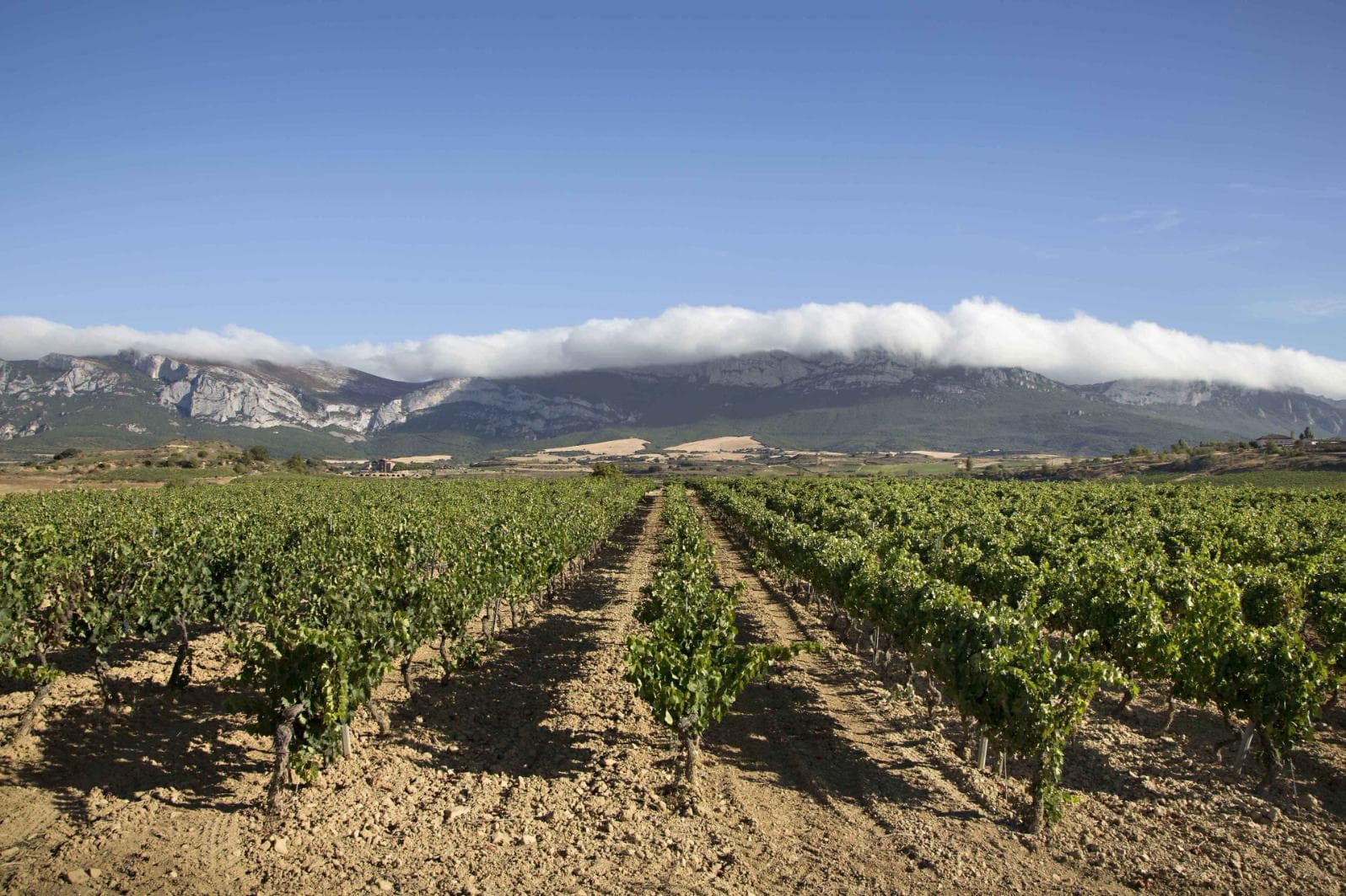
Tempranillo picked in Rioja Alavesa — one of the three zones named above. Photo by María Jesús Tomé, CC BY 2.0, via Wikimedia Commons.
On a wine tasting in Rioja, the useful question is not «is this a Reserva?» but «which zone, and how old are the vines?». Zone and vineyard age are what the rulebook actually ties to character; the ageing term only tells you how long the wine sat still.
Where to stay in Rioja
Rioja is the easiest of the three to visit without a car problem: the villages are close together, and several estates run rooms on site, which turns a tasting into a stay rather than a drive. These are the winery hotels in our directory across Rioja Alavesa and Rioja Alta.
Ribera del Duero: a hard 75%, and a family reunion
Cross to the Duero and the logic inverts. Where Rioja regulates a group of varieties, the specification of the DOP Ribera del Duero — current version dated 31 July 2023 — names one and insists on it. Red wines must be made from a minimum of 75% Tempranillo, Tinto Fino or Tinta del País. The document treats all three words as one variety and designates it the principal variety for reds outright. The rest of the authorised list is short: Cabernet Sauvignon, Garnacha Tinta, Malbec, Merlot and Albillo Mayor.
And there is the family reunion. Albillo Mayor — the parent VIVC identifies on Tempranillo's marker-confirmed pedigree — is the appellation's designated principal white variety, required at a minimum of 75% in white Ribera del Duero. Nationally it is a rounding error at 925 hectares, 897 of them in Castilla y León. The mother grape is farmed at one two-hundredth the scale of its offspring, in the same appellation, and almost nobody in the tasting room mentions it.
The production limits sit slightly looser than Rioja's: 7,000 kg per hectare for all varieties except Albillo Mayor, which is allowed 9,500; a minimum planting density of 2,000 vines per hectare; and pressing up to 72 litres per 100 kilograms. Continuous presses are banned by name, as are high-speed centrifugal crushers.
The ageing terms use the same familiar words and quietly different mechanics. Crianza is 24 months with at least 12 in oak; Reserva 36 with at least 12 in oak; Gran Reserva 60 with at least 24 in oak. The divergence from Rioja is in the wood itself: Ribera del Duero permits barrels of up to 330 litres for the three traditional terms, against Rioja's roughly 225-litre cask — and it defines a fourth, softer mention, Roble or Barrica, requiring no less than three months in barrel, in vessels of up to 600 litres.
«Crianza» on a Rioja and «Crianza» on a Ribera del Duero are not the same guarantee. The total clocks are close, but the barrel is a different size, and Rioja additionally specifies a continuous, uninterrupted year in wood. Comparing the two labels as though they were interchangeable is the most common mistake made in front of a Spanish wine shelf.
The climate section of the same document explains why the grape behaves differently here, and it does so in hard figures rather than adjectives: annual extremes of 42 °C and −20 °C, a frost-risk window running from 17 September to 6 June, day-to-night swings of 15 to 20 °C through ripening, and average summer rainfall around 435 mm at Aranda de Duero. The zone spans four provinces — Burgos, Soria, Segovia and Valladolid.
On history, the specification reaches further back than most: excavation at the Vaccean-Roman site of Pintia, between Padilla de Duero and Pesquera de Duero, found microscopic residues in vessels used for serving and drinking wine in the fourth century BC. The modern appellation is far younger — its first regulation was approved by ministerial order of 21 July 1982.
The estate at Sardón de Duero, ringed by its own vineyard. It sits in the Duero valley but outside the DO Ribera del Duero — it holds a single-estate denomination of its own.
Staying on the Duero — and a boundary worth understanding
One property in our directory makes an excellent teaching example of how Spanish appellation geography really works. Abadía Retuerta LeDomaine stands at Sardón de Duero in Valladolid province, deep in the Duero valley — and is not in the DO Ribera del Duero. It holds its own protected designation, DOP Abadía Retuerta, a single-estate denomination covering a continuous delimited block of 560.49 hectares within one municipality, entered in the EU register by implementing regulation in 2022. Its own rulebook permits Tempranillo alongside Cabernet Sauvignon, Syrah and Merlot, caps yields at 8,000 kg per hectare and requires each variety to be vinified separately before any blending.
That is the difference between a regional denomination and a vino de pago in one address: same river, same grape, entirely separate legal instrument. Worth knowing before you ask the sommelier for «a Ribera» and get handed something that is legally nothing of the kind.
Toro: the same grape, and the regulator says so out loud
Toro sits west of Ribera del Duero, on the same river, at altitudes the specification puts between 620 and 840 metres. Its principal red variety is Tinta de Toro — a name VIVC files as a synonym of Tempranillo Tinto and which Spain's national register counts on the same line as Tempranillo.
What makes Toro interesting is that its own regulator addresses the question head-on rather than ducking it. The specification, in the section on the link to the geographical area, describes Tinta de Toro as ampelographically and genetically similar to the Tempranillo variety, but lower-yielding, more tannic, richer in potassium, less acidic, with slightly anthocyanin-tinted flesh at ripeness, giving more concentrated and powerful wines. That is a regulator conceding the identity while defending the local expression — and it is a far more honest formulation than the marketing claim that Tinta de Toro is «a different grape».
The viticultural rules match the description. Minimum planting density is 500 vines per hectare — against Rioja's floor of 2,850 and Ribera's 2,000. That is not laxity; it is a rulebook written around old, widely spaced, bush-trained plantings on sandy soils, including the pre-phylloxera vineyard the document explicitly cites as part of the region's viticultural heritage. Maximum yield for Tinta de Toro is 7,500 kg per hectare, or 54 hectolitres, and pressing may not exceed 72 litres per 100 kilograms.
For blending, red Toro is made from Tinta de Toro and/or Garnacha Tinta, with up to 15% of other authorised varieties. To be labelled as the varietal type vino tinto (Tinta de Toro), the wine needs at least 85% of it. The denomination itself was recognised by ministerial order of 29 May 1987, making it the youngest of the three by five years.
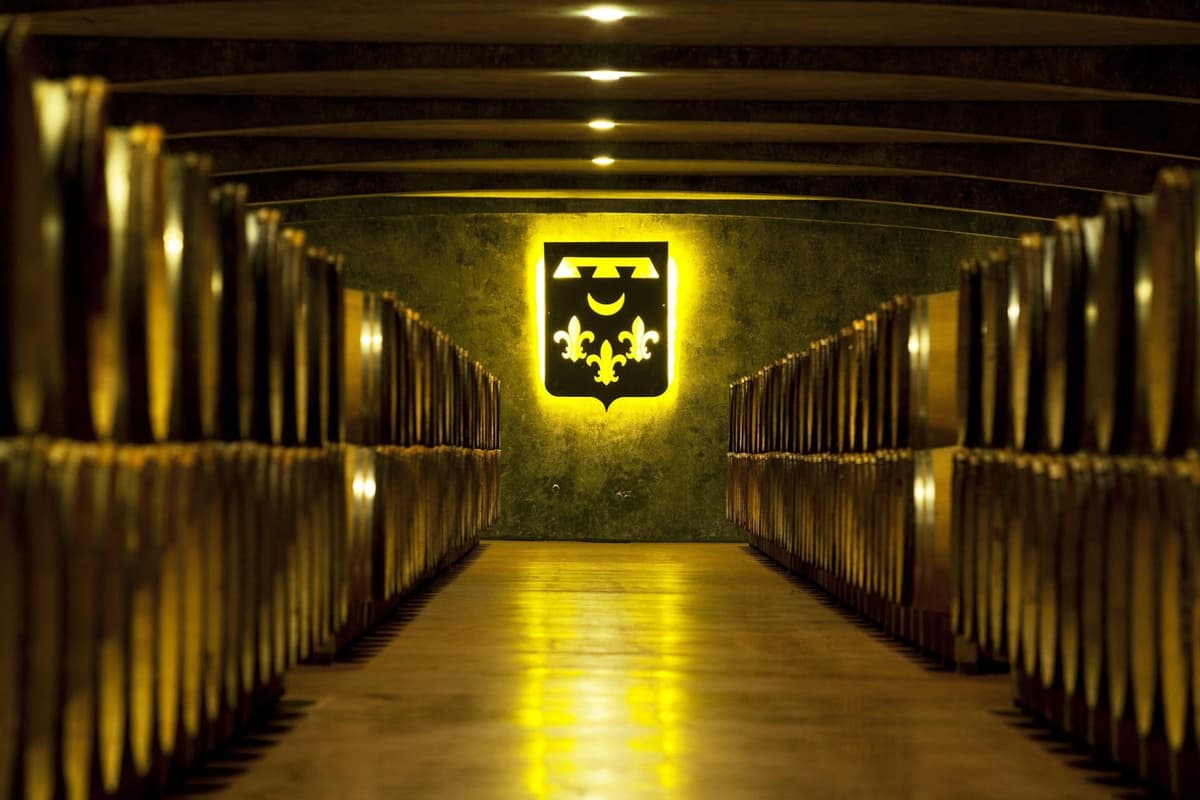
A barrel hall in Toro. The appellation's reputation for concentration starts in the vineyard rules — low densities, old plantings, 54 hectolitres per hectare — not in the cellar.
Resort
4.7(755 reviews)
Abadia Retuerta LeDomaine
Castile and León, Ribera del Duero, Spain
Starting from
$747 /night
Hotel
4.3(355 reviews)
Valbusenda Hotel Bodega & Spa
Castile and León, Toro, Spain
Starting from
$376 /night
Toro and Ribera del Duero are a comfortable drive apart, which makes a two-appellation wine tour along the Duero the most efficient way to taste the same variety under two rulebooks in a single trip. Rioja is a separate journey — different river, different side of the country.
Reading it all on the back label
Put the three specifications side by side and a genuinely useful shorthand falls out. It is more reliable than any tasting note, because it is what the producer is legally bound to.
DOCa Rioja
DO Ribera del Duero
DO Toro
The three appellations against the rest of Spain's denominations, shown pale. Rioja follows the Ebro; Ribera del Duero and Toro sit on the Duero, Toro the further west of the two. Maps by Té y kriptonita, CC BY-SA 3.0, via Wikimedia Commons.
The variety name tells you the region, not the plant. Tinto Fino means the wine is from the Duero. Ull de Llebre means Catalonia. Cencibel means La Mancha. All three are Tempranillo.
The blend rule tells you how much freedom the winemaker had. Rioja: 95% from five reds collectively, no single-variety floor. Ribera del Duero: 75% Tempranillo, non-negotiable. Toro: 85% for a Tinta de Toro varietal.
The yield cap tells you about concentration. Rioja 6,500 kg/ha, Ribera del Duero 7,000, Toro 7,500 — and Rioja's Viñedo Singular sites 5,000.
The ageing term tells you about the barrel, not just the calendar. Roughly 225 litres in Rioja; up to 330 in Ribera del Duero; a separate three-month Roble mention that exists in Ribera and not in Rioja.
If you want the one bottle per region that shows the rulebook doing something, ask for a Viñedo Singular in Rioja — 35-year-old vines minimum, a fifth less fruit per hectare, a pressing ceiling that cannot be waived — and, on the Duero, anything from an estate-level denomination rather than the regional one. Those are the wines where the paperwork and the glass line up most directly.
A last note for anyone travelling further. VIVC's synonym list for Tempranillo Tinto also includes Aragonez and Tinta Roriz — the names the same variety carries in Portugal, where it works in blends rather than alone. Which is a decent excuse to keep going west; our guide to what a quinta actually is covers what changes when you cross the border. And for readers who found the appellation mechanics here useful, the same treatment applied to Italy sits in our explainer on DOCG, DOC and IGT.
Sources & Further Reading
Every figure above is taken from the body that sets or records it — the appellation specifications published by Spain's Ministry of Agriculture, Fisheries and Food, and the Vitis International Variety Catalogue. Note that specifications are amended and the planted-area statistics are re-issued annually, so hectare figures and rulebook details should be re-checked against the current version before being relied on.
Vitis International Variety Catalogue — passport data for TEMPRANILLO TINTO — confirms the prime name, variety number 12350, Spanish origin, the marker-confirmed parentage Albillo Mayor × Benedicto, and the list of 96 recorded synonyms including Tinta del País, Tinto Fino, Tinta de Toro, Cencibel, Ull de Llebre, Aragonez and Tinta Roriz.
Ministry of Agriculture (Spain) — Pliego de condiciones, DOCa Rioja — the source for the 95% / 85% red-variety rule, the absence of any Tempranillo minimum, planting density of 2,850–10,000 vines/ha, the 6,500 kg/ha cap, the 70 l/100 kg pressing limit, the Crianza / Reserva / Gran Reserva definitions, the Viñedo Singular conditions (35-year vines, 5,000 kg/ha, 65 l/100 kg), the 63,593 ha across 144 municipalities, the three zones, and the 3 April 1991 Calificada order.
Ministry of Agriculture (Spain) — Pliego de condiciones, DOP Ribera del Duero — the source for the 75% Tempranillo / Tinto Fino / Tinta del País minimum, Albillo Mayor as principal white at 75%, the 7,000 and 9,500 kg/ha yield caps, the 2,000 vines/ha floor, the 330-litre and 600-litre barrel limits, the Roble/Barrica mention, the climate figures, the Pintia archaeology and the 21 July 1982 first regulation.
Ministry of Agriculture (Spain) — Pliego de condiciones, DOP Toro — the source for Tinta de Toro as principal variety, the regulator's own description of it as ampelographically and genetically similar to Tempranillo, the 85% varietal threshold, the 500 vines/ha minimum density, the 7,500 kg/ha cap, the 620–840 m altitude range, the reference to pre-phylloxera vineyard, and the 29 May 1987 recognition order.
Ministry of Agriculture (Spain) — Pliego de condiciones, DOP Abadía Retuerta — confirms that the Sardón de Duero estate holds its own single-estate protected denomination separate from Ribera del Duero, covering 560.49 delimited hectares, with Tempranillo among its authorised red varieties, an 8,000 kg/ha yield cap and separate vinification by variety.
Ministry of Agriculture (Spain) — planted winegrape area by variety, 31 July 2025 — the register entry that names the variety as «Tempranillo, Cencibel, Tinto Fino, Tinta de Toro, Tinta del País, Ull de Llebre» at 190,407 ha, Airén at 182,929 ha, the regional breakdown quoted above, Tempranillo Blanco at 866 ha and Albillo Mayor at 925 ha.
 Alex OssoSep 8, 2026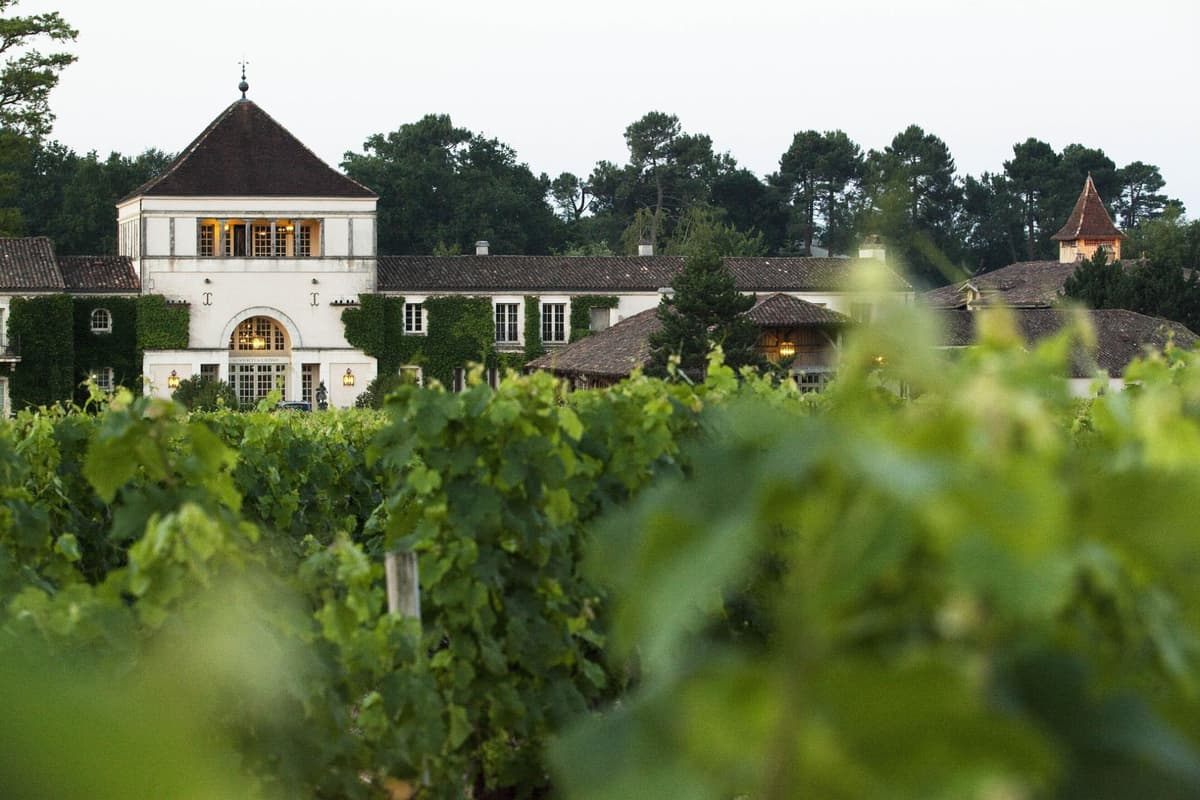

 Build your own directory


